Warm Dried Mulberry and Cinnamon Milk Drink on the Stovetop
Dried mulberries are naturally sweet and release a mild, jammy flavour when briefly simmered in water. Straining that liquid before combining it with warm milk keeps the drink smooth rather than pulpy, and ground cinnamon stirred in at the end adds warmth without requiring whole spices or long infusion times. This stovetop method produces two cups from pantry staples and takes under fifteen minutes from start to pour.
Read the note ↓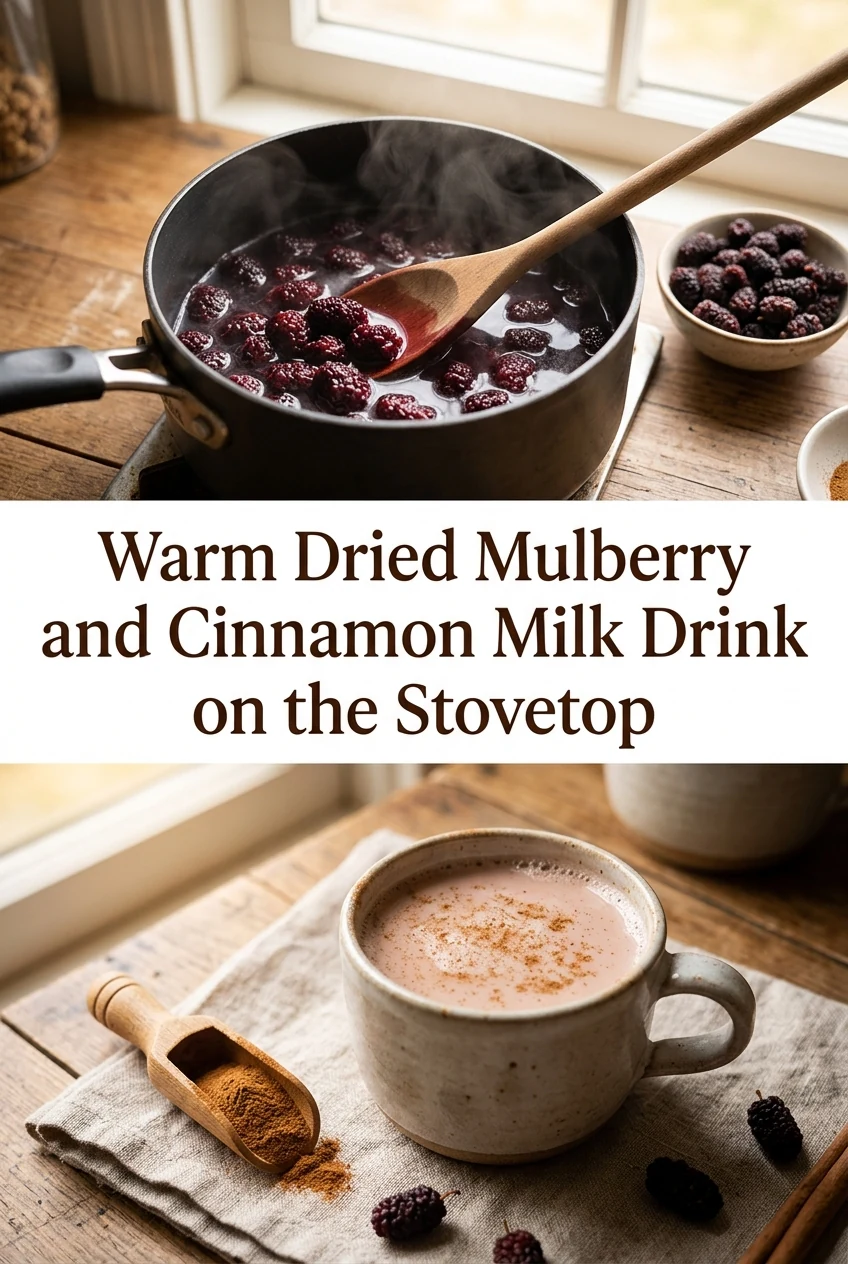
AI-generated editorial concept created for this article. The image is not a technical diagram or a tested result.
Simmer the Dried Mulberries in a Small Amount of Water
Place 40 grams of dried mulberries and 180 millilitres of cold water in a small saucepan. Bring to a gentle simmer over medium-low heat and cook for 6 to 8 minutes, stirring occasionally. The berries will soften and the water will take on a deep reddish-purple colour and a mild sweetness. Do not boil vigorously, as this reduces the liquid too quickly before the flavour has time to develop. The goal is a lightly infused liquid, not a thick syrup.
Strain the Mulberry Liquid Cleanly
Set a fine-mesh sieve over a heatproof jug or bowl and pour the simmered mixture through it. Press the softened berries gently with the back of a spoon to extract as much liquid as possible, then discard the solids. You should have approximately 120 to 140 millilitres of strained mulberry liquid remaining. If the liquid has reduced below 100 millilitres, add a small splash of warm water to bring it back up before proceeding. Rinse the saucepan for the next step.
Warm the Milk Separately and Combine
Pour 400 millilitres of full-fat or semi-skimmed pasteurised milk into the rinsed saucepan. Warm over medium-low heat, stirring gently, until steam rises and small bubbles appear at the edges. Do not bring the milk to a rolling boil. Remove from heat and pour in the strained mulberry liquid, stirring to combine. The mixture will turn a soft lavender-pink colour. Taste at this point; the natural sweetness of the mulberries is usually sufficient, but a small amount of honey can be stirred in if preferred.
Add Ground Cinnamon and Stir Thoroughly
Add a quarter teaspoon of ground cinnamon to the combined liquid and stir briskly for about 20 seconds. Ground cinnamon does not dissolve fully and will settle if left undisturbed, so stir again just before pouring. If you prefer a stronger cinnamon note, increase to a half teaspoon, but add it in stages and taste between additions rather than committing to the larger amount immediately. A small whisk works better than a spoon for distributing the powder evenly through the warm liquid.
Pour and Serve Promptly
Divide the drink between two warmed cups, approximately 260 to 270 millilitres each. Warming the cups briefly with hot water from a kettle before pouring helps the drink stay at a comfortable temperature for longer. Serve immediately. Do not leave the prepared drink sitting in the pan on residual heat for more than a few minutes, as milk held warm for extended periods can develop a skin and an off flavour. Any leftover drink should be refrigerated promptly and rewarmed gently within the same day.
A little more
to know.
Can this drink be made with a plant-based milk alternative?
Oat milk and soy milk both work well here. Use an unsweetened variety so the natural mulberry sweetness is not masked. Avoid high-heat with oat milk as it can become starchy in texture; keep the heat at medium-low throughout.
Why discard the cooked mulberries rather than blending them into the drink?
Dried mulberries develop a slightly fibrous, seedy texture after cooking that creates a gritty mouthfeel when blended into milk. Straining gives a smoother result. The cooked berries can be stirred into porridge or yoghurt rather than wasted.
Original editorial guidance and recipe formulations, not independently kitchen-tested. Times are estimates and depend on equipment and product directions. Cooked bases need additional cooling and refrigeration before cold serving. Images are AI-generated illustrations; appearance and yield may vary. Check actual ingredient labels, allergens, and any certification you require. We do not certify products. Read our approach.
Save to Pinterest ↗ANOTHER IDEA FOR THE COUNTER