Warm Dried Apricot and Cardamom Milk Drink on the Stovetop
Dried apricots need rehydrating before they can blend into a smooth milk drink. Skipping that step leaves fibrous chunks that no blender fully eliminates. This guide walks through soaking, blending, straining, and combining the apricot base with warm whole milk and ground cardamom on a low flame, so the finished drink is silky rather than gritty. Quantities here serve two 240 ml cups and can be scaled proportionally once you are comfortable with the method.
Read the note ↓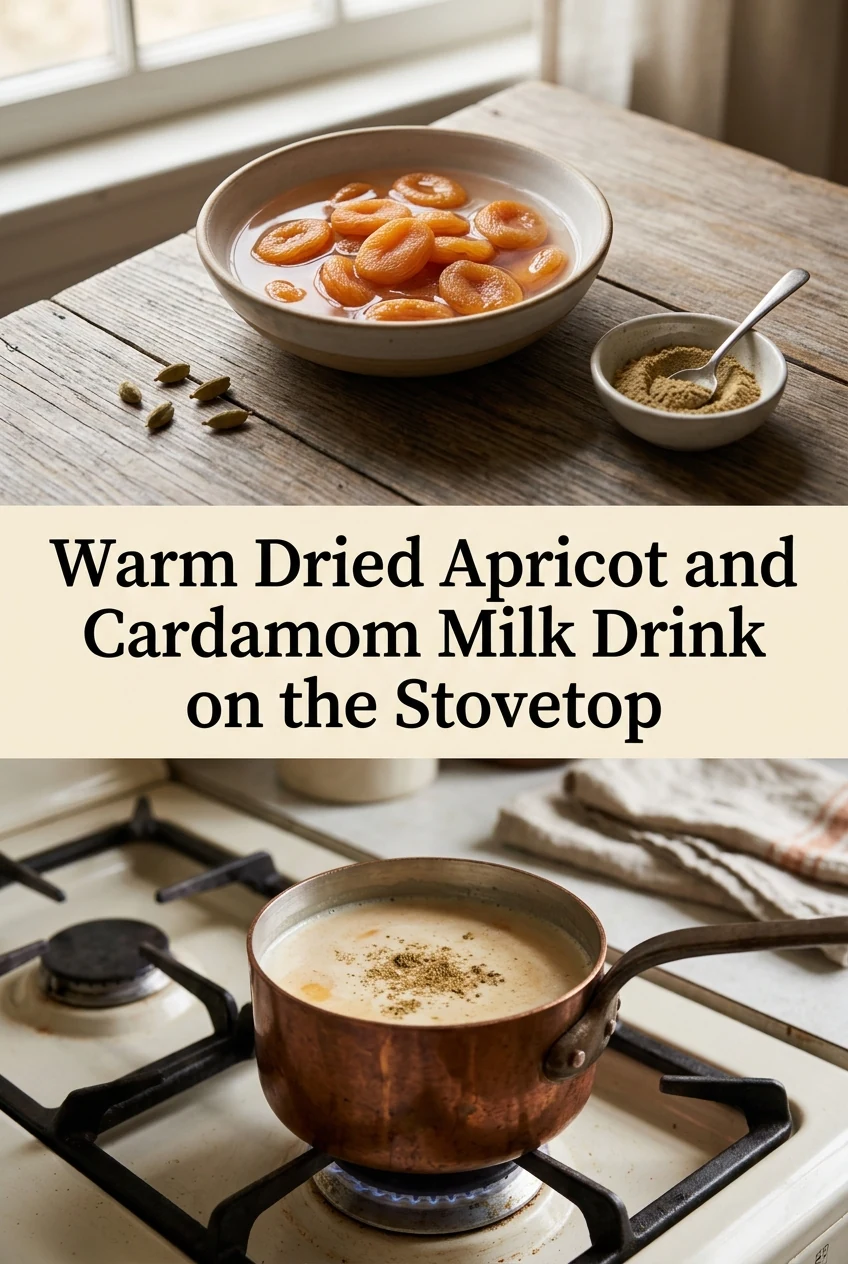
AI-generated editorial concept created for this article. The image is not a technical diagram or a tested result.
Choose and Weigh Your Dried Apricots
Use unsulfured or sulfured dried apricots interchangeably; both soften well. Weigh out 60 g of dried apricots for two servings. Avoid apricots with added sugar or oil coatings, as these change the syrup balance. If your apricots feel very firm or leathery, that is a sign they need a longer soak. Rinse them briefly under cold tap water to remove any surface dust before soaking.
Soak Until Fully Softened
Place the rinsed apricots in a small bowl and cover with 200 ml of room-temperature water. Soak for a minimum of two hours, or overnight in the refrigerator. The fruit should feel plump and yield easily when pressed between two fingers. Soaking liquid picks up natural fruit sugars, so reserve it for blending rather than discarding it. Longer soaking produces a smoother final texture with less blending effort.
Blend to a Smooth Puree
Transfer the soaked apricots and all reserved soaking liquid into a blender jug. Blend on high speed for 60 to 90 seconds until the mixture looks uniformly smooth with no visible fruit pieces. As an illustrative example, 60 g of apricots soaked in 200 ml of water typically yields roughly 220 ml of puree, though actual volume varies with fruit density. Pass the puree through a fine-mesh sieve, pressing with a spoon to extract as much liquid as possible.
Warm the Milk and Combine
Pour 400 ml of whole pasteurized milk into a small saucepan. Add the strained apricot puree and one-quarter teaspoon of ground cardamom. Set the burner to low heat. Stir continuously with a silicone spatula, bringing the mixture to a gentle steam without boiling. Boiling can cause the milk solids to separate and alter the flavor. Taste at this point and stir in one to two teaspoons of honey or sugar if you prefer a sweeter drink.
Serve and Handle Leftovers Safely
Pour into warmed cups immediately and serve. If any drink remains, allow it to cool briefly, then transfer to a clean sealed container and refrigerate at 4 C or below within two hours of preparation, or within one hour if your kitchen is above 32 C. Consume refrigerated leftovers within 24 hours and reheat gently on the stovetop rather than leaving the drink at room temperature. Do not store the finished drink in the blender jug.
A little more
to know.
Can I use apricot nectar from a carton instead of blending dried fruit?
Carton nectar works as a shortcut but typically contains added sugar and a thinner body. You would need to reduce the quantity to about 80 ml per two servings and adjust sweetener accordingly, since the flavor concentration differs noticeably from homemade puree.
Why does my drink look slightly grainy even after straining?
Apricot skin fragments can pass through a coarse sieve. Use a fine-mesh sieve and press firmly. If graininess persists, line the sieve with a single layer of clean muslin cloth and strain a second time before combining with the milk.
Original editorial guidance and recipe formulations, not independently kitchen-tested. Times are estimates and depend on equipment and product directions. Cooked bases need additional cooling and refrigeration before cold serving. Images are AI-generated illustrations; appearance and yield may vary. Check actual ingredient labels, allergens, and any certification you require. We do not certify products. Read our approach.
Save to Pinterest ↗ANOTHER IDEA FOR THE COUNTER