Sweeten Iced Tea With a Pre-Made Syrup Instead of Stirring in Sugar
Granulated sugar dropped into cold or room-temperature brewed tea does not dissolve evenly. The result is a drink that tastes flat at the top and cloyingly sweet at the bottom of the glass. Making a small batch of simple syrup in advance solves this completely. Because the sugar is already dissolved in water, it disperses through cold tea immediately and lets you control sweetness by the teaspoon rather than by guessing at undissolved grains.
Read the note ↓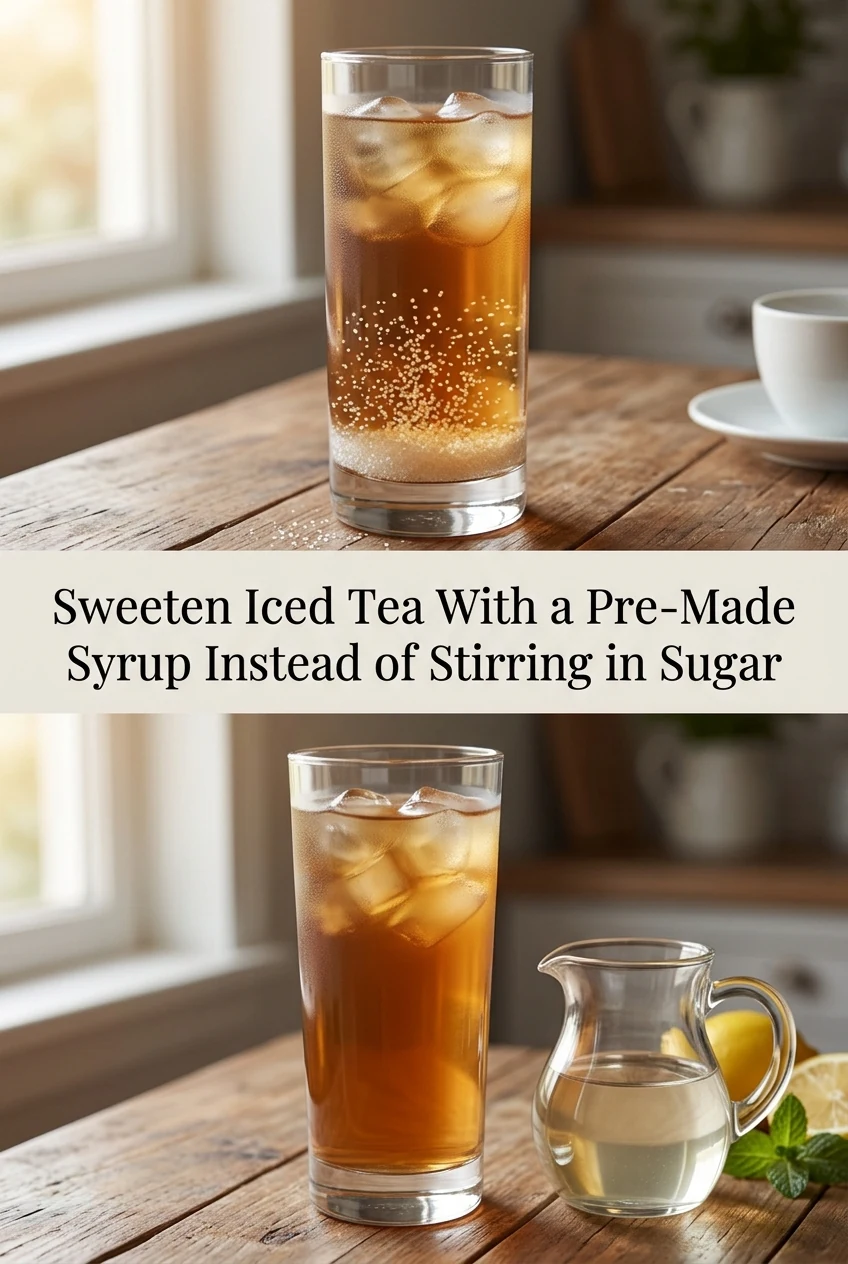
AI-generated editorial concept created for this article. The image is not a technical diagram or a tested result.
What Simple Syrup Is and Why It Works in Cold Drinks
Simple syrup is sugar fully dissolved into water over gentle heat, producing a pourable liquid that blends into cold beverages without stirring effort. A standard ratio is equal parts granulated sugar and water by volume, for example 100 millilitres of water to 100 millilitres of sugar. This produces a moderately sweet syrup. Because the sugar molecules are already in solution, they distribute instantly through cold tea rather than sinking to the bottom as undissolved crystals.
Making a Small Batch Suited to a Serving Jug
For a one-litre jug of iced tea, a small batch of 100 millilitres water and 100 millilitres sugar is sufficient to sweeten the whole jug or let guests add individual amounts. Combine both in a small saucepan over medium-low heat, stir until the sugar is fully dissolved and the liquid is clear, then remove from heat before it simmers vigorously. This takes roughly three to five minutes. Do not boil hard, as prolonged boiling reduces the water and changes the concentration.
Cooling and Storing the Syrup Safely
Allow the syrup to cool to room temperature before transferring it to a clean, lidded glass jar or bottle. Refrigerate promptly, within two hours of making it, at 4 degrees Celsius or below. A plain sugar syrup kept refrigerated is generally usable for up to two weeks, though you should discard it if you notice any cloudiness, off smell or visible change. Label the jar with the date so you are not guessing how long it has been stored.
Adding Syrup to the Jug or Individual Glasses
For a one-litre jug, start by stirring in two teaspoons of syrup, tasting, and adding more in one-teaspoon increments until the sweetness suits the group. For individual glasses, offer the syrup in a small pouring vessel alongside the jug so each person controls their own amount. This approach avoids the common problem of pre-sweetening a whole jug to one person's preference and leaving others with tea that is too sweet or not sweet enough.
Adjusting Syrup Concentration for Different Preferences
If you find you are adding many teaspoons to reach the sweetness you want, you can make a more concentrated syrup using two parts sugar to one part water by volume. This means less liquid is added to the tea, which matters if you are working with a small glass and do not want to dilute the tea flavour. Conversely, a lighter syrup of one part sugar to two parts water gives finer control in small increments. Neither ratio is universally correct; choose based on how you use it.
A little more
to know.
Can I use the syrup in hot tea as well, or is it only for cold drinks?
Simple syrup works in hot tea too, though granulated sugar dissolves readily in hot liquid anyway. The syrup is most useful where temperature is the barrier to dissolving. Using it in hot tea is not wrong, but it adds water volume to the cup, which slightly dilutes the brew.
Will the syrup affect the flavour of the tea beyond sweetness?
A plain sugar syrup made from granulated white sugar and water adds sweetness without a distinct flavour of its own. It will not introduce caramel or molasses notes the way brown sugar or raw sugar would. If you want a neutral sweetener that does not compete with the tea, plain white sugar syrup is the appropriate choice.
Original editorial guidance and recipe formulations, not independently kitchen-tested. Times are estimates and depend on equipment and product directions. Cooked bases need additional cooling and refrigeration before cold serving. Images are AI-generated illustrations; appearance and yield may vary. Check actual ingredient labels, allergens, and any certification you require. We do not certify products. Read our approach.
Save to Pinterest ↗ANOTHER IDEA FOR THE COUNTER