Steep Time and Water Temperature for Four Common Tea Styles
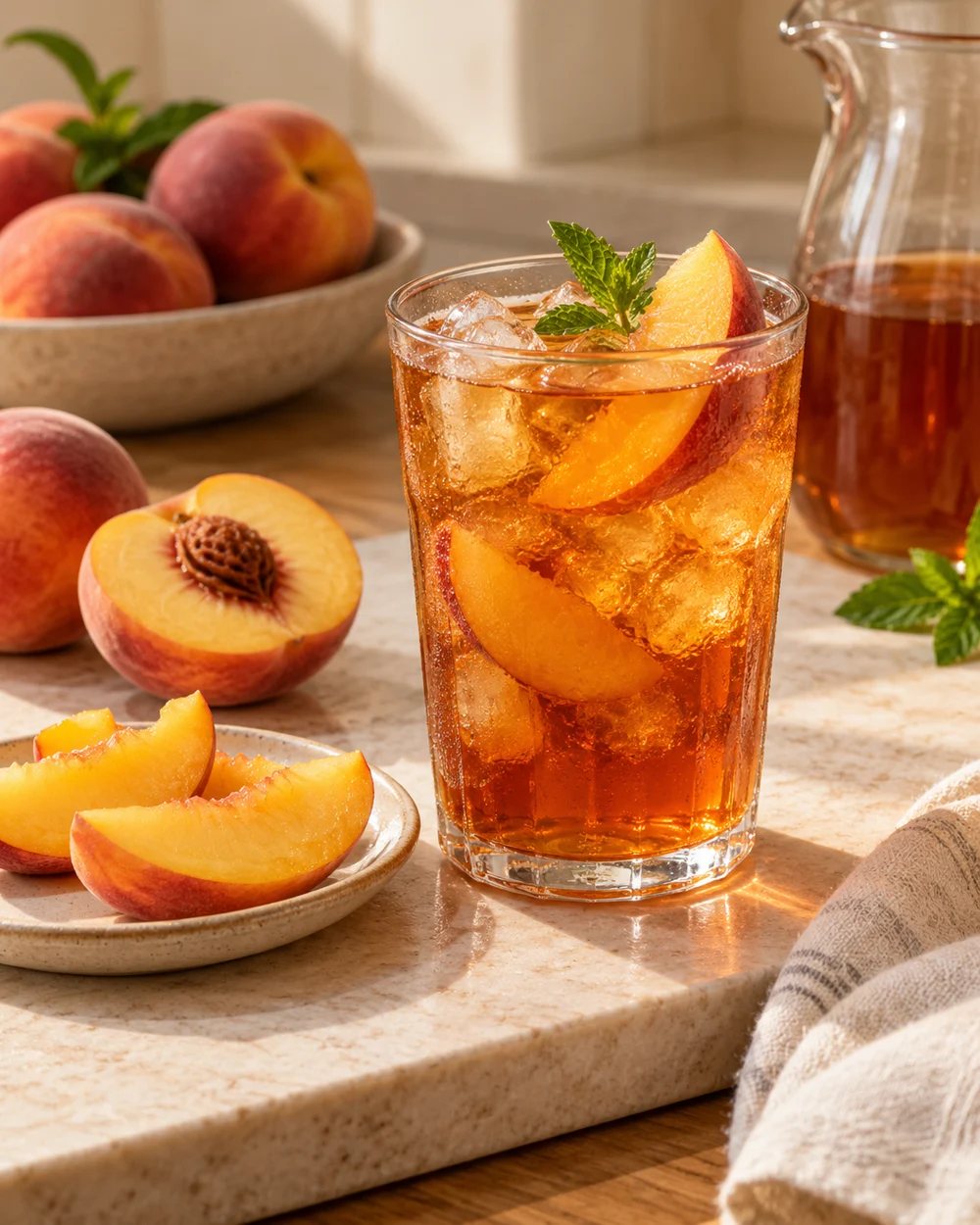
Brewing tea at the wrong temperature is the most common reason a cup turns bitter or flat before it even reaches the ice. Green tea scalded with boiling water tastes harsh; white tea steeped too briefly tastes like warm water. Each of the four styles covered here, green, black, white, and rooibos, has a different ideal temperature range and steep window. Getting those two variables right before chilling produces a clean, balanced base that holds up well over ice without needing heavy sweetening to mask off-notes.
Read the note ↓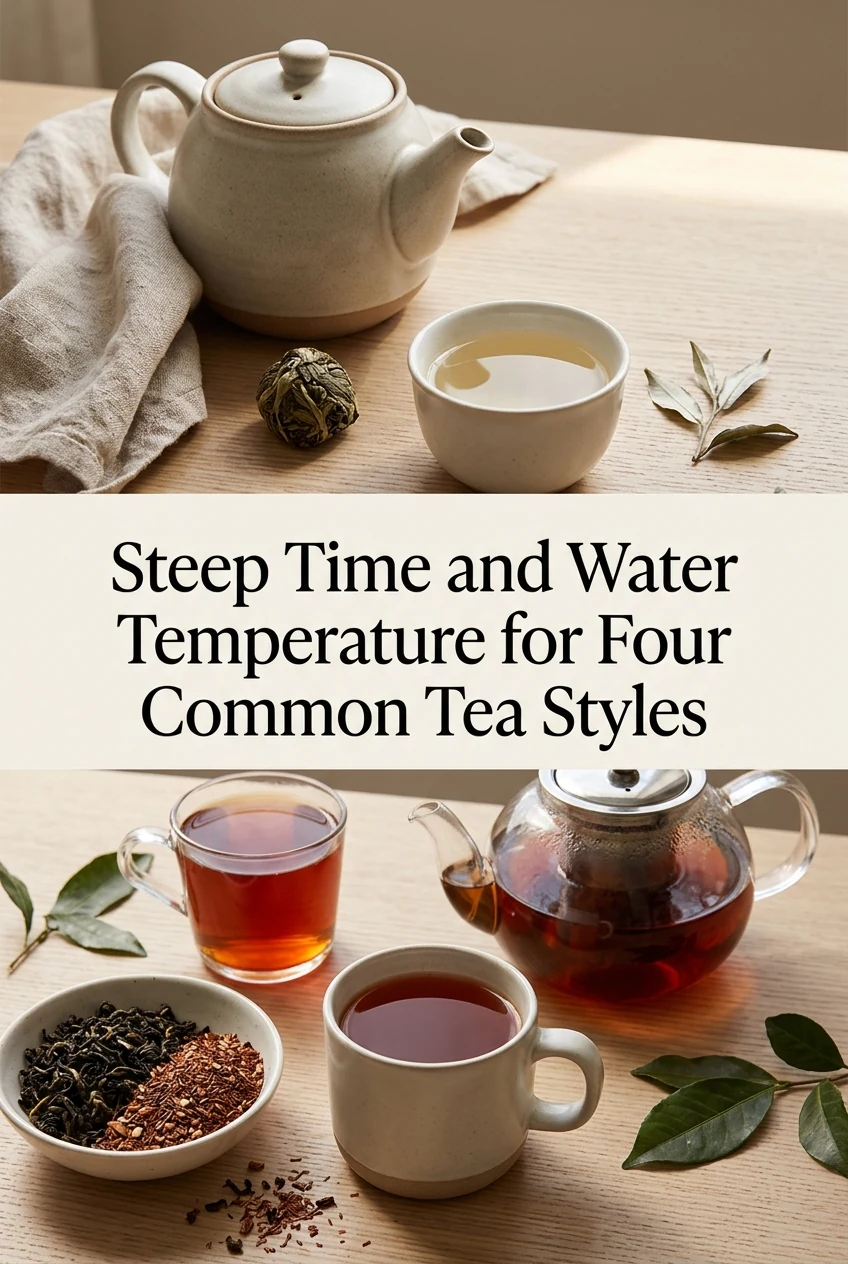
AI-generated editorial concept created for this article. The image is not a technical diagram or a tested result.
Green Tea: Lower Heat, Shorter Window
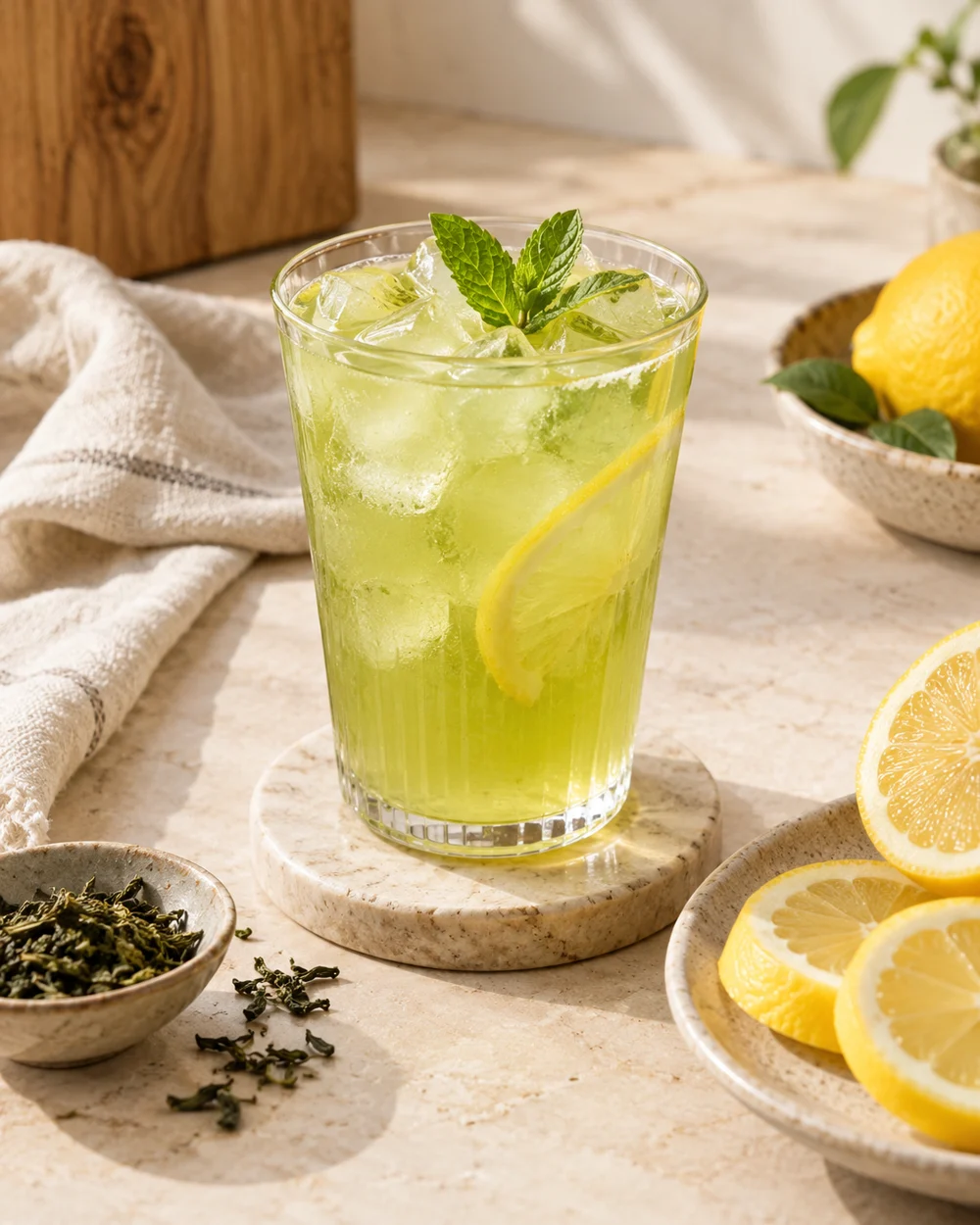
Green tea is sensitive to high temperatures. Water between 70 and 80 degrees Celsius generally produces a smooth, grassy cup without the bitterness that boiling water causes by over-extracting tannins. Steep loose-leaf green tea for 1.5 to 2 minutes, then remove the leaves promptly. Leaving green tea leaves in contact with water beyond 3 minutes at any temperature increases astringency noticeably. For iced tea, brew at double strength using the same temperature, then pour directly over ice to dilute to drinking concentration.
Black Tea: Full Boil, Defined Limit
Black tea is fully oxidized and handles boiling water well. Use water at or near 95 to 100 degrees Celsius and steep for 3 to 5 minutes depending on the leaf grade and your preferred strength. Fannings and dust in tea bags extract faster than whole leaves, so a bagged black tea may reach full strength in 3 minutes while a whole-leaf version needs closer to 5. Remove the leaves or bag at the end of the window. Over-steeping black tea past 6 minutes produces a noticeably tannic, drying result.
White Tea: Gentle Heat, Patient Steep
White tea is minimally processed and benefits from water between 75 and 85 degrees Celsius. Unlike green tea, white tea can handle a longer steep of 4 to 5 minutes without becoming bitter, because its lower tannin content makes it more forgiving. The resulting liquor is delicate and lightly sweet. For iced preparation, white tea holds up well when brewed at standard strength and chilled rather than double-strength, since its subtle flavor can be overwhelmed by heavy dilution from melting ice.
Rooibos: Boiling Water, Long Steep
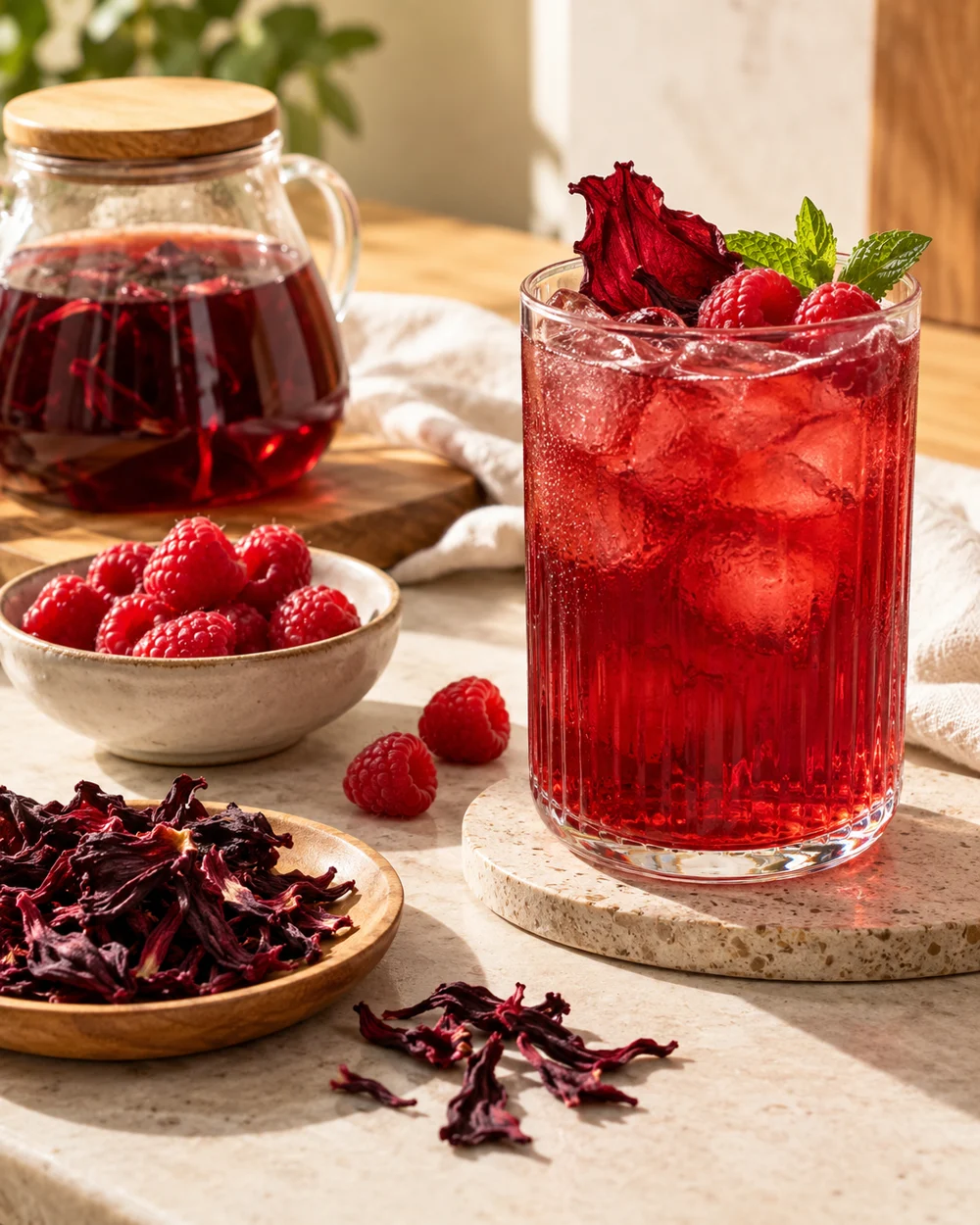
Rooibos is not a true tea but a South African herbal tisane made from the Aspalathus linearis plant. It is naturally caffeine-free and contains very low tannin levels compared to true tea, meaning it resists developing harsh bitterness even with extended steeping or high water temperatures. Use fully boiling water and steep for 5 to 7 minutes to extract its full reddish color and naturally sweet, slightly earthy flavor. Rooibos is one of the most forgiving options for iced tea because an extra minute of steeping does not ruin the batch.
Chilling and Serving Without Diluting Flavor
After steeping, remove all leaves or bags and allow the tea to cool at room temperature for no more than 30 minutes before transferring to a sealed container in the refrigerator. Refrigerate at 4 degrees Celsius or below and use within two days for best flavor. When serving refrigerated tea over ice, pre-chilling the glass or using ice made from tea helps avoid diluting the beverage. If you choose to pour hot tea directly over ice, brew it at double strength to account for ice melt so the finished drink maintains proper flavor concentration.
A little more
to know.
Can I cold-brew any of these four teas instead of using hot water?
Green, white, and black teas cold-brew well in the refrigerator using cold water for 6 to 12 hours. Rooibos also cold-brews but may need closer to 12 hours to develop full color and flavor. Always cold-brew in the refrigerator, not at room temperature.
Why does my iced green tea taste bitter even when I use the right temperature?
Bitterness after chilling often traces back to leaving the leaves in the water too long during hot brewing, not the chilling step itself. Check that you removed the leaves within your target window and that your water temperature was not higher than intended.
Original editorial guidance and recipe formulations, not independently kitchen-tested. Times are estimates and depend on equipment and product directions. Cooked bases need additional cooling and refrigeration before cold serving. Images are AI-generated illustrations; appearance and yield may vary. Check actual ingredient labels, allergens, and any certification you require. We do not certify products. Read our approach.
Save to Pinterest ↗ANOTHER IDEA FOR THE COUNTER