Small-Batch Pomegranate and Rose Syrup for Cold Drinks
A small-batch syrup made from pomegranate juice, sugar, and dried rose petals gives cold drinks a deep ruby colour and a layered flavour without leaving a large surplus. This article walks through one illustrative plan for simmering, straining, and portioning the syrup into a single labelled jar so that nothing sits unused for longer than you intend.
Read the note ↓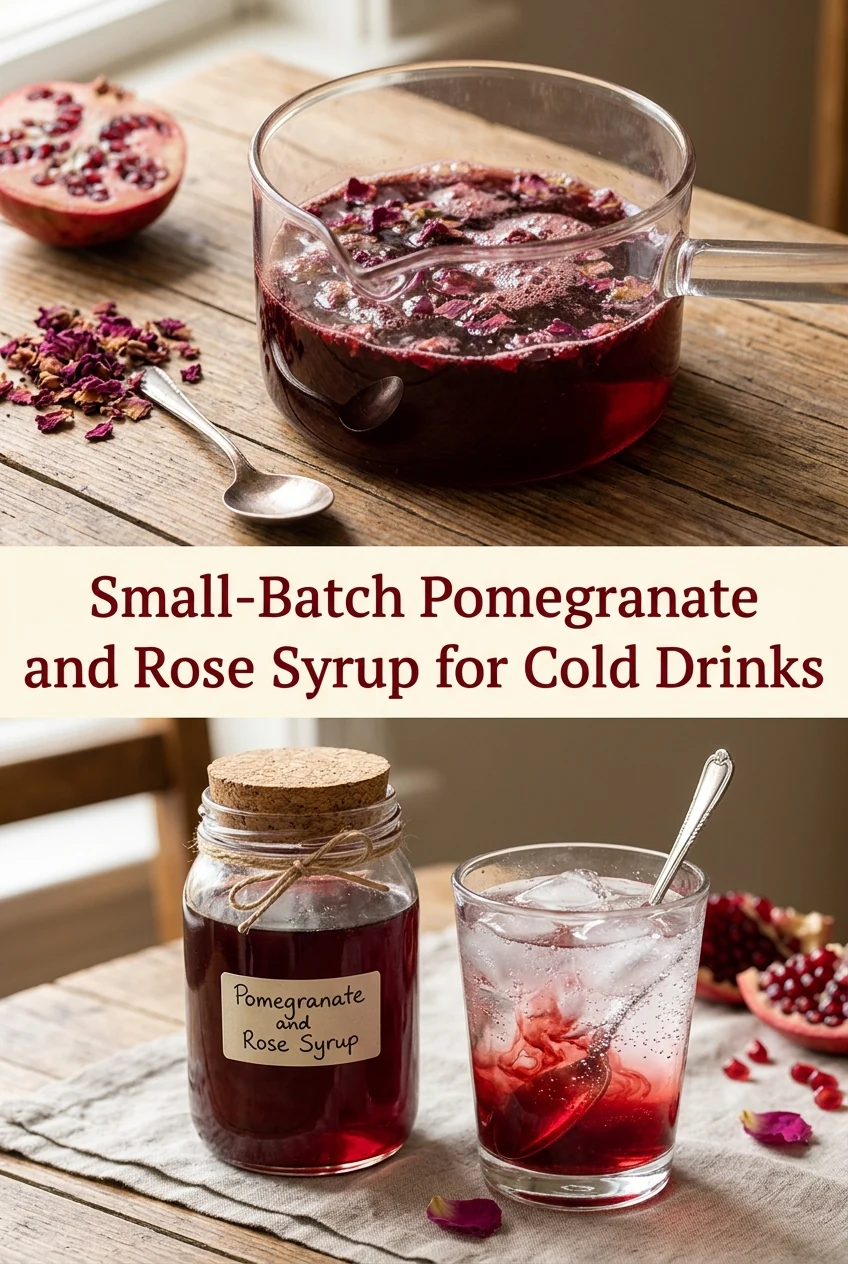
AI-generated editorial concept created for this article. The image is not a technical diagram or a tested result.
Choosing Your Ingredients
Start with 240 ml of pure pomegranate juice that lists no added sweeteners or concentrates on the label, so you control the sugar level yourself. Pair it with 200 g of white granulated sugar, which dissolves cleanly and lets the fruit colour show through. For the floral note, use food-grade dried rose petals sold specifically for culinary use; check that the packet carries no pesticide warnings and is intended for consumption rather than decoration. Avoid rose water or rose extract unless the label clearly states the product is alcohol-free, because many extracts use an alcohol carrier. Using dried petals instead keeps the process straightforward and the ingredient list short.
Equipment and Jar Preparation
You will need a small saucepan with a capacity of at least 500 ml, a fine-mesh sieve, a heatproof jug, a ladle or spoon, and one clean glass jar with a tight-fitting lid. A 250 ml jar suits this batch size well. Wash the jar and lid in hot soapy water, rinse thoroughly, and allow them to air-dry completely before use. Do not attempt homemade pressure sterilisation or chemical treatments. The syrup is intended for near-term refrigerator use, not shelf-stable preservation, so a thoroughly washed and dried jar is the appropriate preparation here.
Simmering the Syrup
Pour the 240 ml of pomegranate juice into the saucepan and add the 200 g of sugar. Stir over a medium-low heat until the sugar has fully dissolved, which you can confirm by running a clean spoon along the bottom of the pan and seeing no gritty residue. Once dissolved, add 5 g of dried rose petals, which is roughly one loosely packed tablespoon. Bring the mixture to a gentle simmer and keep it there for approximately eight to ten minutes, stirring occasionally. The liquid will reduce slightly and take on a slightly thicker consistency. Remove the pan from the heat and allow the petals to steep in the warm syrup for a further five minutes off the heat. This is an illustrative timing plan; your hob and pan will behave differently, so watch the texture rather than the clock alone.
Straining and Portioning
Set the fine-mesh sieve over the heatproof jug and pour the syrup through it slowly, pressing the spent petals gently with the back of a spoon to extract the remaining liquid. Discard the petals. Allow the strained syrup to cool in the jug for around fifteen minutes before transferring it to the prepared jar. Pouring a very hot liquid directly into a cold glass jar risks cracking the glass, so a brief cooling period is sensible. Seal the jar with its lid and label it with the contents and the date you made it. Store it in the refrigerator and use it within a timeframe you are comfortable with given your refrigerator conditions; do not rely on an invented shelf life.
Using the Syrup in Cold Drinks
The finished syrup works well stirred into still or sparkling water, added to lemonade, or drizzled over crushed ice. As a starting point for a single drink, try one to two tablespoons of syrup in a 300 ml glass of chilled sparkling water, then adjust to your preferred sweetness. The deep colour disperses quickly in clear liquids, making the drink visually striking without any additional colouring. Because the batch yields roughly 200 to 220 ml of finished syrup after reduction and straining, a 250 ml jar accommodates it comfortably with a small headspace. That volume covers approximately ten to fifteen single-drink servings at the one-tablespoon measure, giving you a useful run of drinks from one small cooking session.
A little more
to know.
Can I use bottled pomegranate juice from a supermarket?
Yes, provided the label shows 100 percent pomegranate juice with no added sugar or sweeteners. Blended juice drinks or sweetened juice mixtures will alter the sweetness balance and the final colour, so check the ingredient list before buying.
What if my syrup looks thinner than expected after cooling?
Syrup thickens noticeably as it cools, so allow it to reach room temperature in the jug before deciding whether it needs further reduction. If it still seems very thin once cool, you can return it to the saucepan and simmer it gently for a few more minutes, then strain again into the clean jar. This is an adjustment step, not a correction for a fixed error, since pan size, heat level, and juice composition all influence the outcome.
Original editorial guidance and recipe formulations, not independently kitchen-tested. Times are estimates and depend on equipment and product directions. Cooked bases need additional cooling and refrigeration before cold serving. Images are AI-generated illustrations; appearance and yield may vary. Check actual ingredient labels, allergens, and any certification you require. We do not certify products. Read our approach.
Save to Pinterest ↗ANOTHER IDEA FOR THE COUNTER