Small-Batch Peach and Ginger Syrup for Cold Drinks
Fresh peaches bruise easily and their blush colour can fade fast when heat is applied carelessly. Pairing them with raw ginger adds a clean, lively warmth, but the two ingredients need a short, gentle simmer rather than a long boil if you want the syrup to stay golden rather than turning muddy brown. This article walks through one illustrative small-batch plan, from slicing fruit to sealing a labelled jar, so you can follow the logic and adapt quantities to whatever peaches you have on hand.
Read the note ↓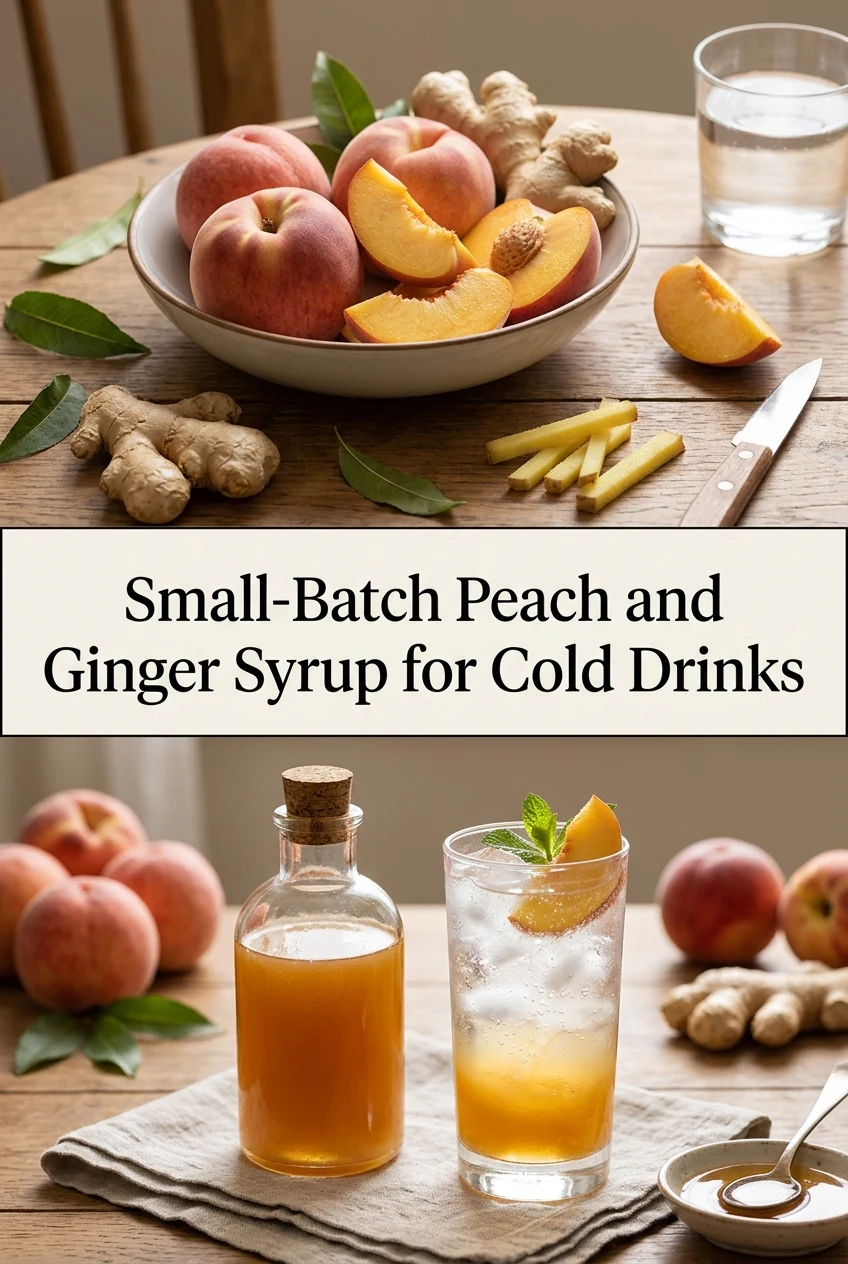
AI-generated editorial concept created for this article. The image is not a technical diagram or a tested result.
Choosing and Preparing Your Fruit and Ginger
Select ripe but firm yellow peaches, roughly 400 g whole weight for this worked example. Ripe fruit releases juice readily, which means less added water is needed and the colour stays truer. Wash the peaches, halve them, remove the stones, and cut each half into rough chunks. There is no need to peel them at this stage because the skins will be strained out later and they contribute colour during simmering. For ginger, a 30 g piece of fresh root gives a noticeable but not overpowering warmth at this fruit quantity. Peel the ginger and slice it into thin coins rather than grating it, which makes straining cleaner and avoids fine fibres passing through the sieve.
Building the Syrup Base
Combine the peach chunks, ginger coins, 150 g white granulated sugar, and 180 ml cold water in a small, heavy-based saucepan. The ratio of roughly equal parts sugar to expressed fruit juice is a useful starting point for a pourable consistency once cooled, though the exact result will vary with how juicy your peaches are. Stir once to distribute the sugar, then place the pan over medium-low heat. Allow the mixture to come to a gentle simmer, stirring occasionally. Once small bubbles appear steadily around the edges, reduce the heat slightly and hold that gentle simmer for around twelve to fifteen minutes. The peach pieces should soften completely and the liquid should take on a warm amber-gold tone. Avoid a rolling boil, which can push the colour toward brown and drive off the fresh fruit aroma.
Straining for a Clear, Pourable Result
Set a fine-mesh sieve over a heatproof jug or bowl. Pour the hot mixture through the sieve in one steady motion, then use the back of a spoon to press the softened solids gently, coaxing out the remaining syrup without forcing pulp through the mesh. Discard the spent peach and ginger solids. The liquid in the jug at this point will look slightly cloudy while hot, which is normal. Allow it to sit undisturbed for five minutes and it will clarify somewhat as it begins to cool. If you prefer a cleaner result, you can pass the liquid through the sieve a second time lined with a piece of clean muslin, though this step is optional and will slow the process.
Portioning Into a Labelled Jar
For this example batch, the expected yield after straining is roughly 220 to 260 ml of syrup, which fits comfortably into a single 300 ml glass jar with a tight-fitting lid. Wash the jar in hot soapy water, rinse it thoroughly, and allow it to air-dry completely before use. Pour the syrup into the jar only once it has cooled to room temperature, as sealing hot liquid into a closed jar can affect the lid seal and create condensation inside. Affix a label noting the contents and the date you made it. Store the sealed jar in the refrigerator. Use the syrup within a timeframe you are comfortable with based on your own kitchen conditions, checking for any change in smell or appearance before each use.
Using the Syrup in Cold Drinks
This syrup is designed to stir into cold drinks without needing to dissolve the way granulated sugar would. A starting point of one to two tablespoons stirred into a tall glass of still or sparkling cold water gives a lightly sweetened, fruit-forward drink. It also works well mixed into chilled black tea or blended into a cold lassi-style drink made with plain yoghurt and a little cold water. Because the ginger is present as a background note rather than a dominant flavour, the syrup pairs with mild bases without overwhelming them. Adjust the amount to your own preference, as sweetness perception varies between individuals and drink sizes.
A little more
to know.
Can I use frozen peaches instead of fresh?
Frozen peaches can work in this plan as an illustrative alternative. Thaw them first and drain away any excess liquid before adding them to the pan, otherwise the extra water may thin the syrup more than intended. Expect the colour to be slightly paler than with fresh ripe fruit, since freezing can affect pigment in the skin.
Why does the syrup look cloudy when it is hot but clearer once cooled?
Fine particles from the fruit remain suspended in the hot liquid and settle or disperse as the temperature drops, which is a normal behaviour with fruit-based syrups strained through a standard fine-mesh sieve. A second pass through muslin while the syrup is still warm, before it goes into the jar, can reduce this cloudiness further if a very clear result matters to you.
Original editorial guidance and recipe formulations, not independently kitchen-tested. Times are estimates and depend on equipment and product directions. Cooked bases need additional cooling and refrigeration before cold serving. Images are AI-generated illustrations; appearance and yield may vary. Check actual ingredient labels, allergens, and any certification you require. We do not certify products. Read our approach.
Save to Pinterest ↗ANOTHER IDEA FOR THE COUNTER