Set Up a Shared Ingredient Area When Two People Are Preparing Different Warm Drinks at Once
When two people work at the same stovetop simultaneously, reaching across a hot burner for a shared spice jar or milk jug creates real risk and causes portion confusion. Establishing a clearly divided neutral zone between the two work positions before either burner is switched on keeps ingredients accessible, prevents cross-contamination of flavours, and lets both drinks progress at the same pace without interruption or negotiation mid-pour.
Read the note ↓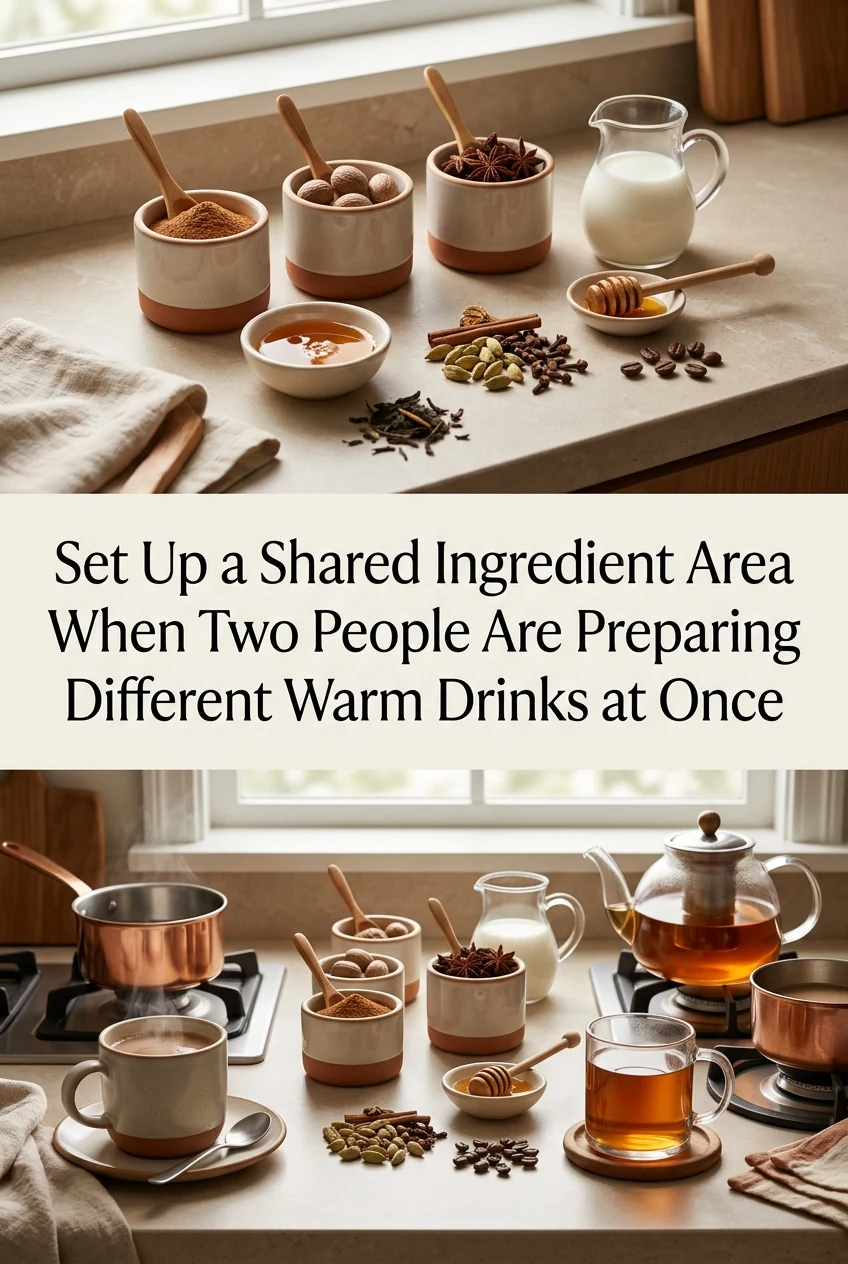
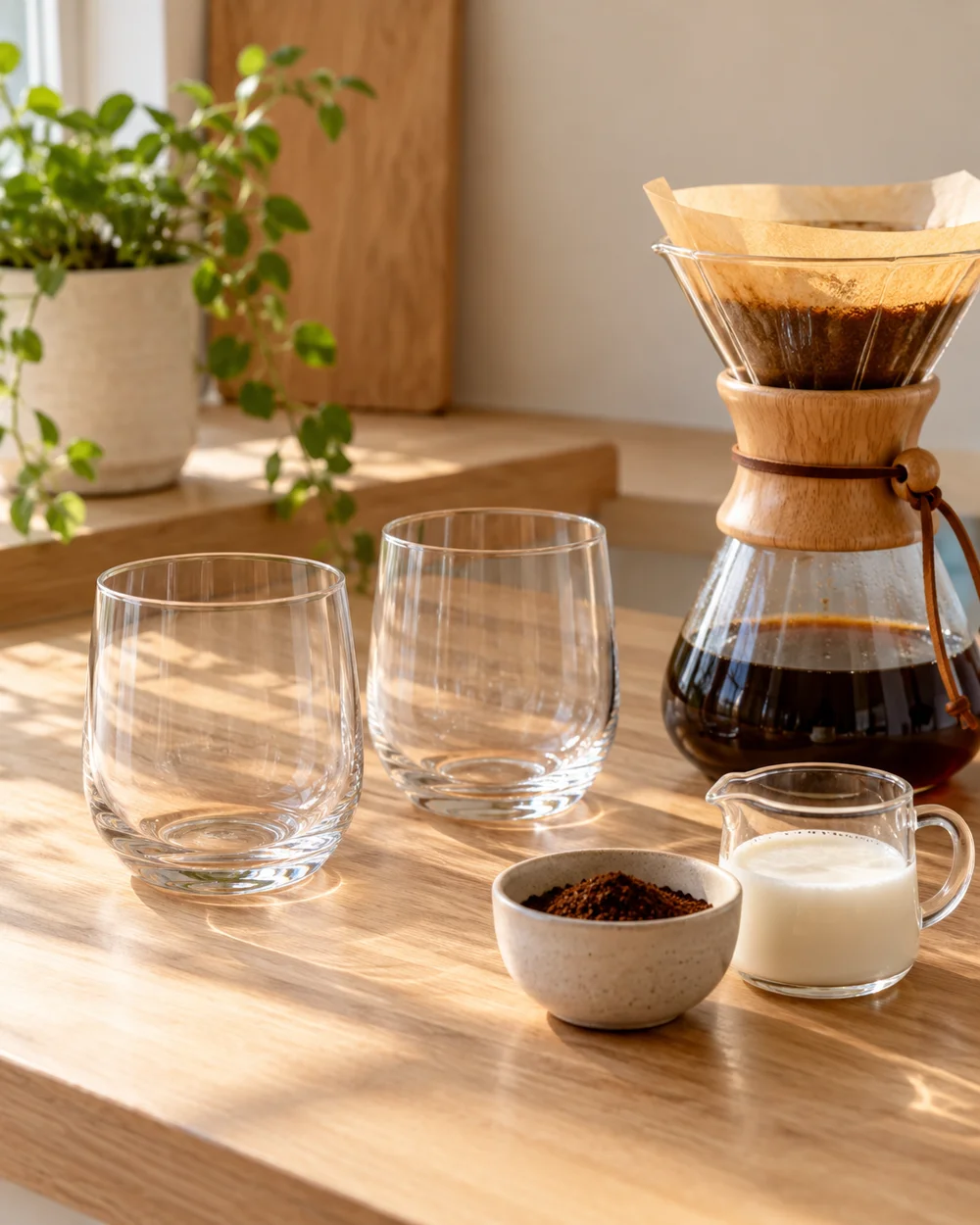
AI-generated editorial concept created for this article. The image is not a technical diagram or a tested result.
Choose a Neutral Zone Before Lighting Any Burner
Identify a flat, heat-safe surface between the two cooking positions, such as a wooden board or a folded dry towel placed on the counter beside the stove. This zone should sit at least 20 centimetres from any active burner edge. Neither person owns this strip; it holds only items both people need. Agree on its boundaries verbally before starting so neither cook reaches across the other's active pot or pan during the preparation.
Pre-Measure Each Shared Ingredient Into Separate Small Bowls
If both drinks require ground cinnamon but in different quantities, spoon each portion into its own small bowl and label it with a piece of tape or simply place it on the correct side of the neutral zone. For example, one drink might need a quarter teaspoon and the other half a teaspoon. Pre-measuring eliminates the moment where one person holds the spice jar over a hot pan while the other waits. This step takes under two minutes and prevents almost all mid-cook confusion.
Position Milk Jugs and Ladles on Assigned Sides
Each person should have their own pouring vessel, even if both are using the same type of milk. Splitting 500 millilitres of milk into two separate jugs before starting means neither cook needs to pass a heavy container across a lit burner. Ladles and stirring spoons should rest on a spoon rest or small plate on each person's own side, not in the shared zone, which should remain clear for ingredient bowls only.
Sequence Burner Use When the Stove Has Only One Suitable Ring
If only one burner suits both tasks, agree on a simple sequence before starting. One person heats their liquid first to a gentle simmer, moves the pan to a cool back burner to rest, then the second person uses the active ring. This avoids simultaneous crowding. A drink held on a back burner with the heat off will stay warm for several minutes in a covered pan, which is usually enough time for the second drink to finish.
Clear the Shared Zone Immediately After Each Transfer
Once an ingredient has been added to a pot, remove its bowl from the shared zone straight away. A cluttered neutral strip quickly becomes a source of error, particularly when both people are pouring at similar times. Returning empty bowls to a sink or side tray as you go keeps the zone functional throughout the whole session and makes it easy to spot at a glance which shared ingredients have already been used and which are still waiting.
A little more
to know.
What if the counter space beside the stove is too narrow for a proper neutral zone?
Use a small wheeled trolley or a stable stool placed directly beside the stove as the shared surface. It does not need to be large, only stable, heat-safe, and reachable by both people without leaning across a burner.
How do we handle a shared ingredient that cannot be pre-measured, like a honey jar?
Pass the jar hand to hand rather than setting it in the shared zone mid-cook. One person measures their portion, hands the jar directly to the other, and both return to their own side before continuing. Never set an open jar near an active flame.
Original editorial guidance and recipe formulations, not independently kitchen-tested. Times are estimates and depend on equipment and product directions. Cooked bases need additional cooling and refrigeration before cold serving. Images are AI-generated illustrations; appearance and yield may vary. Check actual ingredient labels, allergens, and any certification you require. We do not certify products. Read our approach.
Save to Pinterest ↗ANOTHER IDEA FOR THE COUNTER