Set Up a Rinse Bowl for Citrus Garnish Tools So They Stay Clean Between Drinks
When you move from zesting a lemon to zesting a lime without rinsing the tool, residual oil and pulp from the first fruit cling to the blade and carry into the second. A small bowl of clean water placed beside the cutting board solves this with almost no extra effort. This guide explains how to position the bowl, when to rinse, and how to keep the water useful across a short garnish session rather than replacing it constantly.
Read the note ↓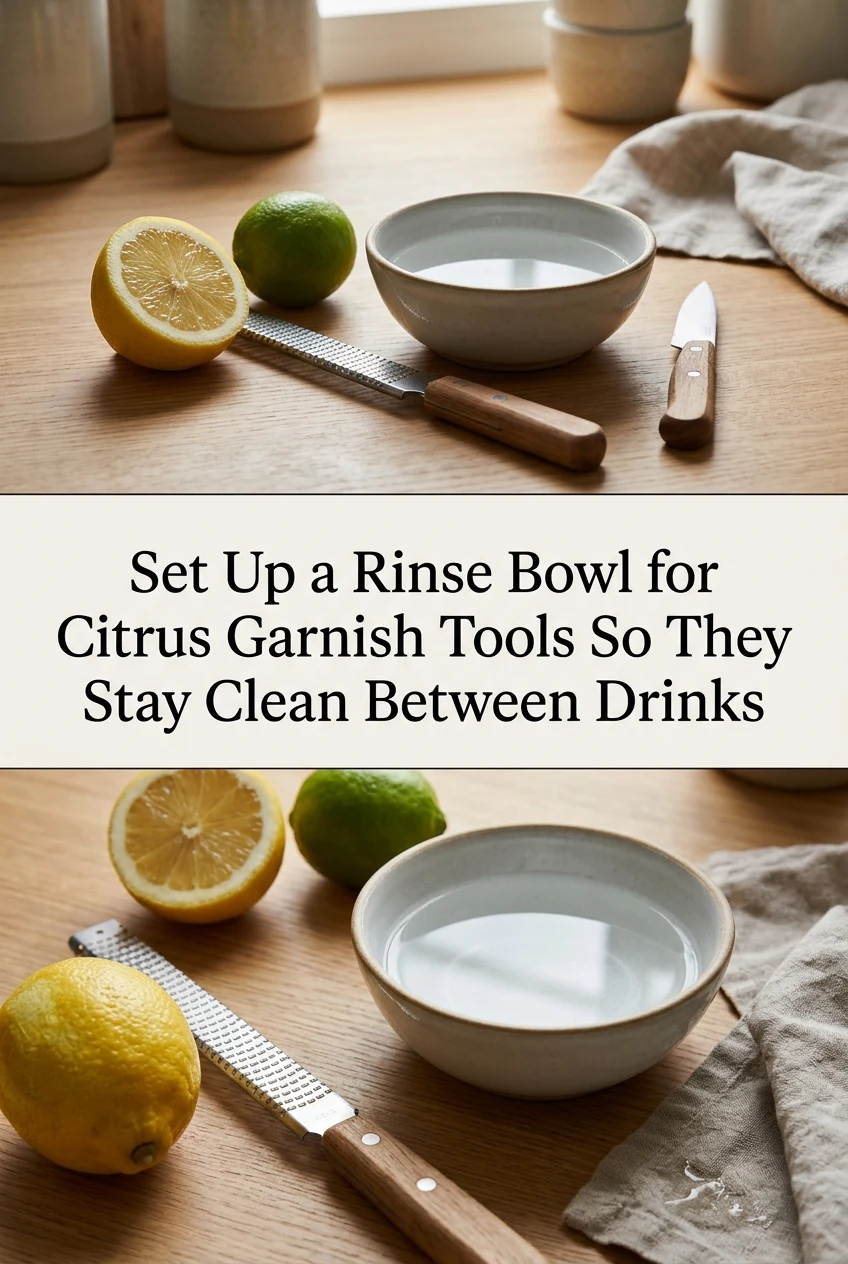
AI-generated editorial concept created for this article. The image is not a technical diagram or a tested result.
Choose the Right Bowl Size and Position
A bowl holding roughly 300 to 400 millilitres of cold tap water is large enough to submerge the head of a handheld zester or a Y-peeler without splashing. Place it on the dominant side of the cutting board so your working hand never crosses over the board mid-motion. A ceramic ramekin is too shallow; a standard cereal bowl works well. Position it before you cut any fruit so the habit is already in place when your hands are sticky.
When to Rinse and How Briefly
Rinse the tool immediately after finishing each fruit, not after every single stroke. Dip the blade into the water, swirl it two or three times against the bowl wall, then tap it lightly on the bowl rim to shed excess water before moving to the next fruit. This takes under five seconds. Skipping the tap leaves a water film on the blade that dilutes the essential oil you are about to collect from the next fruit's skin.
Recognising When the Water Needs Changing
The water becomes less effective once it turns visibly cloudy with suspended pulp or develops a strong mixed-citrus smell, which typically happens after zesting three or four whole fruits in sequence. At that point, empty the bowl, rinse it quickly, and refill with fresh cold water. For a session covering only two fruit types, one fill is usually sufficient. Keeping a small jug nearby makes refilling faster than walking to the sink.
Handling a Peeler Versus a Microplane Zester
A Y-peeler has a wide blade with fewer crevices, so a brief dip and wipe on a clean cloth removes residue reliably. A microplane or box zester has many fine teeth that trap pulp more stubbornly. For the zester, use a soft pastry brush kept in the bowl to sweep the teeth from the back of the blade outward while it is submerged. This prevents pulp from drying in the teeth between fruits during a longer garnish session.
Clearing the Station After the Last Drink
Once garnish prep is finished, empty the bowl promptly, wash the tools with dish soap and warm water, and dry them before storing. Citrus oil left on metal tools can cause discolouration over time. The cutting board should be rinsed and wiped down before residue dries. Keeping the rinse bowl as a dedicated step in your teardown routine, rather than an afterthought, means the station is ready faster for the next session.
A little more
to know.
Can I use the same rinse water for both the tool and my hands between fruits?
Keep them separate. Hand oils and soap residue from a quick rinse will contaminate the tool water and leave an off flavour on the next fruit's zest. Use a second small bowl or the sink for hands.
Does the water temperature matter for rinsing the zester?
Cold water is preferable because warm water softens citrus peel waxes and oils, causing them to smear across the blade and leave a floating film that clings to the tool when lifted out. Cold water keeps the oils firm so pulp rinses away cleanly.
Original editorial guidance and recipe formulations, not independently kitchen-tested. Times are estimates and depend on equipment and product directions. Cooked bases need additional cooling and refrigeration before cold serving. Images are AI-generated illustrations; appearance and yield may vary. Check actual ingredient labels, allergens, and any certification you require. We do not certify products. Read our approach.
Save to Pinterest ↗ANOTHER IDEA FOR THE COUNTER