Set a Timer When Steeping Black Tea for Iced Service to Avoid Bitterness
Black tea steeped beyond its recommended window releases tannins that become noticeably more bitter once the liquid is chilled. The problem is more pronounced in iced service than in hot service because chilling sharpens astringent flavours rather than softening them. A kitchen timer costs nothing to use and removes the guesswork entirely. This guide covers how to time the steep correctly, cool the tea safely, and hold it for service without losing quality.
Read the note ↓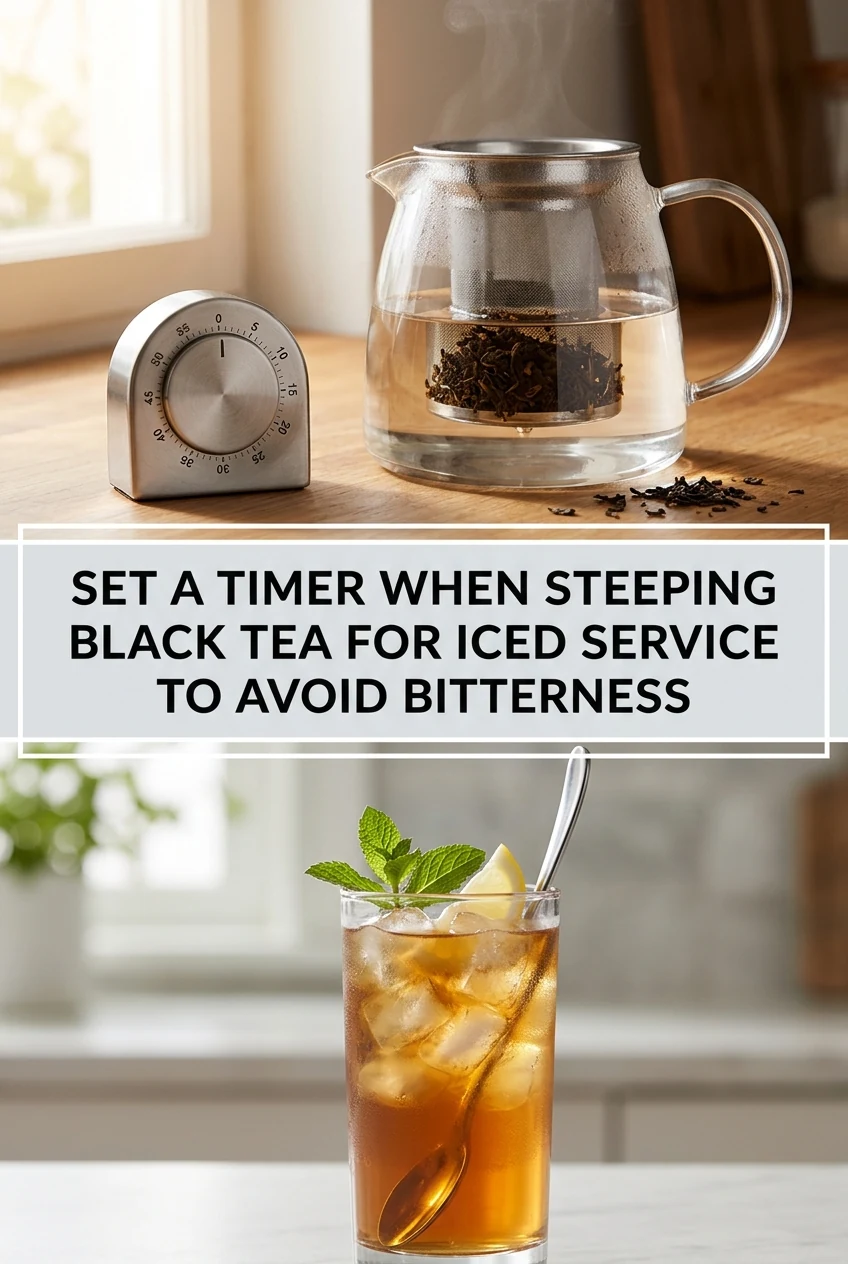
AI-generated editorial concept created for this article. The image is not a technical diagram or a tested result.
Check the Producer's Steep Time Before You Begin
Steep time varies between black tea varieties and between producers of the same variety. A robust Assam may be recommended at three to four minutes while a lighter Darjeeling first flush may be suggested at two to three minutes. These are the producer's guidelines for their specific product, not universal rules. Check the packaging each time you open a new tea, and use that figure as your starting point rather than a remembered number from a different brand.
Set the Timer the Moment Water Meets Leaves
Start the timer as soon as hot water contacts the tea leaves or bag, not when you remember to check it. A two-minute distraction during a busy café setup is enough to push a three-minute tea to five minutes. Use a dedicated kitchen timer or the timer function on a phone kept nearby. For a batch of one litre, use the same steep time as a single cup; volume does not extend the recommended steep window for most black teas.
Remove Leaves or Bags Promptly at the Signal
When the timer sounds, remove the infuser, bags, or strain the loose leaf immediately. Do not press or squeeze tea bags against the side of the vessel, as this releases additional bitter compounds into the liquid. If you are using a teapot with a built-in strainer, pour the tea into a separate heat-safe jug as soon as the time is up to stop extraction. Leaving leaves in contact with hot liquid continues the steep even off the heat.
Cool the Tea Before Adding Ice
Allow the strained tea to cool to room temperature before adding ice or refrigerating it. Pouring hot tea directly over ice dilutes the drink significantly and can crack glass vessels. Place the jug in a shallow basin of cold water to speed cooling if needed. Once cooled to room temperature, transfer to the refrigerator and bring to 4 degrees Celsius or below. Do not leave brewed tea at room temperature for more than two hours before refrigerating.
Hold and Serve Within a Practical Window
Properly steeped and chilled black tea holds its flavour well for up to 24 hours in a sealed container in the refrigerator. Beyond that, the flavour tends to flatten rather than become more bitter, but quality declines. For iced service, pour over fresh ice at the point of serving rather than storing tea with ice already added, as melting ice continues to dilute the drink during storage. Label the container with the time it was made.
A little more
to know.
Does using more tea leaves to make a stronger concentrate change the steep time?
Increasing leaf quantity to make a concentrate for dilution does not automatically extend the steep time. Over-steeping a concentrate amplifies bitterness proportionally. Keep to the producer's time and adjust leaf quantity carefully, tasting before diluting.
Can already-bitter iced tea be corrected after brewing?
Bitterness from over-extraction cannot be fully removed. A small amount of sugar can soften the perception of bitterness, but it does not eliminate the underlying tannin flavour. Diluting with additional water reduces intensity but also reduces overall tea character.
Original editorial guidance and recipe formulations, not independently kitchen-tested. Times are estimates and depend on equipment and product directions. Cooked bases need additional cooling and refrigeration before cold serving. Images are AI-generated illustrations; appearance and yield may vary. Check actual ingredient labels, allergens, and any certification you require. We do not certify products. Read our approach.
Save to Pinterest ↗ANOTHER IDEA FOR THE COUNTER