Scoop or Weigh: Comparing Volume and Mass Measures for Matcha in Baking
Matcha powder is expensive, strongly flavoured and visually sensitive, so a small measurement error changes both the colour and taste of a baked item noticeably. Home bakers scaling a small café-style biscuit recipe face a practical choice between a teaspoon and a kitchen scale. This guide explains where volume and gram measures diverge for matcha specifically, and how to decide which method serves your recipe and your equipment without guessing.
Read the note ↓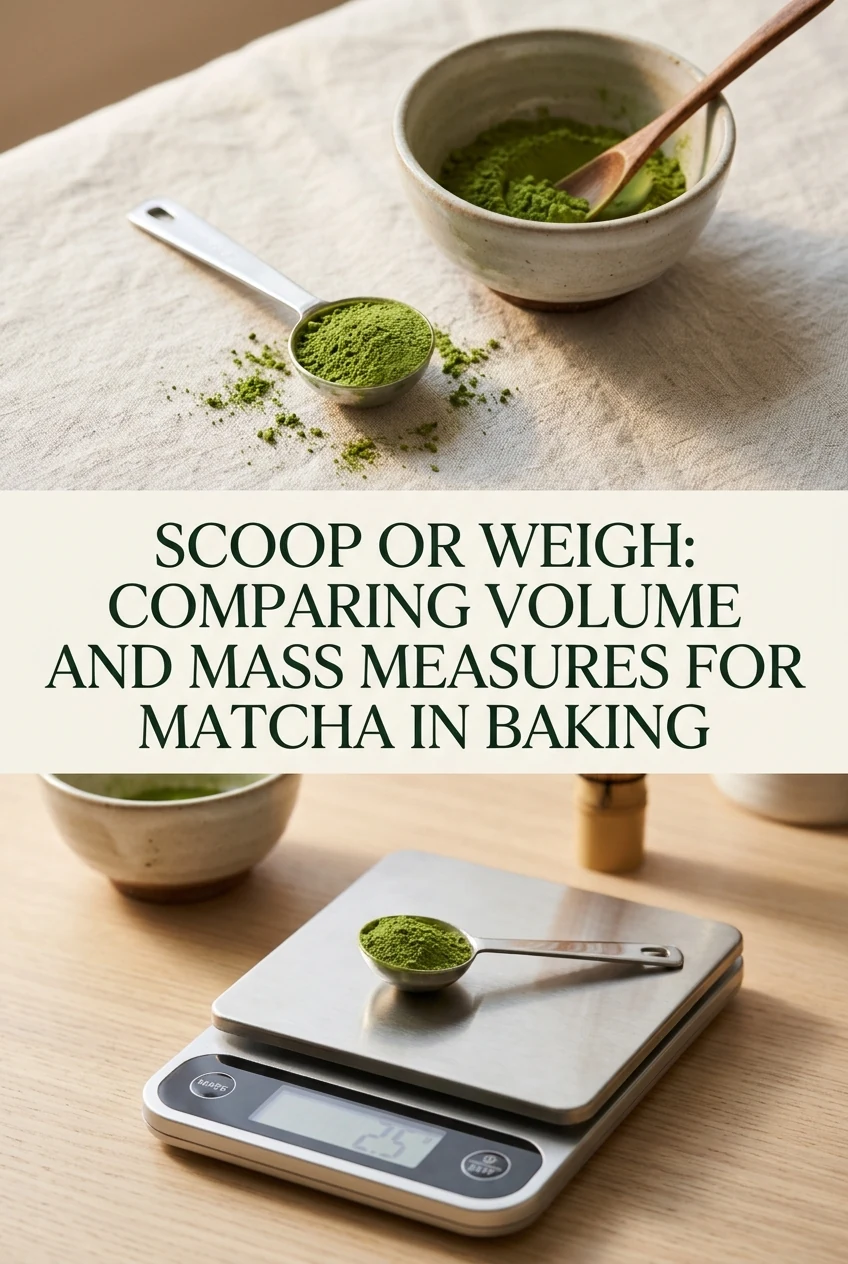
AI-generated editorial concept created for this article. The image is not a technical diagram or a tested result.
Why Matcha Density Varies
Matcha is a very fine powder that compresses easily. A teaspoon scooped directly from a tin and levelled can hold anywhere from about 2 grams to 3.5 grams depending on how settled the powder is and how firmly the spoon was pressed in. That range represents a difference of up to 75 percent between the lightest and heaviest scoop. In a recipe calling for 6 grams of matcha (nominally three level teaspoons), scooping tightly packed spoons can deliver over 10 grams in total—nearly double the intended amount—producing a noticeably bitter and very dark biscuit.
When a Teaspoon Is Acceptable
Volume measures are workable when a recipe is written specifically in teaspoons, the batch is large enough that small errors average out, and the baker is not trying to reproduce a precise colour or flavour. For a batch of 24 or more biscuits, a gram or two of variance in total matcha rarely ruins the result. If you choose to scoop, spoon the matcha loosely into the measuring spoon rather than scooping directly from the tin, then level it with a straight edge to reduce compression.
When a Scale Is Necessary
A kitchen scale becomes necessary when a recipe states grams, when you are scaling a small batch of 8 to 12 biscuits where each gram of matcha is proportionally significant, or when you are trying to match a specific green colour for a café display. A scale that reads to 0.1-gram increments is ideal for matcha quantities under 5 grams. Place a small piece of baking paper on the scale pan, tare to zero, and spoon matcha onto the paper until the target weight appears.
A Worked Example With a Small Biscuit Recipe
Consider a recipe for 10 matcha shortbread rounds calling for 4 grams of matcha, 80 grams of plain flour and 50 grams of unsalted butter. If you scoop rather than weigh and add 6 grams of matcha instead of 4, the matcha-to-flour ratio shifts from 1 to 20 to 1 to 13. The biscuits will taste more bitter and bake darker. This is an illustrative example showing how ratio shift works, not a verified baking result, but the arithmetic demonstrates why precision matters at small batch sizes.
Sifting Matcha Before Adding It to Dry Ingredients
Regardless of whether you weigh or scoop, matcha should be sifted into the dry ingredient bowl rather than added directly. Matcha clumps in the same way cocoa does, and unmixed pockets create dark green streaks in the finished biscuit. Use a fine-mesh sieve and tap it gently over the flour. If you weighed the matcha onto baking paper, tip the paper into the sieve to avoid losing any powder on the scale pan. Whisk the sifted dry ingredients together before adding wet ingredients.
A little more
to know.
Does the grade of matcha affect how it should be measured for baking?
Different matcha grades and milling styles vary in particle size and aeration, meaning a volume scoop of one tin rarely matches the weight of another. Weighing eliminates this variation entirely, ensuring consistent flavour and colour regardless of which grade you bake with.
Can I mix matcha with a small amount of liquid before adding it to batter?
For pourable cake or muffin batters, blending matcha into a small amount of warm recipe liquid helps disperse it smoothly. For biscuit doughs, however, avoid adding extra water, as unbudgeted moisture encourages gluten formation and changes dough spread; sifting the matcha directly with the dry flour is the standard method.
Original editorial guidance and recipe formulations, not independently kitchen-tested. Times are estimates and depend on equipment and product directions. Cooked bases need additional cooling and refrigeration before cold serving. Images are AI-generated illustrations; appearance and yield may vary. Check actual ingredient labels, allergens, and any certification you require. We do not certify products. Read our approach.
Save to Pinterest ↗ANOTHER IDEA FOR THE COUNTER