Scoop or Weigh: Comparing Volume and Mass Measures for Dried Fruit in Baking
A cup of dried cranberries scooped loosely and a cup packed firmly can differ by 30 g or more, which shifts the moisture balance and sweetness of a small café baking batch noticeably. Understanding why volume measures vary for dried fruit, and when a kitchen scale removes that uncertainty, helps you get more consistent results without changing your recipe. This guide compares both approaches honestly and shows where each one is reliable.
Read the note ↓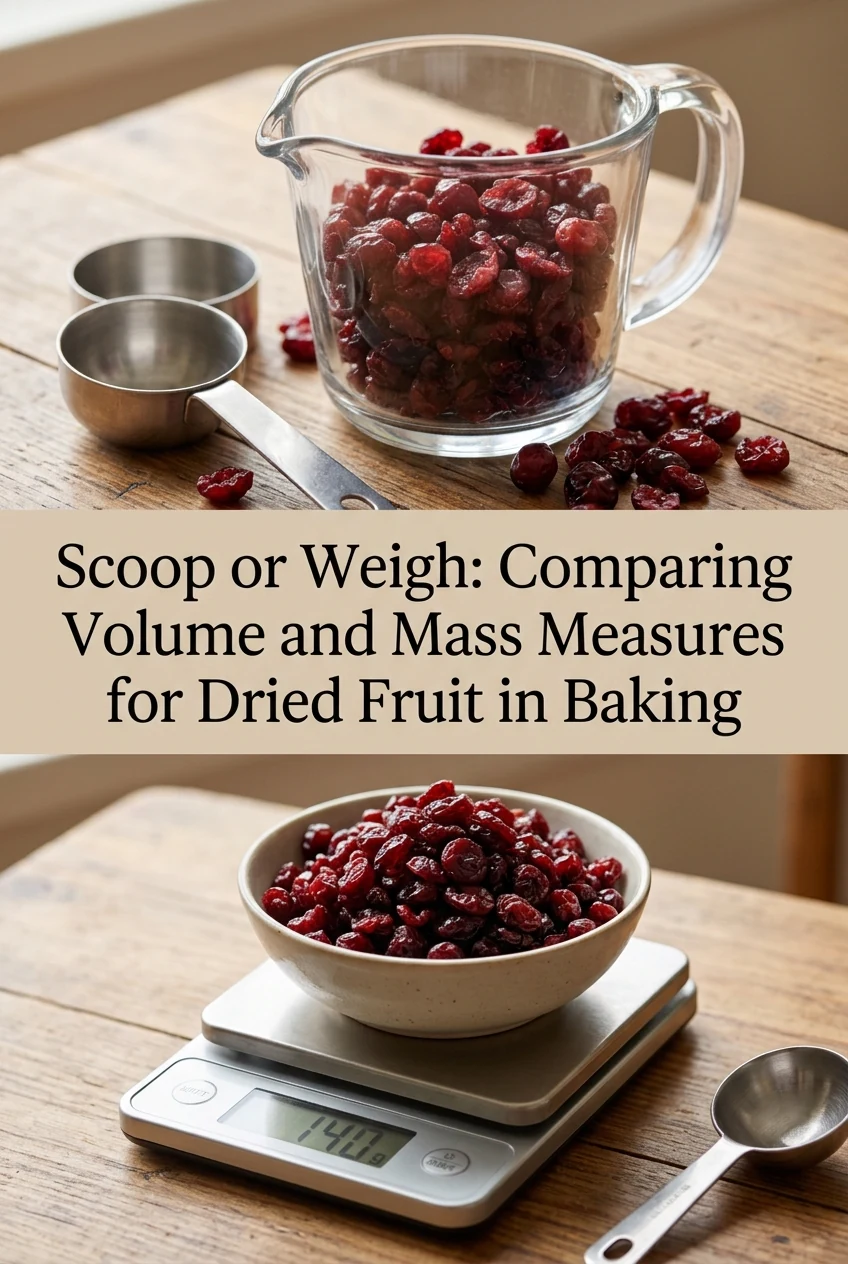
AI-generated editorial concept created for this article. The image is not a technical diagram or a tested result.
Why Dried Fruit Compresses Unpredictably
Dried fruit pieces are irregular in shape and vary in stickiness depending on residual moisture content and any added coating. Sultanas pour loosely and leave air gaps; dried apricot pieces, cut into chunks, stack and compress under their own weight. The same 240 ml measuring cup can hold anywhere from 120 g to 160 g of sultanas depending on how the scoop is filled and whether the cup is tapped on the counter. This range is wide enough to alter the texture of a small muffin batch.
A Worked Illustration of the Difference
Consider a recipe calling for one cup of dried cranberries in a batch of twelve small muffins. A loosely spooned cup might yield 110 g; a firmly packed cup might yield 145 g. That 35 g difference represents roughly a third of an additional portion of fruit spread across twelve muffins. The extra moisture and sugar from the additional fruit can make the muffins stickier in the centre and extend the bake time slightly. This is an illustrative example, not a verified result for every cranberry brand.
When Volume Measuring Is Acceptable
Volume measures are reasonable for dried fruit when the recipe is forgiving, the batch is large enough that small variations average out, and you use a consistent filling method every time. Spooning fruit into the cup rather than scooping directly from the bag reduces compression. Level the top with a straight edge. If you bake the same recipe repeatedly and always fill the cup the same way, your results will be consistent even if they differ from someone else following the same recipe.
When a Scale Gives Clearer Results
For small café batches of eight to twelve items, where each unit represents a larger fraction of the total, weighing dried fruit on a digital scale that reads to 1 g gives you a fixed starting point that does not depend on technique. Tare the bowl, add fruit until the display matches the target weight, and stop. This is especially useful for sticky dried fruits like dates or figs, which are almost impossible to measure consistently by volume because they clump against the cup walls.
Practical Setup for Switching Between Methods
If your recipe gives only a volume measure and you want to convert to weight, fill the cup using your usual method, then tip the contents onto the scale and record the weight. Do this three times and average the results. Use that average as your working weight for future batches. This takes under five minutes and gives you a personal reference that reflects your specific fruit brand and filling habit, which is more reliable than a generic conversion table from another source.
A little more
to know.
Does the type of scale matter for measuring dried fruit?
A scale reading to 1 g is sufficient for most small baking batches. Scales that only read to 5 g increments can introduce enough rounding error to matter when a recipe calls for less than 50 g of fruit total.
Should I chop large dried fruit before measuring by weight or volume?
Chop after weighing by mass, since chopping changes how pieces pack and makes volume measures even less reliable. If measuring by volume, chop first so the pieces fill the cup more predictably and you can level the top cleanly.
Original editorial guidance and recipe formulations, not independently kitchen-tested. Times are estimates and depend on equipment and product directions. Cooked bases need additional cooling and refrigeration before cold serving. Images are AI-generated illustrations; appearance and yield may vary. Check actual ingredient labels, allergens, and any certification you require. We do not certify products. Read our approach.
Save to Pinterest ↗ANOTHER IDEA FOR THE COUNTER