Rinse Fine Matcha Sieves Without Trapping Moisture
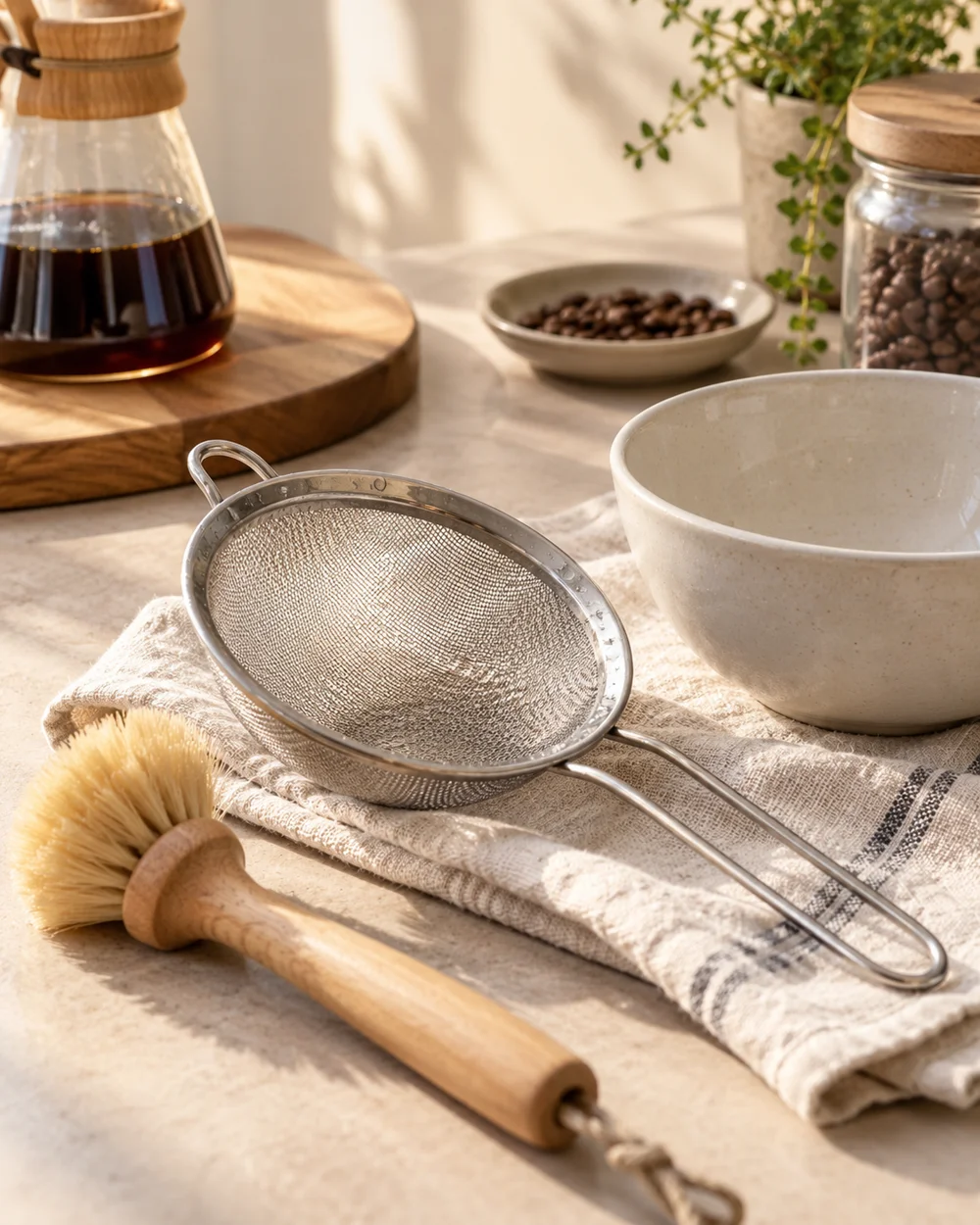
Matcha sieves utilize ultra-fine stainless-steel mesh designed to break electrostatic clumps in powdered green tea. Because these micro-apertures are exceptionally small, surface tension readily traps water droplets between individual wire strands during cleaning. If stored damp, trapped moisture causes localized wire oxidation, degrades solder joints, and causes fresh matcha powder to turn gummy and obstruct the weave during the next use. Establishing a dry-clearing habit paired with a reverse cold-water rinse and deliberate mechanical moisture expulsion protects equipment longevity and preserves smooth tea sifting.
Read the note ↓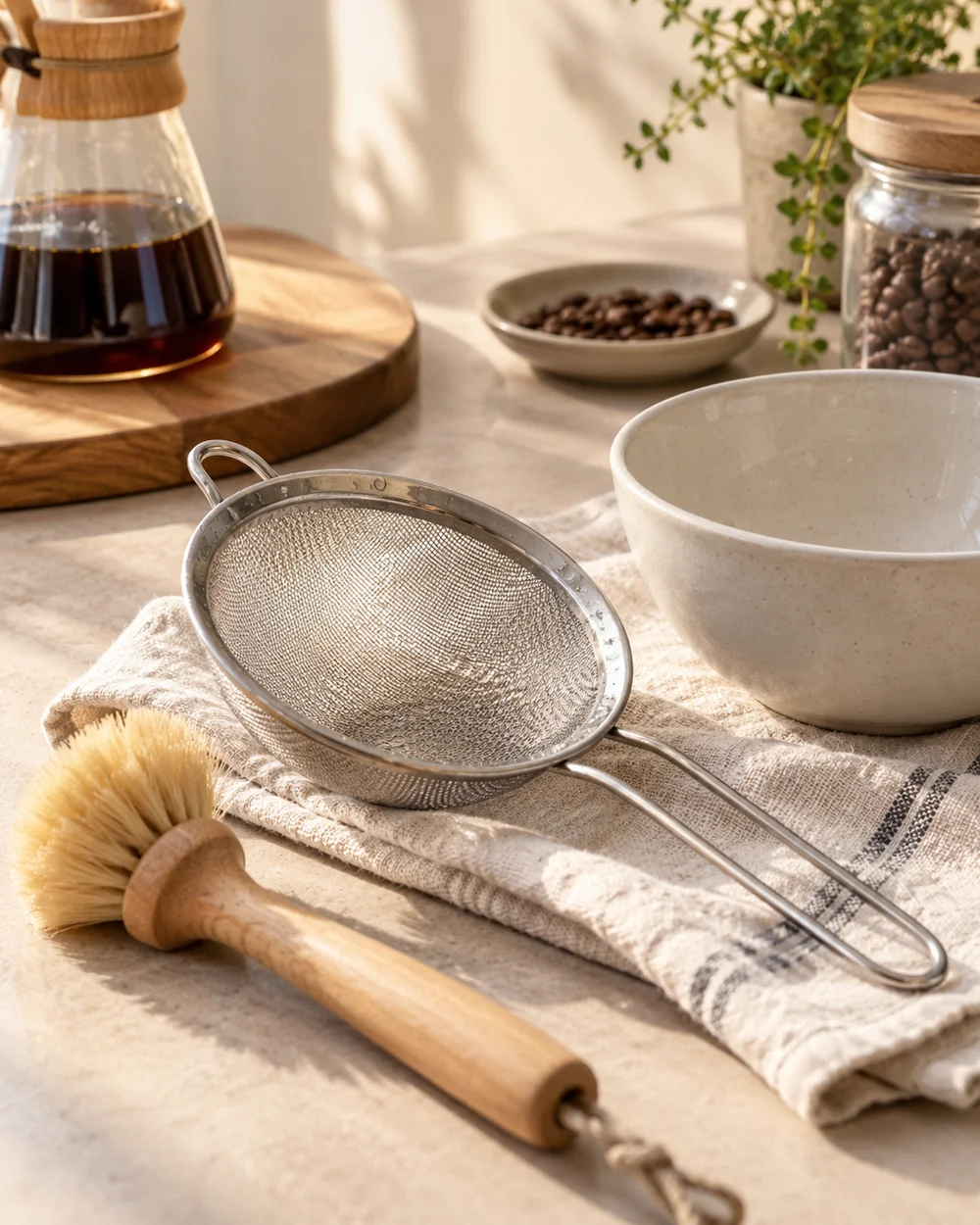
Representative category illustration reused from our editorial library; it does not depict this specific project or a tested result.
The Problem with Wetting Dry Matcha Residue
Rinsing a powdered tea sieve immediately under running water creates an immediate paste across the mesh. Fine matcha particles absorb liquid instantaneously, swelling into dense plugs that lock tightly into the tiny apertures. Once hydrated solids pack the weave, dislodging them requires aggressive scrubbing that stretches, dents, and distorts delicate stainless-steel wires. Removing residual dry powder mechanically before introducing any liquid is essential for preserving the screen geometry and preventing stubborn blockages over daily use.
Mechanical Dry Clearing First
Immediately after sifting dry matcha, invert the sieve over a waste receptacle or compost bin. Tap the rigid metal rim firmly against the heel of your palm three or four times. This impact creates a sharp shock wave that dislodges uncompacted electrostatic powder clinging to the underside of the screen. For crevices where the wire screen meets the outer circular frame, sweep a clean, dry natural-bristle pastry brush lightly across the surface. The screen should appear largely free of visible green dust before exposing the tool to water.
Cold-Water Reverse Flush Protocol
Hold the pre-cleared sieve inverted under a steady, gentle stream of cold tap water. Using cold rather than hot water prevents fine tea solids and natural proteins from softening into a gummy paste that adheres to wire intersections. Running water through the back of the screen pushes remaining particulates out in the reverse direction from which they entered during sifting. Avoid using abrasive scouring pads or dish detergents containing artificial perfumes, as detergent residues can cling to the fine mesh and taint subsequent tea preparations.
Expelling Trapped Water Droplets
Liquid surface tension causes water to form transparent lenses across fine mesh openings, sealing moisture inside the apertures. To break this surface tension, hold the sieve rim firmly and flick your wrist sharply downward toward the sink basin several times. This rapid deceleration releases water beads from the wire intersections. Repeat this motion with the sieve held both inverted and upright. Relying entirely on passive air drying allows trapped water to linger in rim seams, leading to premature wire tarnish and corrosion.
Drying and Proper Aerated Storage
After flicking away excess water, press the sieve basket gently between two layers of a clean, lint-free microfiber cloth or flat-weave cotton towel. Pat the mesh firmly without dragging or rubbing, which can deform the wire weave. Do not nest damp sieves inside bowls or stack objects inside the basket. Store the tool hanging freely from an open hook or resting rim-down on an elevated wire drying rack in a well-ventilated space. Allow at least two hours of drying time to ensure zero residual moisture remains before sifting dry powder.
A little more
to know.
Can I clean a fine matcha sieve in the dishwasher?
No. Dishwasher wash cycles use aggressive alkaline detergents and sustained high heat that corrode fine wire mesh and weaken solder joints bonding the screen to the rim. Hand-rinsing with cold tap water and air drying ensures the longest working lifespan for delicate mesh.
How should I remove old matcha that has hardened inside the mesh?
Submerge the sieve basket in a shallow bowl of lukewarm water for five minutes to soften the dried tea solids. Gently brush both sides of the screen with a soft-bristled toothbrush under a slow stream of running water until all apertures are clear.
Original editorial guidance and recipe formulations, not independently kitchen-tested. Times are estimates and depend on equipment and product directions. Cooked bases need additional cooling and refrigeration before cold serving. Images are AI-generated illustrations; appearance and yield may vary. Check actual ingredient labels, allergens, and any certification you require. We do not certify products. Read our approach.
Save to Pinterest ↗ANOTHER IDEA FOR THE COUNTER