Rinse and Store a Reusable Metal Coffee Filter After Each Use
Coffee oils coat the fine mesh of a metal filter during every brew. Left in place, those oils oxidise within hours and develop a rancid, bitter character that carries directly into the next cup. Rinsing the filter immediately after use under warm running water removes the bulk of those oils before they set. The full routine takes under two minutes and keeps the filter performing consistently without requiring any special cleaning products for daily maintenance.
Read the note ↓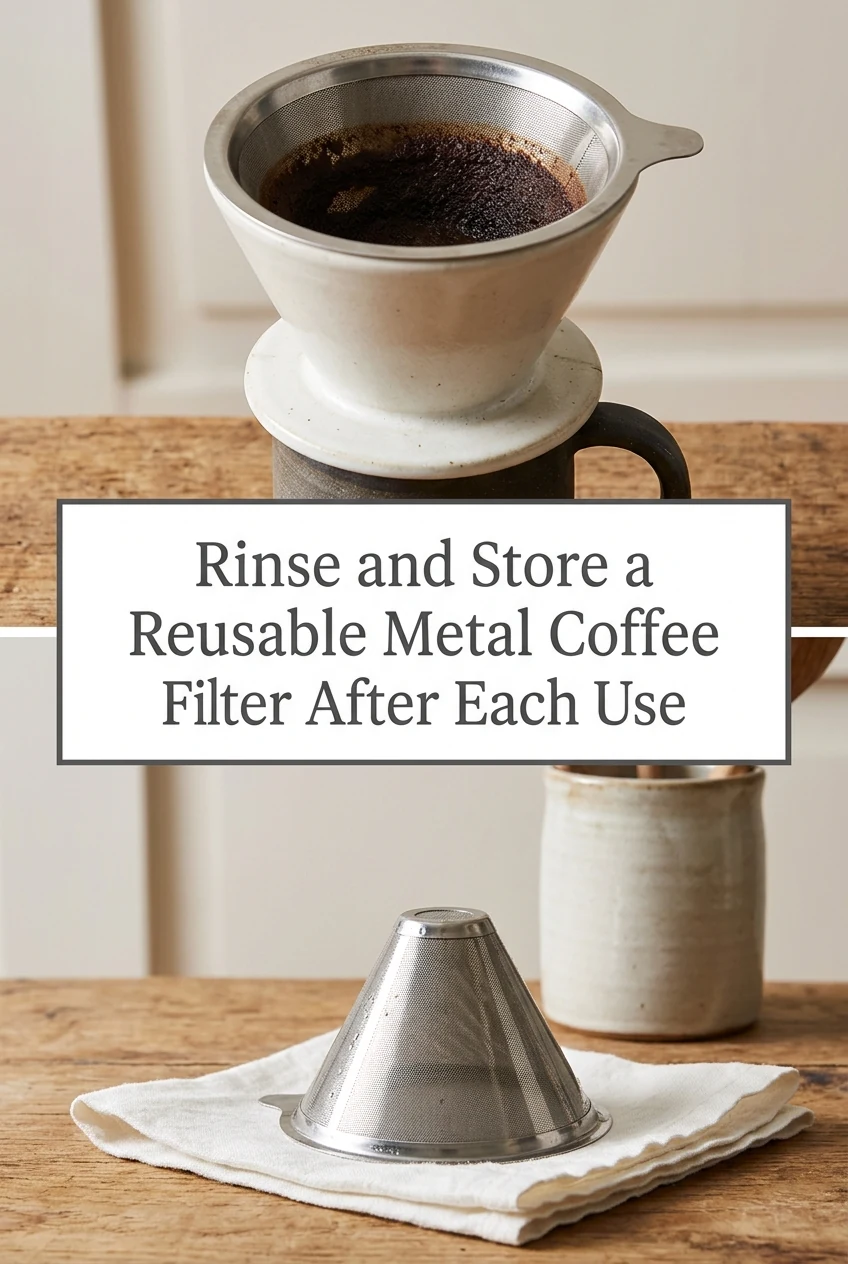
AI-generated editorial concept created for this article. The image is not a technical diagram or a tested result.
Timing the Rinse Correctly
Rinse the filter as soon as the brew is complete and you have poured the coffee. Do not leave spent grounds sitting in the mesh while you drink. Warm grounds release oils continuously, and those oils push deeper into the mesh weave the longer they sit. If you cannot rinse immediately, at minimum knock the grounds into a compost bin and leave the filter open to air rather than sealed inside the brewer with residual moisture trapped around it.
The Warm Running Water Method
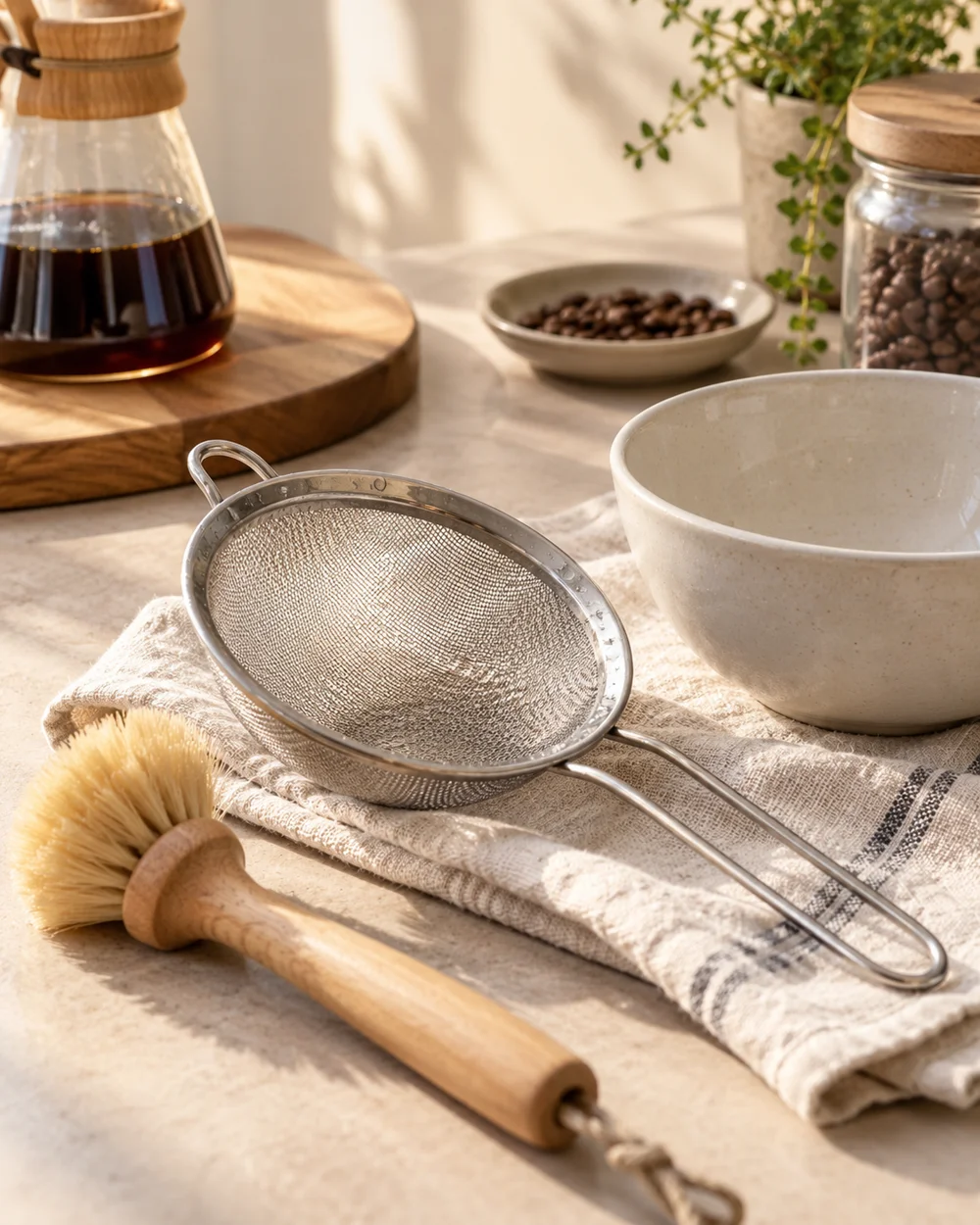
Hold the filter under warm running tap water and use your fingers or a soft brush to work across both the interior and exterior mesh surfaces. Warm water, not boiling, is appropriate here because it loosens oils without warping the frame of filters that have a plastic or silicone rim. Avoid using a steel wool pad or abrasive scrubber, which can distort the mesh openings and affect how evenly water flows through during the next brew. A dedicated soft-bristle brush works well.
Checking That Oils Are Actually Gone
After rinsing, hold the filter up to a light source and look through the mesh. If the weave appears clear and uniform, the rinse was effective. If you see a dull film or the mesh looks unevenly coated in certain patches, rinse again with slightly warmer water and use the brush more deliberately on those areas. A faint coffee smell after rinsing is normal. A sharp or sour smell indicates oil residue that needs another pass before the filter is ready to dry.
Drying Before Storage
Shake excess water from the filter and set it upright or on its side in a position where air can circulate around the mesh on both faces. Do not place it flat against a surface that blocks airflow on one side. A damp filter stored in a closed cabinet can develop mould on the frame or rim within a day or two, particularly in a warm kitchen. Allow the filter to air-dry fully, which typically takes one to two hours depending on kitchen humidity, before placing it back in the brewer or a storage drawer.
When a Deeper Clean Becomes Necessary
Even with daily rinsing, oil residue can accumulate in the mesh over weeks of regular use. If you notice the filter beginning to slow the flow of water noticeably or if a faint rancid note appears in brewed coffee despite rinsing, consult the manufacturer's care instructions for your specific filter model. Some manufacturers recommend periodic soaking in plain warm water. Follow only the guidance provided by your filter's maker rather than a generic recipe, as mesh gauge and frame materials vary.
A little more
to know.
Is it safe to put a metal coffee filter in the dishwasher?
Some metal filters are listed as dishwasher-safe by their manufacturers and others are not. Check the documentation that came with your specific filter before placing it in a dishwasher, as high heat and detergent can affect certain frame materials.
How do I store the filter if I only brew coffee a few times per week?
Rinse and dry the filter fully after each use, then store it in a dry open container rather than sealed in a bag. Sealed storage traps any remaining moisture and increases the chance of odour developing between uses.
Original editorial guidance and recipe formulations, not independently kitchen-tested. Times are estimates and depend on equipment and product directions. Cooked bases need additional cooling and refrigeration before cold serving. Images are AI-generated illustrations; appearance and yield may vary. Check actual ingredient labels, allergens, and any certification you require. We do not certify products. Read our approach.
Save to Pinterest ↗ANOTHER IDEA FOR THE COUNTER