Rinse and Dry a Bamboo Whisk After Each Matcha Session
A bamboo whisk, called a chasen, is made from a single piece of bamboo split into fine tines that can number sixty or more. Those tines are fragile and absorb moisture. Leaving dried matcha on them causes the bamboo to warp, the tines to splay outward, and eventually to crack at the base. The care routine after each use takes under two minutes and directly determines how long the whisk remains functional. This guide covers the exact steps in the order they matter.
Read the note ↓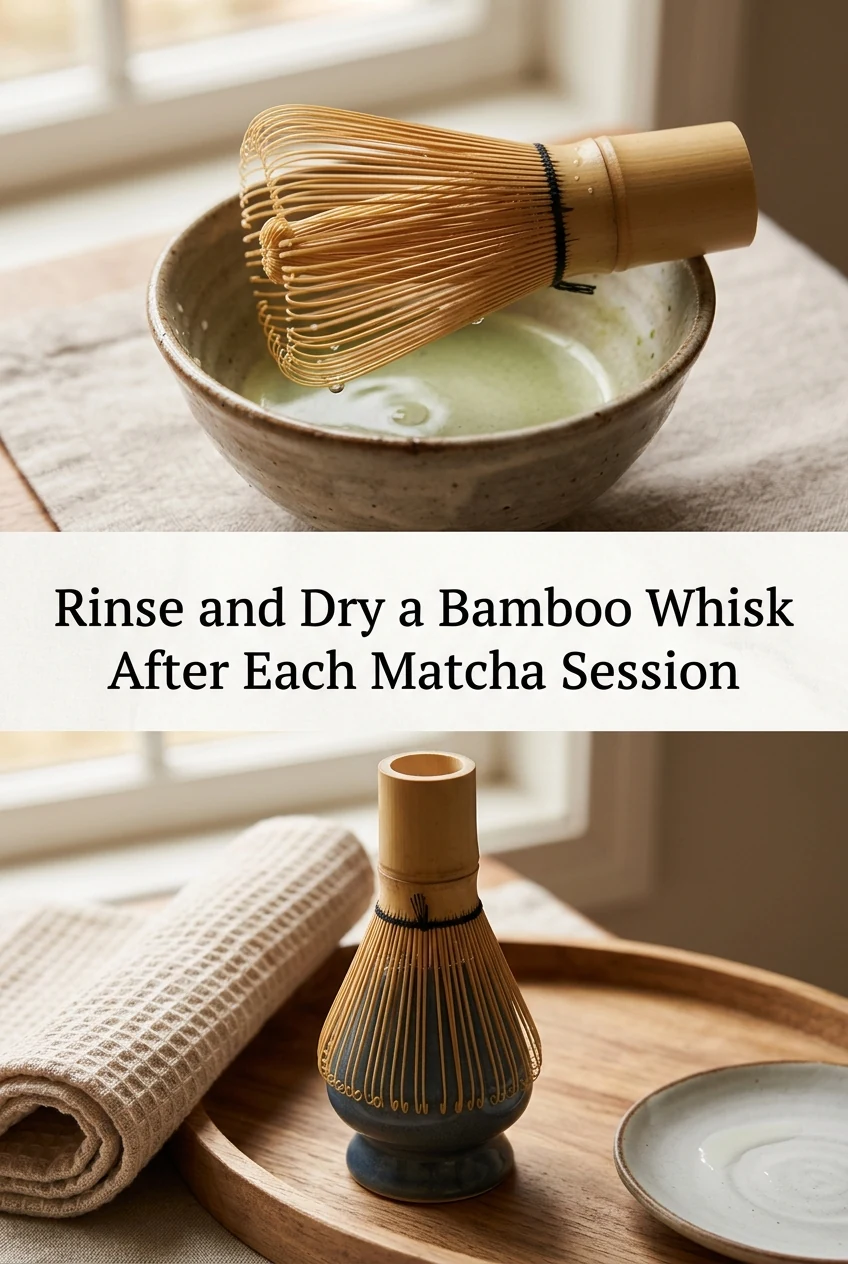
AI-generated editorial concept created for this article. The image is not a technical diagram or a tested result.
Rinse Immediately After Use, Not Later
The most important timing rule is to rinse the whisk before the matcha dries. Matcha residue that has dried onto the tines requires more aggressive rinsing, which stresses the bamboo. Hold the whisk tine-side down under a gentle stream of cool or lukewarm water, rotating it slowly so water reaches all inner tines. Avoid boiling water or forceful water pressure that can bend the delicate tips. The entire rinse should take about thirty seconds. Avoid pressing the tines against the sink basin.
Remove Residue Without Bending the Tines
After the initial rinse, check the inner tines for any remaining green film. If residue persists, swirl the whisk gently in a small bowl of cool water rather than rubbing it with a cloth or sponge. A cloth can snag individual tines and bend them out of alignment. Swirling loosens remaining particles without applying direct pressure. Pour out the water and inspect again. For a whisk used with ceremonial-grade matcha, one swirl cycle is usually sufficient to clear the fine powder.
Reshape the Tines Before Drying
Wet bamboo is pliable, which is the right moment to correct any splaying. If the outer tines have spread wider than the inner ring, gently press them inward with your fingertips so the whisk returns to its original rounded shape. A whisk holder, a small ceramic or plastic form shaped to fit inside the tines, holds this shape while the bamboo dries. Place the wet whisk over the holder immediately after reshaping. This step is what the holder is specifically designed for and is not optional if you want the shape to hold.
Air-Dry Upright and Away from Enclosed Spaces
Set the whisk on its holder in an open area with reasonable airflow, where the tines rest downward over the flared ceramic form so water drains while the curve is preserved. If drying without a holder, stand the whisk upright on its flat handle so the tines point upward into the air. Drying inside a closed cabinet traps humidity and encourages mould growth between the tines. A countertop away from steam sources is adequate. Drying time depends on ambient humidity but is typically one to two hours before the bamboo feels dry to the touch. Do not use a towel to speed drying by pressing the tines; this deforms them. Once dry, the whisk can be stored in a breathable container or left on the holder.
Recognising When a Whisk Needs Replacing
Even with consistent care, bamboo whisks have a finite life. Signs that replacement is due include tines that no longer spring back after use, visible cracks at the base where the tines meet the handle, or a persistent musty smell that does not clear after thorough drying. A whisk with broken inner tines will leave bamboo fragments in your matcha. Most home users who prepare matcha several times a week find a well-maintained whisk lasts several months before these signs appear.
A little more
to know.
Is it safe to wash a bamboo whisk with dish soap?
Dish soap is not recommended. Bamboo is porous and can absorb soap residue, which may affect the flavour of subsequent matcha preparations. Cool water rinsing is sufficient to remove matcha after each use.
What if I do not have a whisk holder?
Without a holder, rest the whisk tine-side up in a small cup or mug so the tines are not compressed. This is less effective than a fitted holder but still allows air circulation and prevents the tines from drying in a splayed position.
Original editorial guidance and recipe formulations, not independently kitchen-tested. Times are estimates and depend on equipment and product directions. Cooked bases need additional cooling and refrigeration before cold serving. Images are AI-generated illustrations; appearance and yield may vary. Check actual ingredient labels, allergens, and any certification you require. We do not certify products. Read our approach.
Save to Pinterest ↗ANOTHER IDEA FOR THE COUNTER