Rinse a Reusable Silicone Ice Cube Tray After Each Fill to Remove Flavour Transfer
Silicone ice trays absorb surface residue from whatever liquid was frozen in them last. If you froze mango juice cubes yesterday and now want plain coffee ice, skipping a rinse means faint fruit flavour can migrate into your next batch. A short rinse and dry routine between fills costs almost no time and keeps each cube tasting only of what you intended to freeze.
Read the note ↓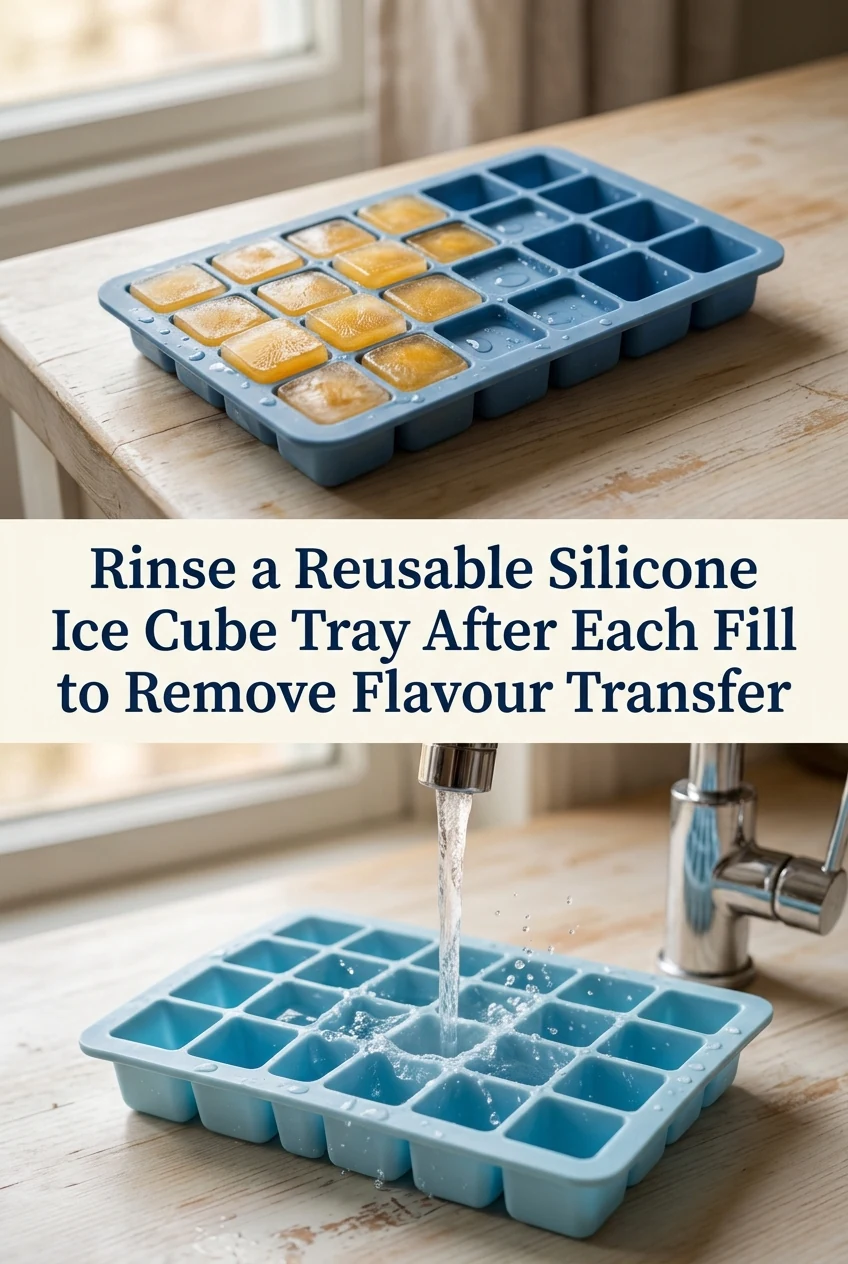
AI-generated editorial concept created for this article. The image is not a technical diagram or a tested result.
Empty the tray completely before rinsing
Pop every cube out before you run water over the tray. Residual ice left in a cavity will dilute your rinse water without actually cleaning the silicone surface. Turn the tray upside down and flex it gently over the sink so any remaining fragments fall out. Check each cavity visually. Only once the tray is fully empty should you move to the rinse step.
Rinse with warm water and a small drop of dish soap
Hold the tray under warm running water and work a small drop of dish soap into each cavity using your fingertip or a soft cloth. Silicone does not need scrubbing; light friction is enough to lift juice sugars or coffee oils from the surface. Rinse thoroughly until no soap film remains. Soap residue left behind will transfer its own off-note to the next fill, so a thorough rinse matters as much as the wash itself.
Dry the cavities before refilling
Water pooled in a cavity before you add your new liquid dilutes the concentration of whatever you are freezing. Shake the tray briskly over the sink, then press a clean folded cloth or paper towel into each cavity to absorb standing water. Air-drying on a rack for ten to fifteen minutes works well if you are not in a hurry. Either method is acceptable; the goal is no visible water remaining before the next fill.
Fill the new liquid to just below the cavity rim
Liquid expands as it freezes. Filling each cavity to the very top risks overflow, which fuses cubes together and makes them difficult to remove cleanly. As an illustrative guide, a standard small silicone cavity that holds roughly 30 ml when full benefits from stopping the fill at about 25 ml. Your tray's actual capacity will differ, so use its own rim as your visual marker rather than a fixed number.
Store the filled tray on a flat freezer shelf
A tilted tray causes liquid to pool to one side, producing uneven cubes and potential spills. Place the tray on the flattest shelf available and avoid stacking anything on top until the cubes are fully solid. Once frozen, transfer cubes to a sealed bag or container so the silicone tray is free for its next fill and the cubes do not pick up freezer odours during longer storage.
A little more
to know.
Can I put a silicone ice tray in the dishwasher between fills?
Many silicone trays are dishwasher-safe, but check your maker's instructions first. A dishwasher cycle takes longer than a hand rinse, so it suits a planned batch change rather than a quick turnaround between same-day fills.
How long do fruit juice cubes stay flavour-fresh in a sealed freezer bag?
Freezer storage time varies by fruit and sugar content. As a practical guide, use juice cubes within two to three weeks for the clearest flavour. Beyond that, freezer oxidation can dull the taste even in a sealed bag.
Original editorial guidance and recipe formulations, not independently kitchen-tested. Times are estimates and depend on equipment and product directions. Cooked bases need additional cooling and refrigeration before cold serving. Images are AI-generated illustrations; appearance and yield may vary. Check actual ingredient labels, allergens, and any certification you require. We do not certify products. Read our approach.
Save to Pinterest ↗ANOTHER IDEA FOR THE COUNTER