Remove Fine Coffee Fines From Metal Mesh Drippers
Reusable stainless steel coffee drippers frequently suffer from slow drawdowns after weeks of steady service. While paper filters trap fine grounds, metal meshes allow fine coffee silt and residual oils to settle into their tiny perforations. Simply rinsing under running tap water often fails to displace wedged grounds and dried oils. Restoring free-flowing filtration requires soaking the dripper in hot water with mild detergent to loosen built-up residues, followed by gentle, directional brushing with soft nylon bristles to clear the openings without damaging the metal weave.
Read the note ↓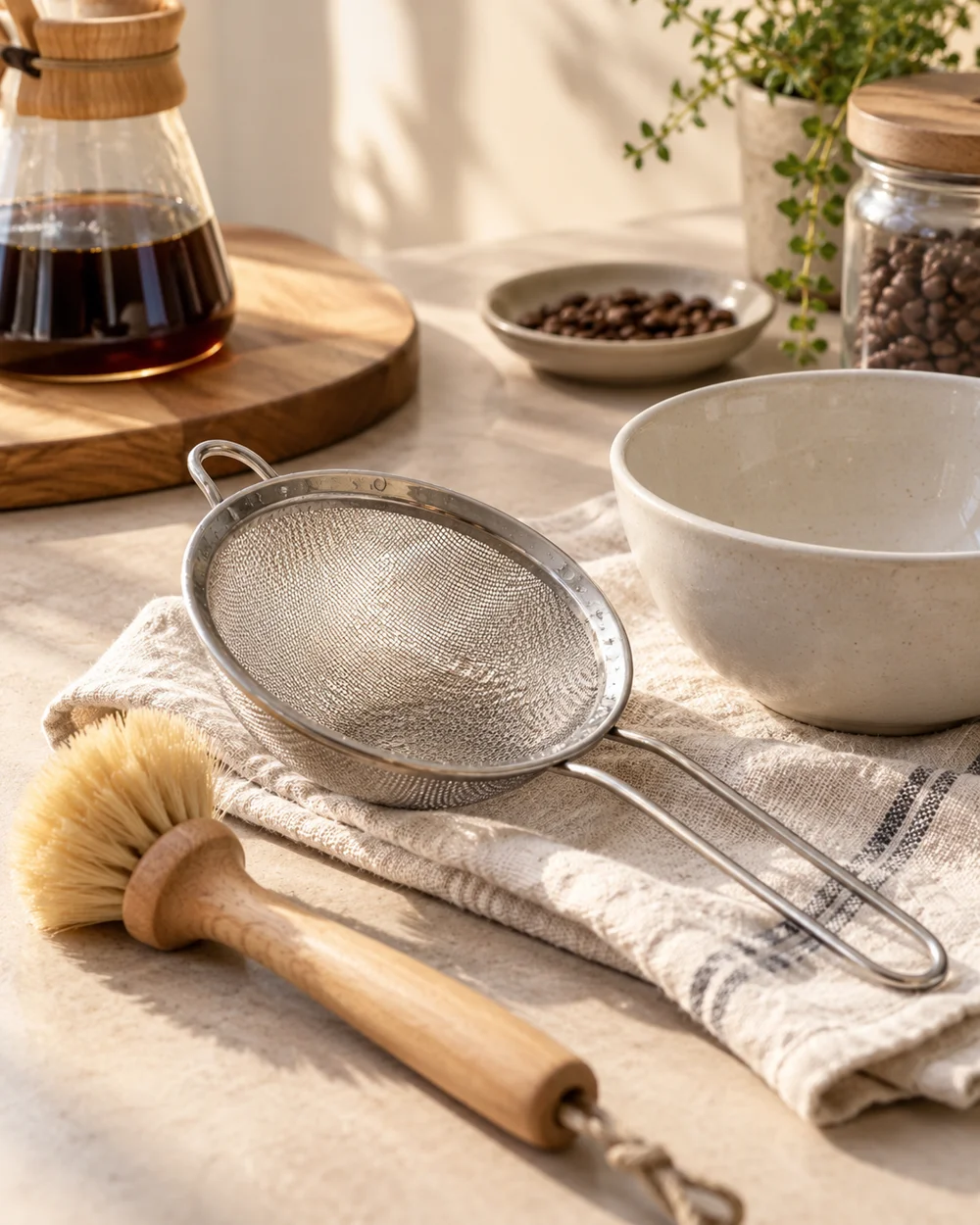
Representative category illustration reused from our editorial library; it does not depict this specific project or a tested result.
How Fine Grounds Settle in Metal Mesh
Coffee grinding naturally produces fine powdery grounds alongside coarser particles. During brewing, water carries these fine particles against the metal mesh. Over time, residual coffee oils coat the stainless steel, causing fine grounds to adhere inside the small mesh perforations. As successive brews deposit more grounds and oils, the openings narrow, which slows water drainage, prolongs brew contact time, and can produce unwanted bitter flavors in the cup.
Hot Water Soak to Loosen Coffee Residues
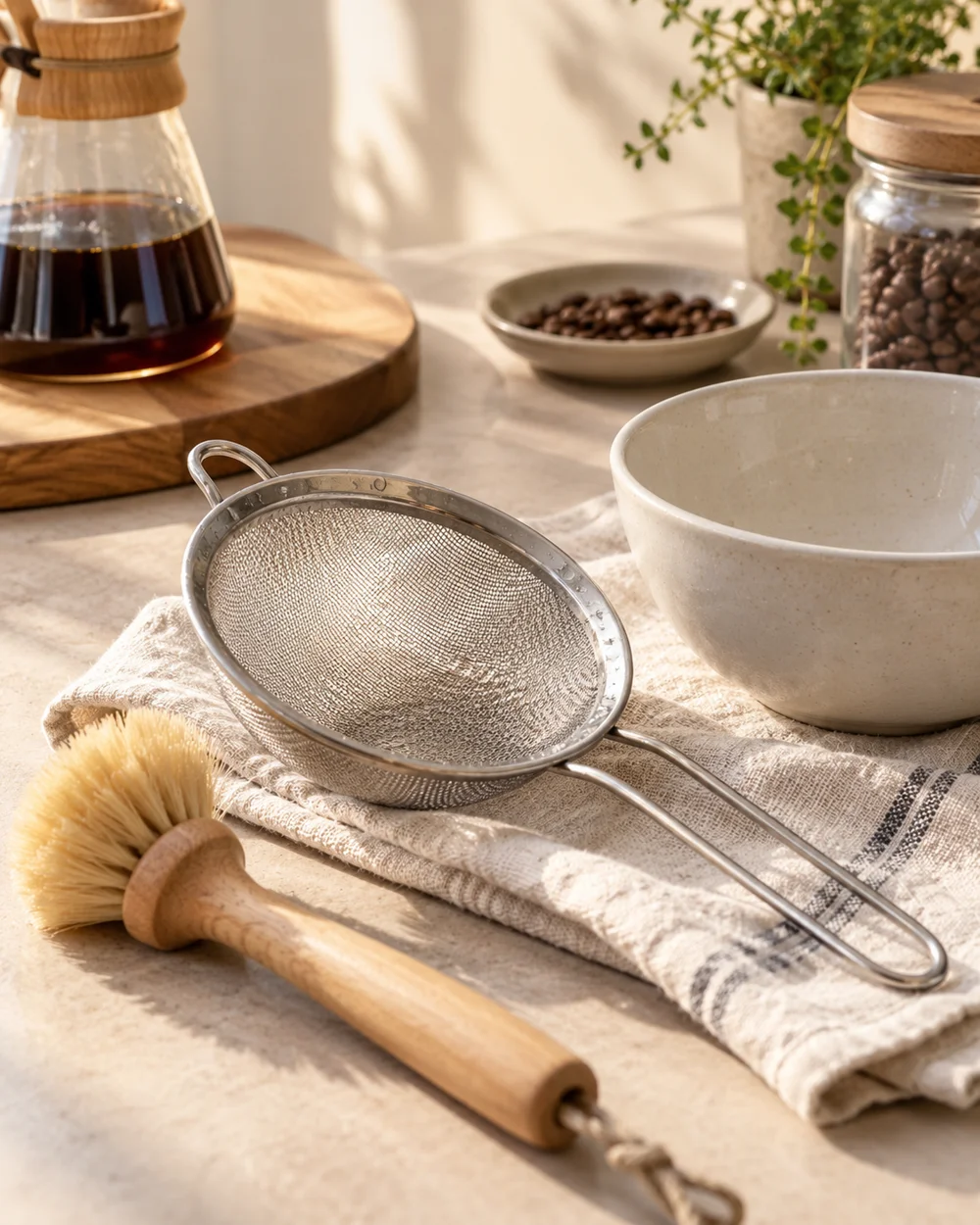
Submerge the clogged metal dripper entirely into a heatproof bowl filled with hot water and a small drop of mild, fragrance-free dish detergent. Allow the cone to soak undisturbed for fifteen to twenty minutes. The hot soak helps loosen dried coffee oils and softens stubborn residues clinging inside the perforations. Avoid using chlorine bleach or metallic scouring pads, which can corrode stainless steel surfaces and scratch delicate mesh weaves.
Directional Brushing Technique with Nylon Bristles
Take a clean, soft-bristled nylon brush, such as a dedicated detail brush or non-scratch kitchen brush. Hold the soaked filter under a stream of warm running water. Brush the outer surface first using gentle circular strokes, allowing the bristles to work against the exterior openings. Brushing from the outside helps dislodge trapped grounds backward out of the mesh perforations rather than pushing them deeper into the filter cone.
Rinsing with Running Tap Water
After brushing, invert the metal cone directly under a running faucet stream. Direct the flow against the exterior mesh walls, forcing water inward toward the cone interior to carry away loosened grounds. Rotate the dripper steadily for thirty seconds to rinse all areas thoroughly. Hold the cone toward a light source to check for remaining clogged sections that may require an additional gentle brush pass.
Drying and Routine Preventative Care
Shake off excess moisture and set the cone upside down on a clean rack to air dry completely. For daily maintenance, rinse the dripper thoroughly under warm running water immediately after discarding spent coffee grounds. Flushing water through the mesh right after brewing washes away loose grounds and oils before they dry and harden, keeping the filter flowing well between periodic deep cleanings.
A little more
to know.
Can I use dish soap during the hot water soak?
A drop of mild, fragrance-free dish liquid helps loosen stubborn oils during the hot soak. Rinse the cone thoroughly with warm running water afterward to remove all soap residue so it does not affect the flavor of future brews.
How often should this deep brushing procedure be performed?
Perform this mechanical clearing whenever brew times increase noticeably by thirty seconds or more, or at least every two weeks for drippers used daily for medium to dark roasts.
Original editorial guidance and recipe formulations, not independently kitchen-tested. Times are estimates and depend on equipment and product directions. Cooked bases need additional cooling and refrigeration before cold serving. Images are AI-generated illustrations; appearance and yield may vary. Check actual ingredient labels, allergens, and any certification you require. We do not certify products. Read our approach.
Save to Pinterest ↗ANOTHER IDEA FOR THE COUNTER