Remove Espresso Puck Residue Without Abrasive Scrubbing
Residual coffee oils and microscopic grounds left inside portafilter baskets and behind group head gaskets bake into stubborn varnishes under sustained boiler temperatures. Using coarse wire pads, metal knives, or abrasive scourers scratches precision-machined filter holes and cuts pliable rubber seals, compromising hydraulic extraction integrity. A systematic non-abrasive cleaning routine relies on warm hydraulic flushing, angled nylon bristle sweeps, and soft microfiber wiping. This gentle sequence dislodges debris thoroughly while protecting critical brass, steel, and elastomer surfaces on your espresso setup.
Read the note ↓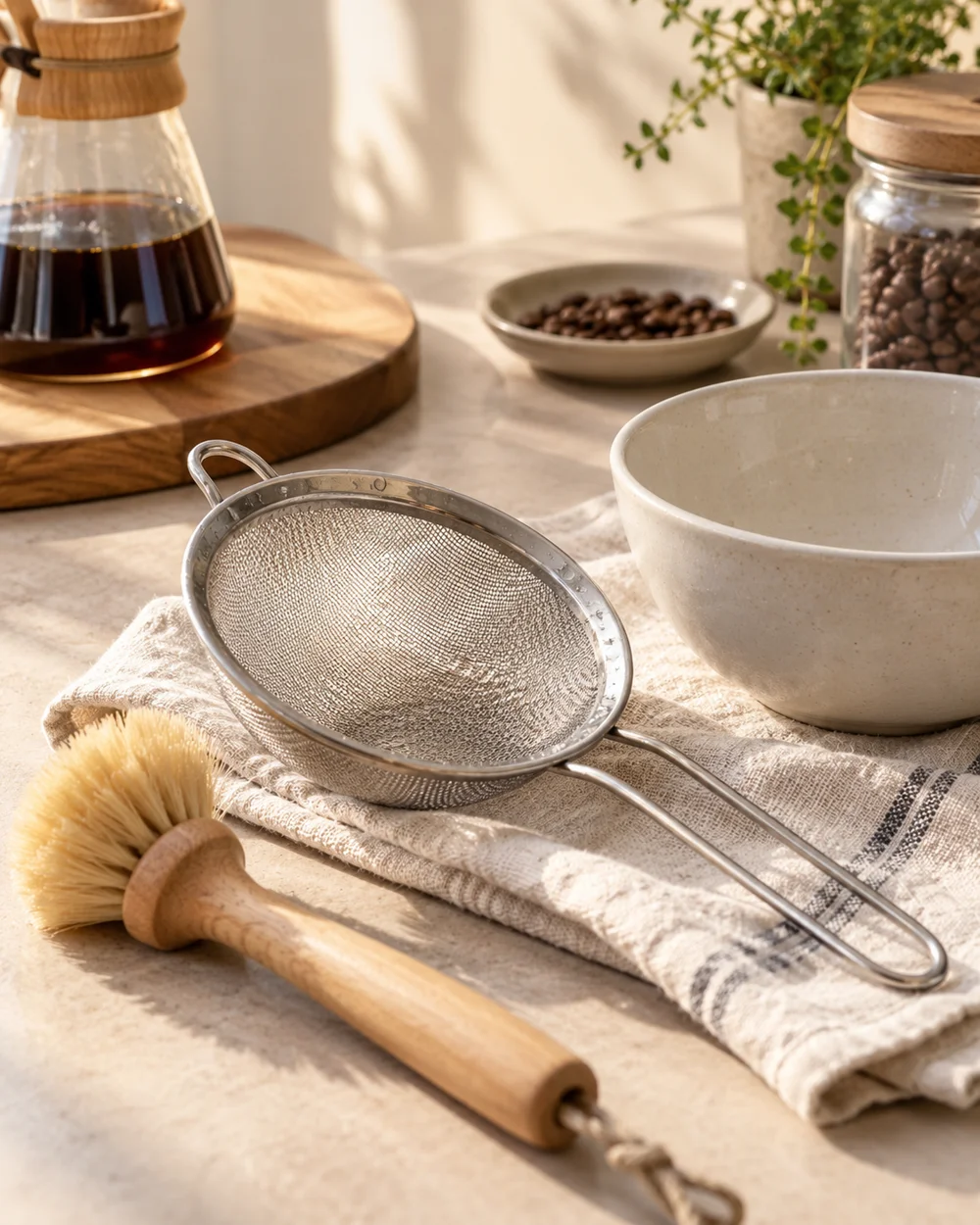
Representative category illustration reused from our editorial library; it does not depict this specific project or a tested result.
Hazards of Metal and Abrasive Cleaning
Espresso filter baskets rely on laser-cut or punch-machined micro-apertures engineered to precise tolerances. Scouring the inside floor of a basket with abrasive pads or wire tools scratches the stainless surface and widens these micro-holes irregularly. Distorted holes lead to localized water channeling during subsequent shots. Furthermore, metal picks scratch the dispersion block and gouge soft silicone or rubber group gaskets, causing leaks around the portafilter ears during pump engagement.
Active Water Flush and Basket Ejection
Immediately after pulling an espresso shot, knock the spent coffee puck into an empty knock box using moderate downward strikes against a padded bar. Avoid rapping metal portafilter rims against hard surfaces, which deforms roundness. Reinsert the empty portafilter loosely into the group head and run the water pump for three seconds. The thermal rush of hot water dissolves sticky surface oils and rinses residual grounds away before they dry into a hardened crust.
Angled Nylon Gasket Sweeps
Coffee grounds accumulate along the internal groove where the group head gasket meets the shower screen. Take an angled nylon-bristled group brush and insert it upward into the group collar with the pump shut off. Rotate the brush around the circular gasket perimeter twice. The rigid nylon filaments dislodge trapped grinds without scoring the elastomer seal. Run a two-second water flush to clear the dislodged particulate out of the bayonet tracks.
Microfiber Extraction Pathway Maintenance
Microfiber cloths grab coffee oils without abrading polished metal surfaces. Dedicate one thick, lint-free microfiber cloth exclusively to portafilter hygiene. Dampen one corner with hot water and firmly twist the cloth inside the interior basket floor, rotating through 360 degrees. Visually inspect the reverse side against a light source to verify that micro-perforations remain open and clear of dark ground plugs before hanging the portafilter back on the machine.
Dispersion Screen Surface Clearance
The shower screen directly above the coffee bed collects fines driven upward during pressure relief. Fold a damp microfiber cloth over your fingers and wipe the shower screen face firmly directly after brushing the gasket. This removes clinging coffee residue before it bakes dry against the dispersion plate. Perform this simple wipe between shot preparations to ensure fresh extraction water remains unblemished by stale oils from prior extractions.
A little more
to know.
Why shouldn't I use scouring powders inside my portafilter?
Abrasive scouring powders create micro-scratches along the smooth steel basket walls. These microscopic fissures collect coffee oils faster and make future residue harder to wipe away with regular water flushes.
How often should I wipe the group head screen?
Wipe the shower screen with a damp microfiber cloth after every single extraction session. Frequent gentle wipes take five seconds and prevent the heavy oil buildup that otherwise requires aggressive intervention.
Original editorial guidance and recipe formulations, not independently kitchen-tested. Times are estimates and depend on equipment and product directions. Cooked bases need additional cooling and refrigeration before cold serving. Images are AI-generated illustrations; appearance and yield may vary. Check actual ingredient labels, allergens, and any certification you require. We do not certify products. Read our approach.
Save to Pinterest ↗ANOTHER IDEA FOR THE COUNTER