Read a Vanilla Flavouring Label to Confirm It Is Alcohol-Free Before Adding It to a Warm Drink
Vanilla flavouring products vary significantly in their base ingredient. Some use an alcohol carrier, while others use glycerin, water, or a combination. For a halal home café menu, only a product explicitly labelled alcohol-free is appropriate. Checking the label before purchase and again before use takes under a minute and prevents an avoidable substitution mid-service. This guide explains exactly what to look for on the packaging and how to apply that check to a warm drink preparation.
Read the note ↓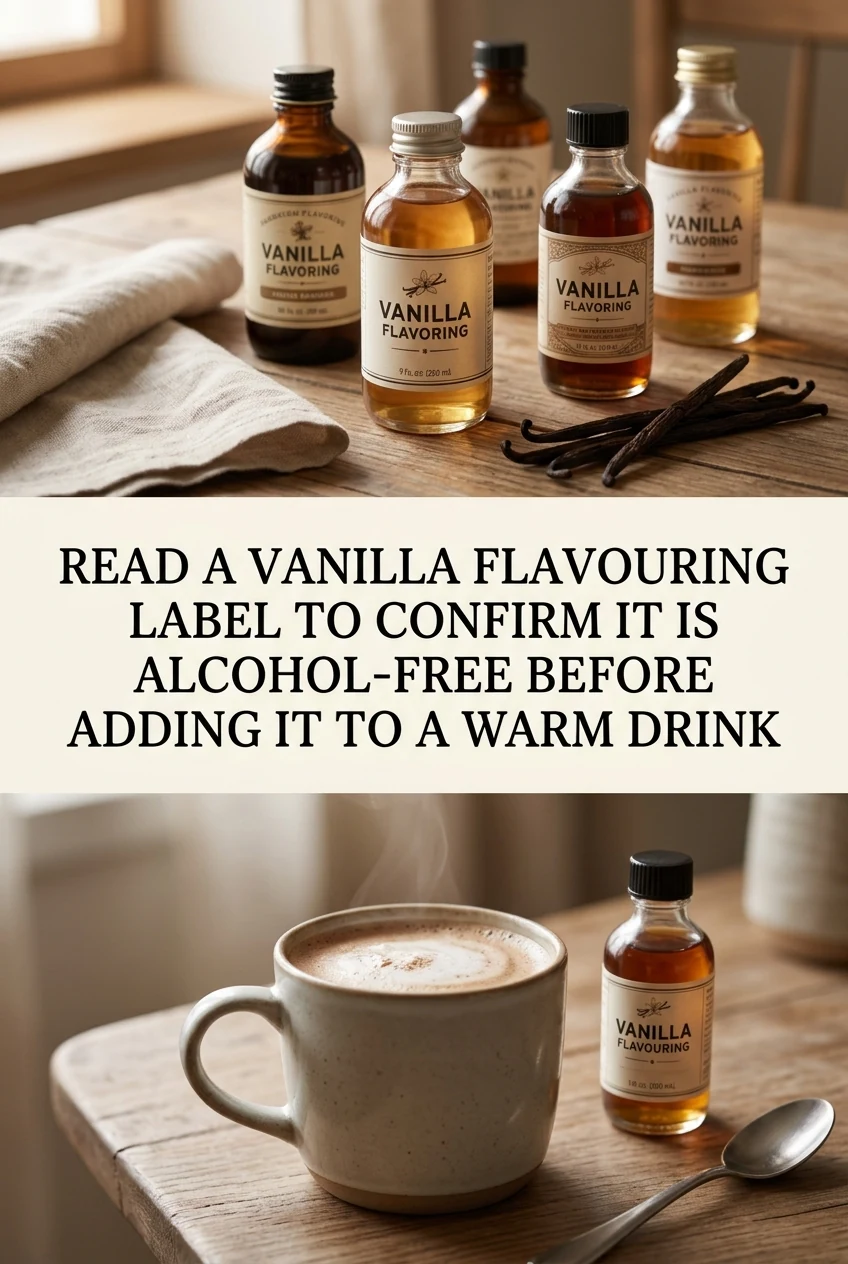
AI-generated editorial concept created for this article. The image is not a technical diagram or a tested result.
Understand Why the Base Ingredient Matters
Vanilla flavouring requires a carrier to suspend and deliver flavour compounds. Conventional extracts typically use ethanol as that carrier, which makes them unsuitable for a halal menu regardless of the vanilla content itself. Alcohol-free versions use alternatives such as vegetable glycerin or water. The flavour intensity and behaviour in hot liquid can differ between bases, so confirming the base before you build a drink recipe around a specific product avoids having to reformulate later.
Locate the Ingredients List on the Label
Turn the bottle to the panel carrying the full ingredients list, not the front marketing text. Ingredients are listed in descending order by weight. If ethanol or alcohol appears anywhere in that list, the product is not alcohol-free regardless of any other claim on the front label. A genuinely alcohol-free product will list water, glycerin, or a named food-grade carrier first, followed by natural or artificial vanilla flavour compounds. Do not rely on the word natural alone as a proxy for alcohol-free.
Check for an Explicit Alcohol-Free Declaration
Beyond the ingredients list, look for a clear declaration such as alcohol-free, non-alcoholic, or contains no alcohol printed on the label. Some manufacturers place this near the product name; others include it in a certification panel. If the declaration is absent but the ingredients list shows no alcohol, note that the absence of a declaration is not the same as a confirmed claim. For a home café menu where the distinction matters, choose a product that carries the explicit statement.
Apply the Check at the Point of Use
Label reading at purchase is useful, but bottles can be refilled or mislabelled in storage. Before adding vanilla flavouring to a warm drink during service, briefly confirm the bottle in hand matches the product you selected. A practical habit is to keep the original bottle rather than decanting into an unlabelled container. For a single warm drink, a typical starting dose is two to three drops or roughly one millilitre; confirm the manufacturer's suggested use on the label as a reference point.
Record the Product Name for Consistent Reordering
Once you identify an alcohol-free vanilla flavouring that performs well in warm drinks, write the exact product name and manufacturer on your ingredient list. Flavouring products are reformulated periodically, so recheck the label when a new batch arrives even if the packaging looks identical. This step is especially relevant if you source from different suppliers across orders. Keeping a note of the batch or lot number alongside your tasting notes helps you track any change in flavour intensity between purchases.
A little more
to know.
Can I use a vanilla paste instead of a liquid flavouring to avoid the alcohol question?
Vanilla paste products also vary by formulation. Some contain alcohol as a carrier or preservative. Apply the same label-reading process to paste: check the full ingredients list and look for an explicit alcohol-free declaration before use.
Does heat from a warm drink burn off any alcohol present in a flavouring?
Alcohol evaporation during brief drink preparation is incomplete and unreliable. You cannot assume a warm drink temperature removes all alcohol from a flavouring. Selecting a product confirmed alcohol-free from the outset is the only dependable approach.
Original editorial guidance and recipe formulations, not independently kitchen-tested. Times are estimates and depend on equipment and product directions. Cooked bases need additional cooling and refrigeration before cold serving. Images are AI-generated illustrations; appearance and yield may vary. Check actual ingredient labels, allergens, and any certification you require. We do not certify products. Read our approach.
Save to Pinterest ↗ANOTHER IDEA FOR THE COUNTER