Read a Tea Tin Steep Time Before Brewing for Iced Service
Iced tea is not simply hot tea poured over ice. Chilling suppresses sweetness and delicate aromatic notes while accentuating astringency and bitterness, so a batch brewed even one minute longer than the maker recommends can taste noticeably harsh once cold. Many home brewers skip the tin label entirely and rely on habit or guesswork, then discard a bitter batch. Reading the steep time and water temperature guidance printed on the tin before the kettle boils takes under a minute and is the single most reliable way to avoid a wasted batch.
Read the note ↓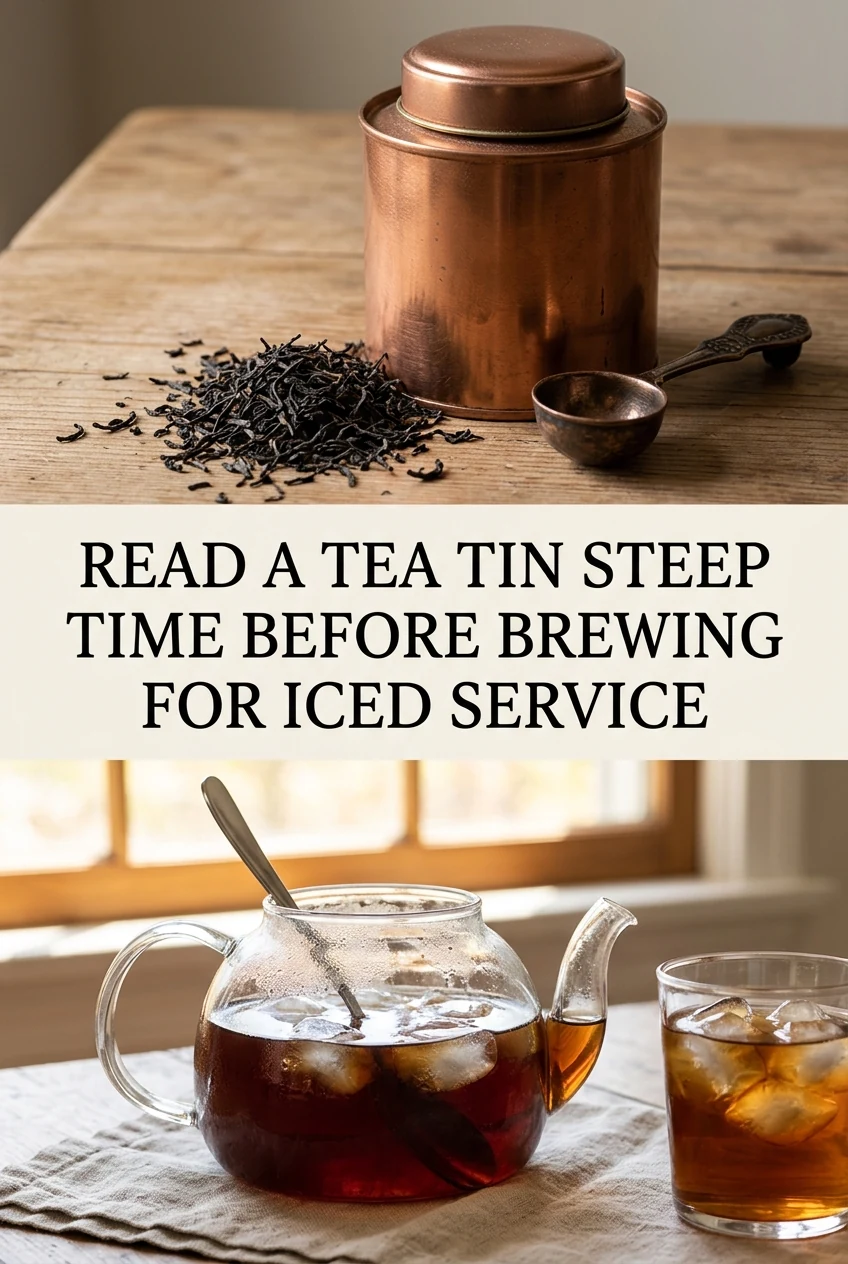
AI-generated editorial concept created for this article. The image is not a technical diagram or a tested result.
Locate the steep time and water temperature on the tin
Most tea tins print steep time and water temperature on the exterior label, the base, or occasionally an inner lid. These two numbers are the most important variables for iced service. Green and white teas typically call for lower water temperatures than black teas, and their steep windows are often narrower. If the tin gives a range, such as two to three minutes, use the shorter end when brewing for iced service because chilling will amplify any bitterness that develops at the longer end.
Understand why chilling changes the taste of an over-steeped batch
Tannins produce astringency, while other extracted compounds contribute bitterness. When tea is hot, volatile aromatics and perceived sweetness help balance these drying and bitter notes, but chilling dulls sweetness and aroma, leaving astringency and bitterness far more prominent. A cup of hot tea that tastes slightly strong may seem acceptable, but the same brew chilled over ice can taste unpleasantly harsh. Brewing to the shorter end of the maker's recommended window, then tasting before chilling, gives you a checkpoint before the batch is committed to ice.
Decide between hot-brew-then-chill and cold-brew methods
Some tins include cold-brew instructions, which involve steeping in cold or room-temperature water for several hours. Cold-brew extracts differently than hot-brew and typically produces a smoother, less bitter result without any temperature adjustment. If your tin includes cold-brew guidance, follow those times and temperatures separately from the hot-brew instructions. Do not apply hot-brew steep times to a cold-brew process or vice versa; the extraction rates are not interchangeable.
Brew a concentrate if you plan to pour over ice immediately
Pouring hot tea directly over ice dilutes the brew as the ice melts. A common flash-chill technique is to brew a double-strength concentrate using your normal measure of tea with half the usual hot water, steeped for the maker's recommended duration. Pouring this hot concentrate over an equal weight of ice allows the meltwater to bring the tea to standard drinking strength while chilling it immediately. For example, brewing 500 milliliters of hot concentrate and pouring it over 500 grams of ice yields approximately 1,000 milliliters of chilled tea at intended strength.
Chill the brewed tea safely before serving
After steeping, remove the tea leaves or bags promptly at the maker's recommended time. Allow the brew to cool briefly at room temperature, then transfer it to a clean covered container and refrigerate at 4 degrees Celsius or 40 degrees Fahrenheit or below within two hours of brewing. Do not leave brewed tea at room temperature for extended periods. Taste the chilled tea before serving; if it is bitter despite correct steep time, the water may have been hotter than recommended, which is worth checking on the next batch.
A little more
to know.
What if the tin has no steep time printed on it?
Check the brand's website or the packaging insert if one was included. Without maker guidance, start with a short steep of two minutes for green teas and three minutes for black teas, taste before chilling, and adjust on the next batch.
Can I re-steep the same leaves for a second iced batch?
Some teas tolerate a second steep, but the extraction will be lighter and the flavor profile different from the first. If re-steeping, you generally need to extend the steep time rather than shorten it, and taste the infusion before chilling. The maker's guidance on re-steeping, if provided, remains the most reliable reference.
Original editorial guidance and recipe formulations, not independently kitchen-tested. Times are estimates and depend on equipment and product directions. Cooked bases need additional cooling and refrigeration before cold serving. Images are AI-generated illustrations; appearance and yield may vary. Check actual ingredient labels, allergens, and any certification you require. We do not certify products. Read our approach.
Save to Pinterest ↗ANOTHER IDEA FOR THE COUNTER