Read a Rooibos Tin to Choose Between Hot and Cold Brewing
Rooibos tins vary considerably in what their makers recommend, and not every rooibos is packaged or processed for cold steeping. Before deciding whether to cold brew or hot brew your rooibos, the most reliable step is reading the label on your specific tin rather than applying a general rule. This guide explains which label sections to check, what language indicates cold-brew suitability, how to interpret water temperature guidance and what to do when the tin gives no cold-brew direction at all.
Read the note ↓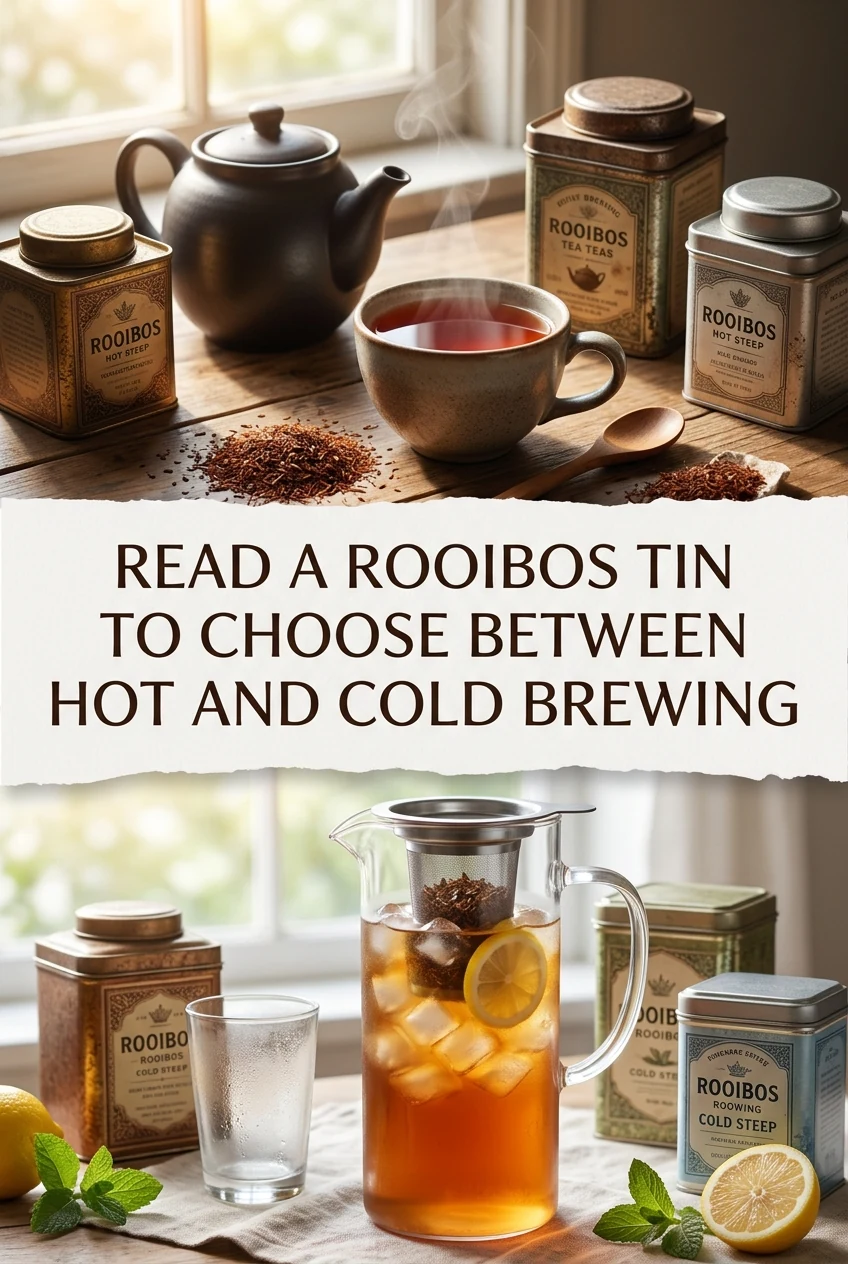
AI-generated editorial concept created for this article. The image is not a technical diagram or a tested result.
Find the Steeping Instructions Panel on the Tin
Most rooibos tins carry steeping instructions on the back panel or the underside of the lid. Look for a section headed with words such as preparation, brewing or how to brew. This panel is distinct from the ingredient list and the marketing copy on the front of the tin. If the tin has both a hot and a cold brewing section listed separately, the maker has provided instructions for both methods for that specific product. If only one method appears, treat that as the maker's recommendation for that tin.
Identify the Water Temperature Guidance
Hot brewing instructions for rooibos commonly specify water between 90 and 100 degrees Celsius and a steeping time of four to six minutes, though this varies by brand. Cold brewing instructions, when present, typically specify cold or room-temperature water and a steeping time of four to twelve hours in the refrigerator. If your tin lists only a hot water temperature with no cold alternative, the maker has not provided guidance for cold steeping that product, and following only the stated instructions is the most reliable approach.
Look for Explicit Cold-Brew Language
Cold-brew suitability is usually stated directly. Phrases such as suitable for cold brewing, cold steep or refrigerator brew indicate the maker has included that method intentionally. Some tins include a separate icon or a second set of measurements for cold preparation. Vague language such as can be enjoyed cold refers to serving temperature after hot brewing, not to the cold steeping process itself. This distinction matters because the two methods produce different extraction results and the maker's ratios apply specifically to the method described.
Check the Quantity Guidance for Each Method
Cold brewing often uses a higher leaf-to-water ratio than hot brewing to compensate for slower extraction at low temperatures. For example, a tin might specify one teabag per 200 ml for hot brewing but two teabags per 300 ml for cold brewing over eight hours. These are illustrative figures to show the type of difference you may encounter, not universal ratios. Always use the quantities printed on your specific tin rather than ratios sourced elsewhere, since rooibos blends differ in leaf density and cut size.
What to Do When the Tin Gives No Cold-Brew Direction
If your tin provides no cold-brew guidance, the straightforward option is to brew rooibos hot according to the label, allow it to cool to room temperature within two hours, then refrigerate it promptly at 4 degrees Celsius or below and use it within 24 hours for iced drinks. This approach follows the maker's stated method and avoids uncertainty about whether the product was intended for cold steeping. If cold brewing is important to you, look for a tin that explicitly includes cold-brew instructions from the maker.
A little more
to know.
Does the tin's best-before date affect whether cold brewing is safe?
A tin within its best-before date is appropriate to use, but cold-brewed rooibos is still a perishable liquid once prepared. Refrigerate it promptly and consume it within 24 hours regardless of the tin date.
Can I use loose-leaf rooibos from a tin for cold brewing if the tin only shows teabag instructions?
Loose-leaf and teabag instructions are not directly interchangeable because leaf surface area differs. If the tin shows only teabag guidance, contact the maker for loose-leaf cold-brew quantities before proceeding.
Original editorial guidance and recipe formulations, not independently kitchen-tested. Times are estimates and depend on equipment and product directions. Cooked bases need additional cooling and refrigeration before cold serving. Images are AI-generated illustrations; appearance and yield may vary. Check actual ingredient labels, allergens, and any certification you require. We do not certify products. Read our approach.
Save to Pinterest ↗ANOTHER IDEA FOR THE COUNTER