Read a Halal Gelatin Label Before Using It in a Small Syrup or Drink Base
Gelatin sold in home baking aisles comes from different animal sources and carries different certifications. Before stirring any gelatin into a syrup or drink base, checking the packaging for a clear halal marking is a simple purchasing decision that prevents having to discard a finished batch. This guide explains what to look for on the label, how source and certification differ, and how to handle the product correctly once you have confirmed it is suitable.
Read the note ↓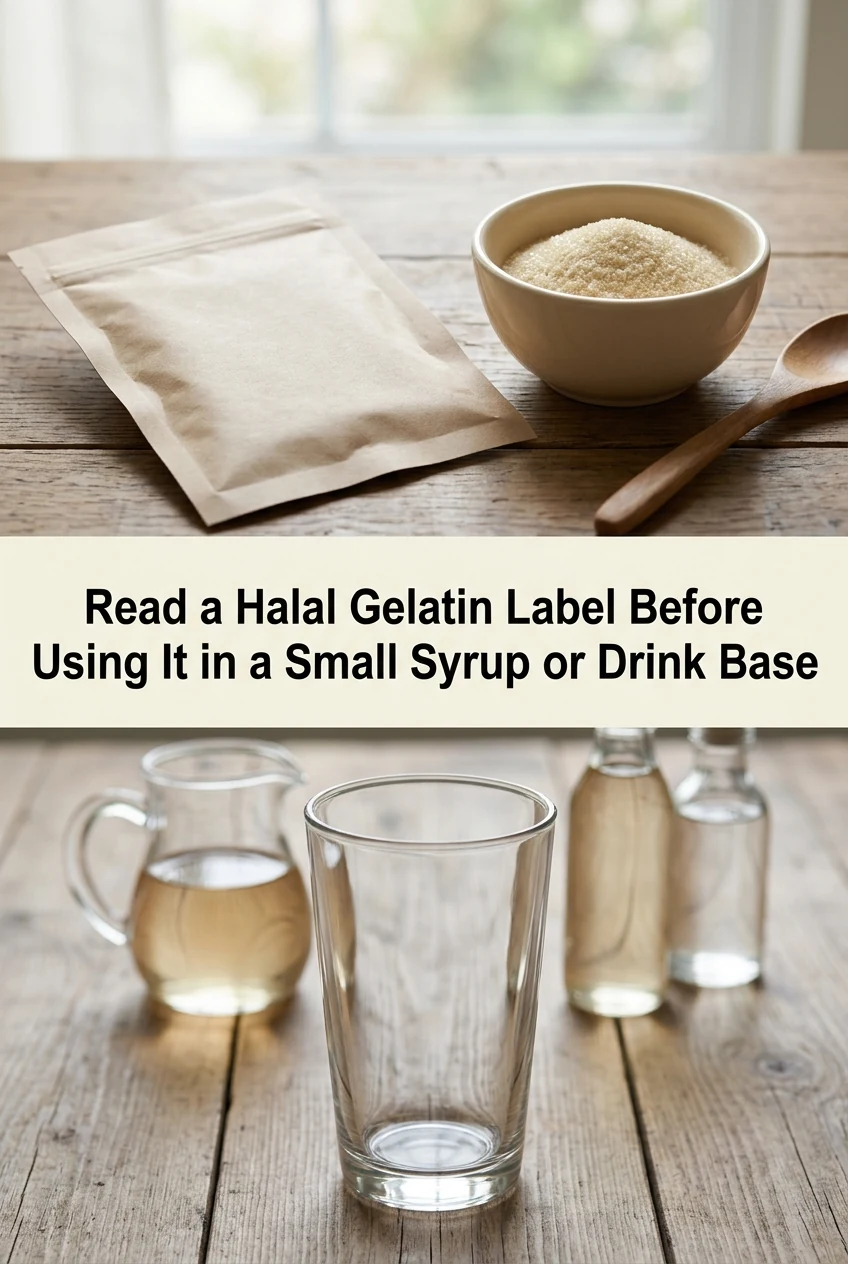
AI-generated editorial concept created for this article. The image is not a technical diagram or a tested result.
Why Source and Certification Are Two Separate Checks
A label may state beef-derived gelatin without carrying any certification body marking, or it may show a halal logo without specifying the animal source. Both pieces of information matter. Source tells you the raw material; certification tells you that a recognized body has audited the slaughter and processing method. Look for both a named source and a visible halal certification mark before placing the product in your basket. If either is absent, choose a different product rather than assuming compliance.
Where to Find the Certification Mark on the Packet
Certification marks are usually printed near the ingredient list or on the back panel, not always on the front. On small sachets, the mark may appear in a corner alongside allergen text. Some brands print the certifying body name in full rather than a logo. Either format is acceptable as long as the body is identifiable. If the mark is illegible due to print quality, treat the product as unverified and select a clearly labeled alternative from the same shelf.
Powdered Versus Sheet Gelatin and Bloom Strength
Halal-certified gelatin is available in both powdered and sheet form. Sheet gelatin is sold by bloom grade, commonly labeled as bronze, silver, gold or platinum, each representing a different setting strength. Powdered gelatin packets typically state the weight in grams. When a syrup recipe specifies one form and you have the other, consult the conversion note on your specific product packaging rather than applying a generic ratio, because bloom strengths vary between brands.
Dissolving Gelatin Correctly in a Small Syrup
For a small syrup of roughly 250 milliliters, bloom powdered gelatin in two to three tablespoons of cold water for five minutes before adding it to the warm liquid. The syrup should be warm but not boiling when the bloomed gelatin is stirred in, as prolonged high heat weakens setting ability. Stir gently until fully dissolved, then remove from heat. This sequence applies to most standard gelatin products; always cross-check against your specific packet instructions, which take precedence.
Storage After Adding Gelatin to a Drink Base
A gelatin-set drink base or syrup is a perishable preparation. Transfer it to a clean covered container and refrigerate at 4 degrees Celsius or below within two hours of preparation, or within one hour if your kitchen is above 32 degrees Celsius. Do not store it at room temperature expecting it to remain stable. Consume within the timeframe your refrigerator and ingredient freshness allow, and discard any portion that shows an off smell or texture change.
A little more
to know.
Can fish-derived gelatin also carry a halal certification?
Yes. Fish gelatin from permissible species can be certified halal. The label should still name the source species and carry a certification mark. Fish gelatin may have a slightly different set texture compared with bovine gelatin, so test your specific product in a small trial batch first.
What if a product is labeled kosher but not halal?
Kosher and halal certifications follow different standards and are not interchangeable. A kosher mark does not confirm halal compliance. Select a product that carries a recognized halal certification mark specifically, regardless of any other dietary labels present on the same packet.
Original editorial guidance and recipe formulations, not independently kitchen-tested. Times are estimates and depend on equipment and product directions. Cooked bases need additional cooling and refrigeration before cold serving. Images are AI-generated illustrations; appearance and yield may vary. Check actual ingredient labels, allergens, and any certification you require. We do not certify products. Read our approach.
Save to Pinterest ↗ANOTHER IDEA FOR THE COUNTER