Read a Coconut Milk Can Label Before Adding It to a Warm Drink
Reaching for any can of coconut milk without reading the label first is a common source of texture problems in warm drinks. Full-fat and light versions behave very differently once heated, and cans with added stabilisers behave differently again from those without. Spending thirty seconds reading the label before opening tells you what to expect in the cup and whether you need to adjust quantity, heat level, or the order in which you add ingredients.
Read the note ↓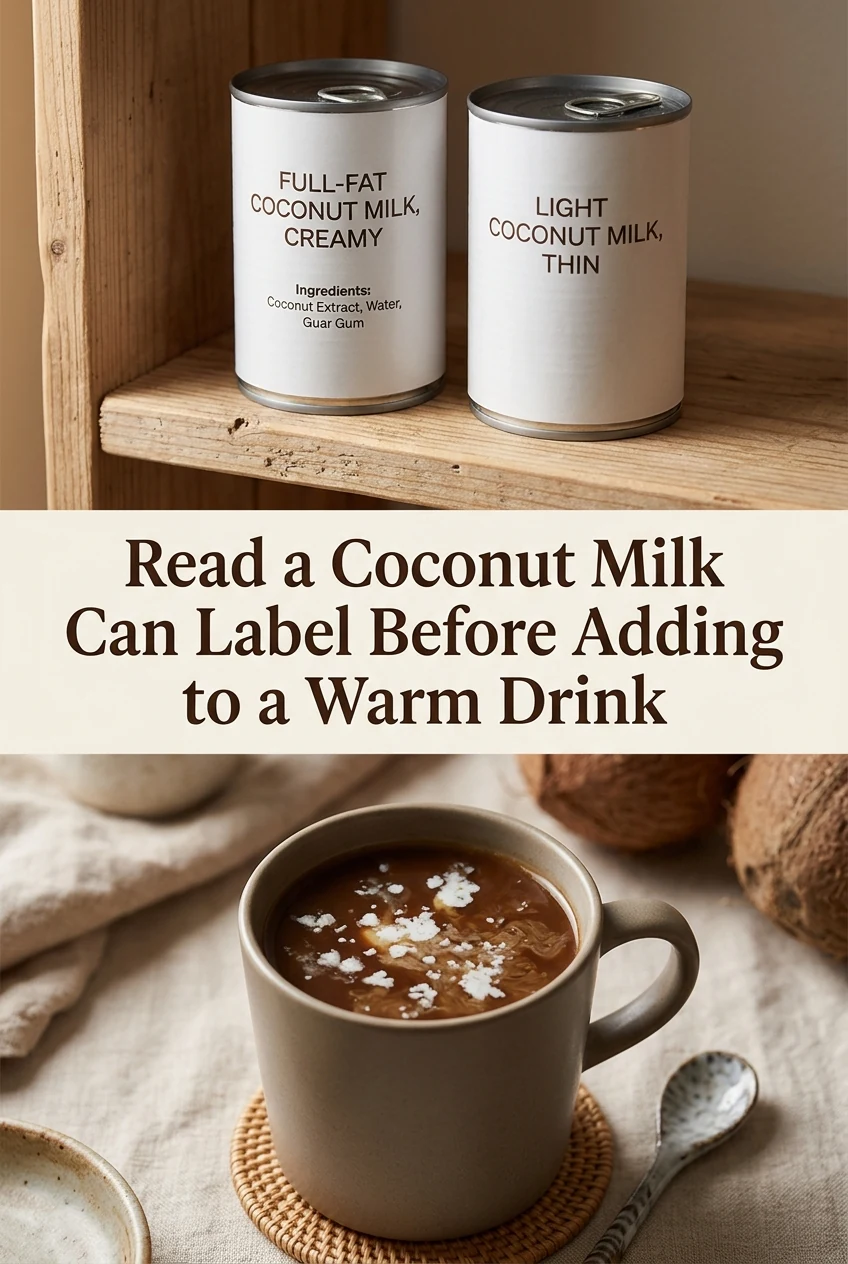
AI-generated editorial concept created for this article. The image is not a technical diagram or a tested result.
Fat Content Is the First Number to Find
Look for the fat per 100 ml figure in the nutrition panel. Full-fat coconut milk typically shows 15 to 20 grams of fat per 100 ml, while light versions usually fall between 3 and 7 grams. This number predicts how rich and stable the drink will be when heated. A full-fat can produces a noticeably thicker, creamier result. A light can produces a thinner liquid that blends more easily but contributes less body, which matters in drinks where coconut milk is the primary source of texture.
What Stabilisers and Thickeners Tell You
Many canned coconut milks include guar gum, carrageenan, or similar ingredients to prevent separation on the shelf. These stabilisers generally hold the emulsion together better during gentle heating than unstabilised versions, which can split into oily and watery layers if heated too quickly or too high. If the ingredient list shows no stabilisers, plan to heat the coconut milk slowly over low heat and stir continuously. Stabilised versions tolerate slightly less careful handling but can still curdle if brought to a rolling boil.
Checking for Added Sugar or Flavouring Before Measuring
Some cans marketed as coconut milk contain added sugar or vanilla flavouring, which is more common in products positioned for dessert use. If your drink recipe already includes a sweetener, using a pre-sweetened can without adjusting will produce an overly sweet result. The ingredient list will show sugar or flavouring near the top if present in meaningful quantity. This is easy to miss when cans from different brands look similar on the shelf.
Matching the Can to the Drink's Required Texture
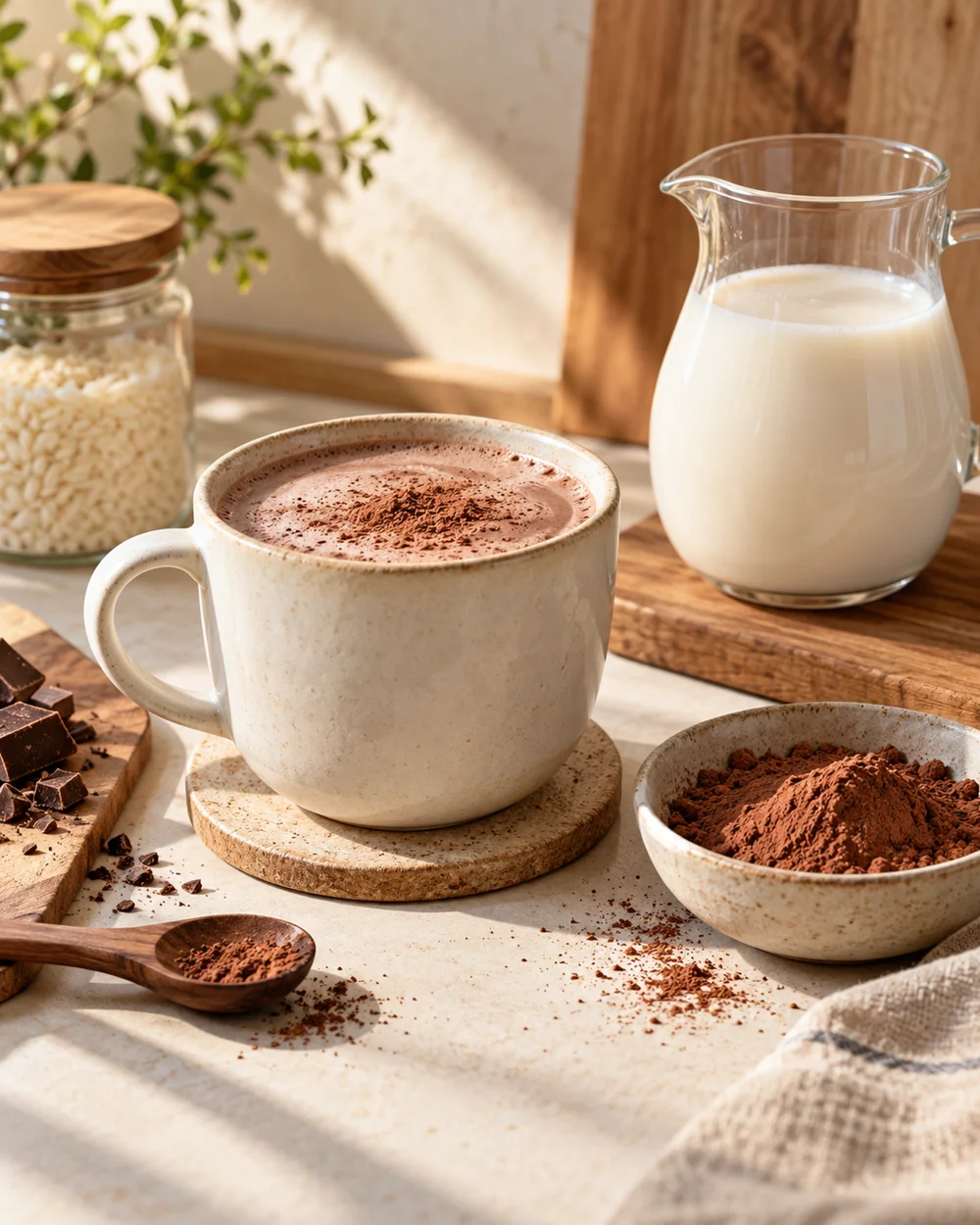
A warm spiced cocoa drink that relies on coconut milk for creaminess benefits from a full-fat, stabilised can used at around 100 to 150 ml per serving. A lighter tea-based warm drink where coconut milk is a background note rather than the main body works well with a light version at 60 to 80 ml. These are illustrative quantity ranges to show the scale of difference, not fixed recipe amounts. Adjust based on the specific drink and your preference for richness.
Opening the Can and Handling Separated Contents
Full-fat coconut milk often separates in the can, with solid cream sitting above watery liquid. This is normal and not a sign of spoilage. Before opening, shake the can firmly for ten to fifteen seconds to recombine the contents if you want a uniform consistency. If your drink specifically calls for thick coconut cream, open without shaking and spoon the solid layer from the top. Refrigerate any unused portion in a sealed container at 4 degrees Celsius and use within two days.
A little more
to know.
Why does my coconut milk look grainy after heating even though I stirred it?
Graininess usually indicates the emulsion has broken, often from heat that was too high or too sudden. This is more common with unstabilised full-fat versions. Reduce heat to the lowest setting and add coconut milk after removing the pan from direct heat, stirring it in gradually.
Is the fat that solidifies at the top of a cold can safe to use, or should it be discarded?
The solidified layer is concentrated coconut cream and is safe to use. It forms because coconut fat solidifies at cool temperatures, which is a normal physical property. Stir or blend it back into the liquid portion before measuring, or use it deliberately as a richer addition to the drink.
Original editorial guidance and recipe formulations, not independently kitchen-tested. Times are estimates and depend on equipment and product directions. Cooked bases need additional cooling and refrigeration before cold serving. Images are AI-generated illustrations; appearance and yield may vary. Check actual ingredient labels, allergens, and any certification you require. We do not certify products. Read our approach.
Save to Pinterest ↗ANOTHER IDEA FOR THE COUNTER