Prevent Fresh Citrus Zest Bitterness in Simmered Milk
Infusing warm milk with orange or lemon peel imparts a bright, floral aroma to cafe drinks, but improper technique can easily yield bitter undertones or curdled dairy. The primary causes of bitterness are the spongy white albedo beneath the colored skin and extended heating that draws out unpleasant compounds. In addition, high heat combined with traces of citrus acid can cause delicate milk proteins to coagulate. By shaving wide, clean ribbons of outer peel without pith and gently warming the dairy, you capture aromatic citrus oils while keeping the milk smooth.
Read the note ↓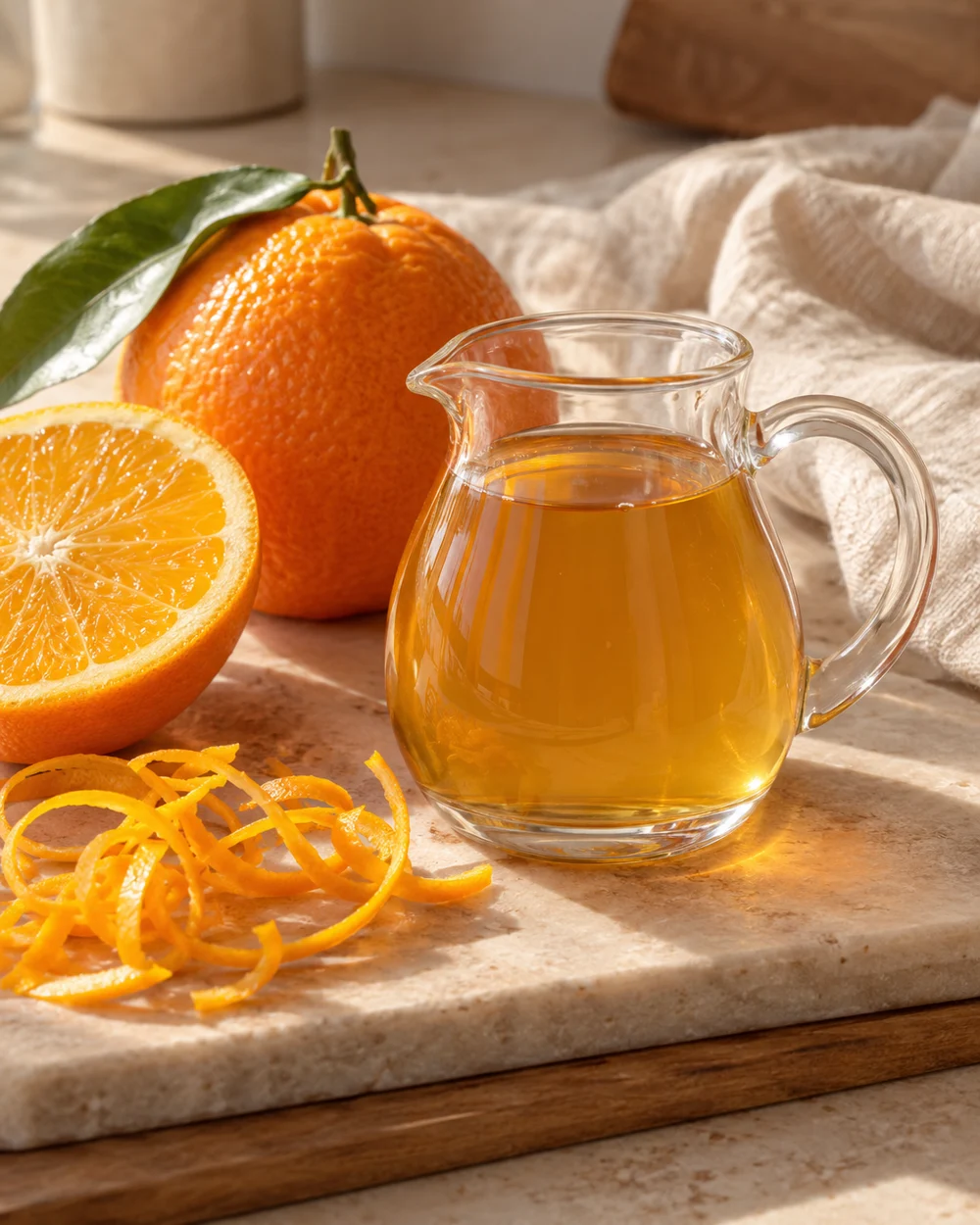
Representative category illustration reused from our editorial library; it does not depict this specific project or a tested result.
Anatomy of the Citrus Rind
The outer colored layer of citrus fruit, known as the flavedo, contains essential oil glands packed with aromatic compounds such as limonene and citral. Directly beneath lies the albedo, the spongy white pith that contains bitter compounds such as naringin and limonin. These bitter constituents dissolve readily into warm milk during prolonged heating. To protect the sweet, clean flavor of your dairy base, peeling must be precise, taking only the colored surface while leaving the white pith behind on the fruit.
Proper Peeling Mechanics
Wash and dry a fresh, firm orange or lemon thoroughly. Using a sharp swivel or Y-shaped vegetable peeler, apply light, even pressure to shave wide ribbons roughly 5 centimeters long and 2 centimeters wide. Inspect the underside of each strip immediately. If any white pith clings to the back, lay the ribbon flat on a cutting board and carefully trim the white layer away with a sharp paring knife until only the thin, colored zest remains.
Bounded Infusion Measurements
For a balanced infusion, measure 250 milliliters of whole milk into a small heavy-bottomed saucepan. Add two trimmed ribbons of citrus peel, totaling roughly 2 to 3 grams of zest. Avoid grating or finely shredding the zest with a rasp for simmered milk; fine particles are difficult to strain out completely and can quickly release harsh, over-extracted flavors into the dairy during sustained heating.
Temperature and Duration Control
Warm the milk and citrus ribbons over medium-low heat until the dairy reaches approximately 65 to 70 degrees Celsius, indicated when steam rises and tiny bubbles form along the edge of the pan. Do not let the milk boil, as high heat can cause dairy proteins to scorch or curdle in the presence of citrus oils. Maintain this gentle heat for 5 to 7 minutes, then remove the pan from the stove and lift the peel strips out immediately with tongs.
Base Handling and Chilling Rules
Use the warm, fragrant milk immediately for specialty drinks, or cool it rapidly for later cafe service. If storing, place the infused milk into a clean container and refrigerate at 4 degrees Celsius or lower within two hours, or within one hour if your room temperature is 32 degrees Celsius or higher. Kept covered and thoroughly chilled, the citrus-infused dairy maintains clean aroma without souring for up to 48 hours.
A little more
to know.
Why did my milk curdle even though I avoided the white pith?
Curdling usually happens if the milk reaches a boil or if acidic juice from the cut fruit accidentally enters the pan. Keeping the heating temperature below 70 degrees Celsius and ensuring you use only dry, pith-free outer peel prevents unwanted curdling.
Can I leave the citrus peel in the milk while it cools?
No. Residual heat continues to extract astringent compounds from the peel even after removing the pan from the burner. Always retrieve and discard the peel strips immediately once the infusion window closes.
Original editorial guidance and recipe formulations, not independently kitchen-tested. Times are estimates and depend on equipment and product directions. Cooked bases need additional cooling and refrigeration before cold serving. Images are AI-generated illustrations; appearance and yield may vary. Check actual ingredient labels, allergens, and any certification you require. We do not certify products. Read our approach.
Save to Pinterest ↗ANOTHER IDEA FOR THE COUNTER