Prevent Condensation Dripping from Chilled Serving Carafes
Serving chilled brew or iced tea from glass carafes often causes moisture to run down the exterior walls, puddling onto tabletop surfaces and creating slick, hard-to-grip glass. This condensation occurs as warm ambient moisture contacts the cold glass surface. Relying solely on loose paper napkins creates soaked, tearing wraps that look untidy and drop lint into beverages. A structured absorbent linen collar applied directly to the carafe body catches running droplets, providing a drier grip and clean tabletop service throughout an entire sitting.
Read the note ↓
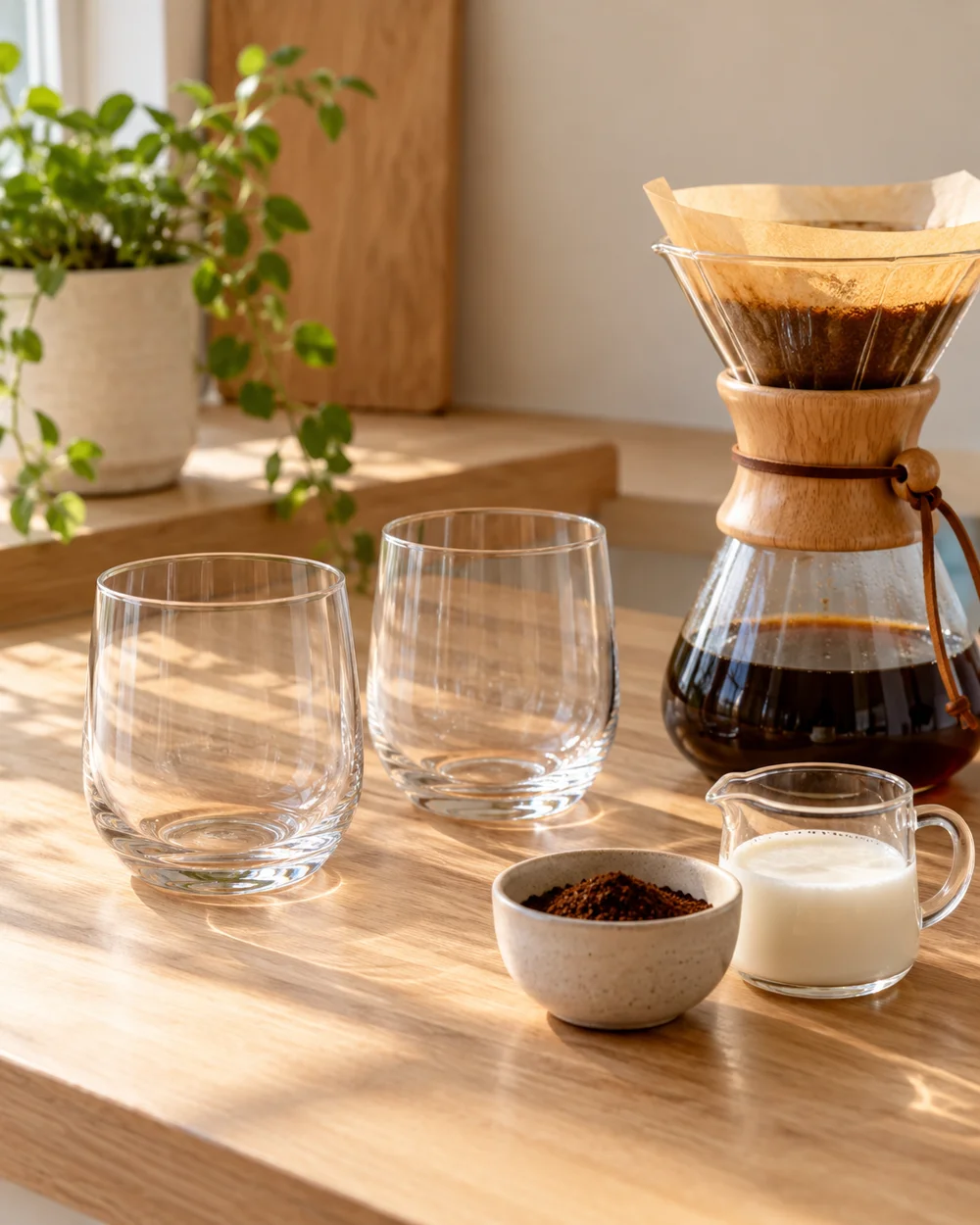
Representative category illustration reused from our editorial library; it does not depict this specific project or a tested result.
The Mechanism of Carafe Runoff
Glass carafes filled with refrigerated liquid quickly cool below the ambient dew point. Water vapor in the room air condenses into droplets along the vertical sides. Because smooth glass offers zero absorption, gravity pulls these droplets downward, collecting in the recessed base rim. When tilted to pour, accumulated water spills across the tabletop or runs down the spout onto the user's hand, creating an uneven grip and unnecessary cleanup.
Selecting the Linen Wrap Material
Choose a medium-weight, unbleached linen or tightly woven cotton cloth roughly ten centimeters wide by twenty-five centimeters long. Cellulose towels degrade when saturated, while synthetic fabrics tend to shed water rather than soaking it up. Natural woven linen holds accumulated condensation effectively without linting, making it a dependable fabric for catching steady carafe perspiration during extended counter service.
Constructing the Base Collar
Fold the cloth strip lengthwise into a three-centimeter band to form multiple internal absorbent layers. Wrap the band snugly around the lower third of the carafe, just above the bottom curve where moisture collects before dripping. Secure the wrap with a simple elastic band, a small cloth loop, or a snug tuck. Ensure the wrap sits completely flat against the glass without loose edges that might catch on glasses during pouring.
Carafe Preparation Workflow
Before seating the linen collar, wipe the exterior of the chilled glass thoroughly dry with a clean service towel. Position the dry wrap onto the dry glass before bringing the vessel to the service area. Introducing the wrap to an already wet surface saturates the inner linen prematurely, reducing its capacity to catch continuous air condensation over the next thirty to forty-five minutes of table rest.
Sanitation and Table Maintenance
Remove the fabric collar immediately after service concludes. Wash damp wraps regularly in hot water and dry them completely before reuse to prevent mildew formation. If serving chilled dairy-based drinks, ensure carafes are returned to active refrigeration at or below four degrees Celsius within two hours, keeping any drips from contaminating the exterior fabric wraps during warm ambient table exposure.
A little more
to know.
Can silicone sleeves replace fabric wraps to stop water dripping?
Silicone improves hand grip but does not absorb moisture. Condensation will still pool beneath the sleeve edge and spill onto the table when the carafe is tilted, requiring regular manual wiping.
How many pour cycles can a single linen band handle?
Service life varies with room temperature and ambient humidity. In typical indoor conditions, a folded three-layer band catches condensation runoff across a standard meal or beverage sitting before dampness indicates it is time to swap on a dry wrap.
Original editorial guidance and recipe formulations, not independently kitchen-tested. Times are estimates and depend on equipment and product directions. Cooked bases need additional cooling and refrigeration before cold serving. Images are AI-generated illustrations; appearance and yield may vary. Check actual ingredient labels, allergens, and any certification you require. We do not certify products. Read our approach.
Save to Pinterest ↗ANOTHER IDEA FOR THE COUNTER