Prepare Stovetop Rice Pudding for Two Small Bowls
A small pot of stovetop rice pudding suits a quiet afternoon at a home cafe table set for two. This article outlines one illustrative plan using short-grain white rice and pasteurized whole milk, cooked gently on a household burner. The quantities are sized for two modest dessert bowls. Because this is a home-cafe technique rather than a kitchen-tested result, your stove, pot, and rice brand will influence the outcome, so treat every figure here as a starting point you adjust by observation.
Read the note ↓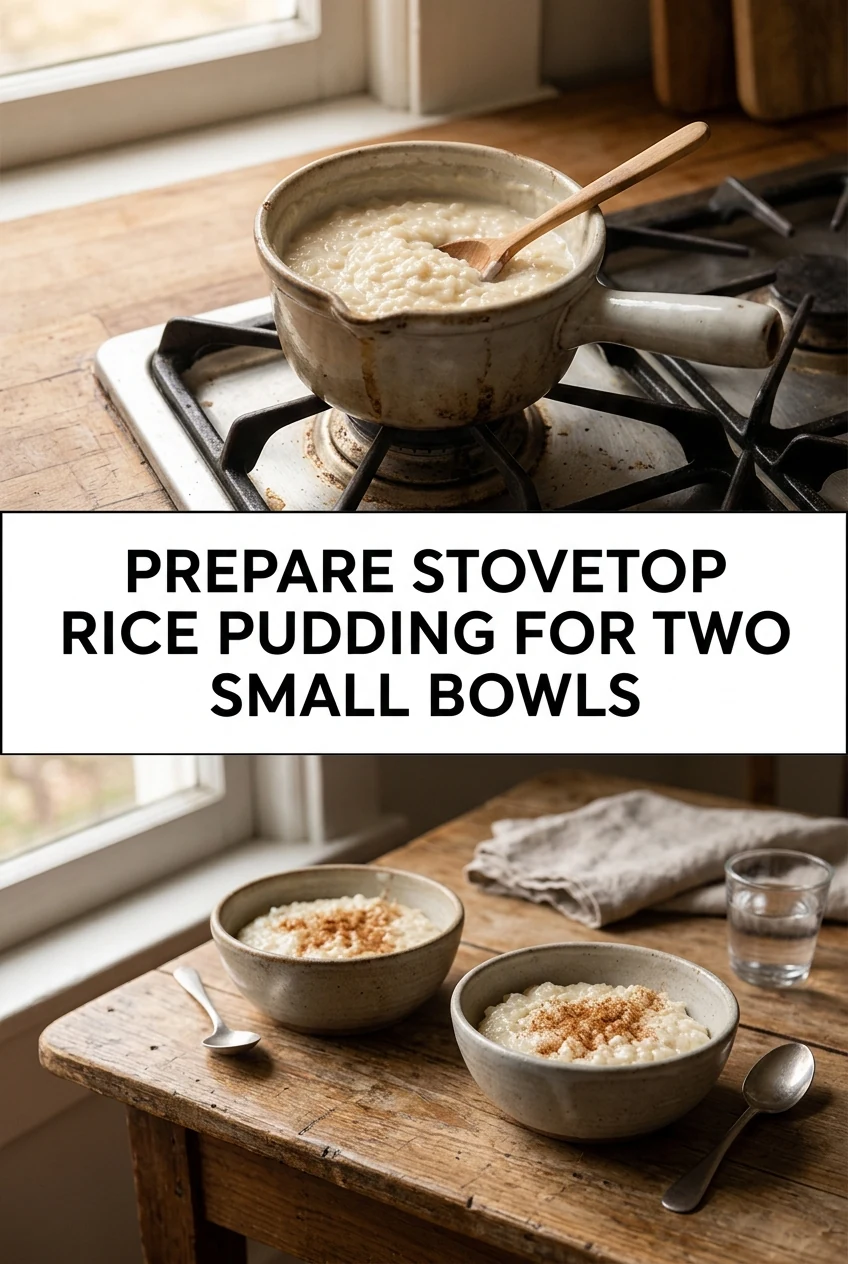
AI-generated editorial concept created for this article. The image is not a technical diagram or a tested result.
Choose Your Rice and Understand Why It Matters
Short-grain white rice, such as a Japanese-style sushi rice or an Italian arborio, releases starch gradually as it cooks, which helps the pudding thicken without added thickeners. Long-grain rice releases less starch and tends to produce a thinner, more separate texture. For two small bowls, measure 60 grams of uncooked short-grain white rice on a kitchen scale. Rinse it once under cold tap water in a fine-mesh strainer, then drain well. This single rinse removes loose surface starch that could make the pudding gluey rather than creamy. Check the packaging of whichever rice you buy, because some specialty rices carry specific preparation notes from the maker that take priority over general guidance.
Gather Ingredients for Two Bowls
For this illustrative plan you will need: 60 g rinsed short-grain white rice, 500 ml pasteurized whole milk, 2 tablespoons white granulated sugar, a small pinch of fine salt, and one-quarter teaspoon of alcohol-free vanilla flavoring. Confirm the vanilla product label explicitly states it is alcohol-free before purchasing; many standard vanilla extracts contain alcohol and are not suitable here. Pasteurized whole milk is used because its fat content supports a richer texture and it is widely available. Do not substitute unpasteurized milk. These quantities are designed to yield approximately two 180 ml to 200 ml servings, though actual yield varies with heat level and how long the mixture reduces.
Cook the Pudding Step by Step
Place the drained rice and 500 ml of pasteurized whole milk in a small, heavy-bottomed saucepan. Set the burner to a medium-low heat. Stir the mixture every two to three minutes using a wooden spoon or silicone spatula, scraping the bottom of the pan to prevent sticking. As the milk heats, small bubbles will appear at the edges before a full simmer develops. Once a gentle simmer is visible, reduce the heat further so the surface just barely moves. Continue stirring regularly. After roughly 25 to 35 minutes of gentle simmering, the rice should be fully tender and the liquid noticeably thickened. Add the sugar and salt, stir until dissolved, then remove the pan from the heat. Stir in the alcohol-free vanilla flavoring off the heat. The pudding will thicken further as it cools. Taste and adjust sugar if needed. Because stovetop heat varies by appliance and pan material, watch the texture rather than the clock.
Portion and Serve or Refrigerate Promptly
Spoon the pudding into two clean bowls. If you plan to serve it warm, do so within a short time of cooking. If you prefer it chilled, allow the pudding to cool at room temperature for no more than a brief period, then cover each bowl with a lid or cling film and place it in the refrigerator. Prompt refrigeration is important because cooked milk-based dishes are perishable. Do not leave the pudding at room temperature for an extended period. Consume refrigerated portions within a timeframe consistent with standard safe food handling for cooked dairy dishes in your household; consult a reliable food safety source in your region for specific guidance, as no universal storage lifespan is stated here. Do not re-heat and re-cool multiple times.
Simple Topping Ideas for a Home-Cafe Presentation
A light dusting of ground cinnamon over each bowl adds warmth to the presentation without additional cooking. A few raisins stirred in during the last five minutes of cooking soften nicely. Finely chopped unsalted pistachios scattered on top just before serving add a gentle crunch. A drizzle of date syrup across the surface gives a caramel-like sweetness. Keep toppings simple so the creamy rice base remains the focus. All toppings should be halal-certified or naturally free of prohibited ingredients; check packaging where relevant.
A little more
to know.
Can I use low-fat milk instead of whole milk?
You can use low-fat pasteurized milk in this plan, but the pudding will likely be thinner and less rich because whole milk contains more fat, which contributes to body and texture. You may need to cook the mixture a little longer to reach a similar consistency, and the result will still vary by your specific stove and pan. Adjust by observation rather than by a fixed time.
How do I know when the pudding is thick enough to take off the heat?
Draw your spoon or spatula slowly through the pudding; if the line it leaves holds its shape for a moment before the mixture flows back together, the pudding has reduced sufficiently. Remember that it will continue to thicken as it cools in the bowl, so pulling it from the heat when it looks slightly looser than your target consistency is a reasonable approach. This is an observational cue, not a precise measurement.
Original editorial guidance and recipe formulations, not independently kitchen-tested. Times are estimates and depend on equipment and product directions. Cooked bases need additional cooling and refrigeration before cold serving. Images are AI-generated illustrations; appearance and yield may vary. Check actual ingredient labels, allergens, and any certification you require. We do not certify products. Read our approach.
Save to Pinterest ↗ANOTHER IDEA FOR THE COUNTER