Prepare Plain Waffle Batter for One Actual Waffle Maker
This article shows you how to mix a small, measured batch of plain waffle batter sized for a single session at home. It does not tell you how to load, cook, or remove waffles, because those steps depend entirely on the manual that came with your specific waffle maker. What you will find here is a straightforward mixing plan, an illustrative worked example using one common batter volume, and guidance on handling perishable ingredients responsibly. Treat everything below as a preparation framework, not a kitchen-tested result.
Read the note ↓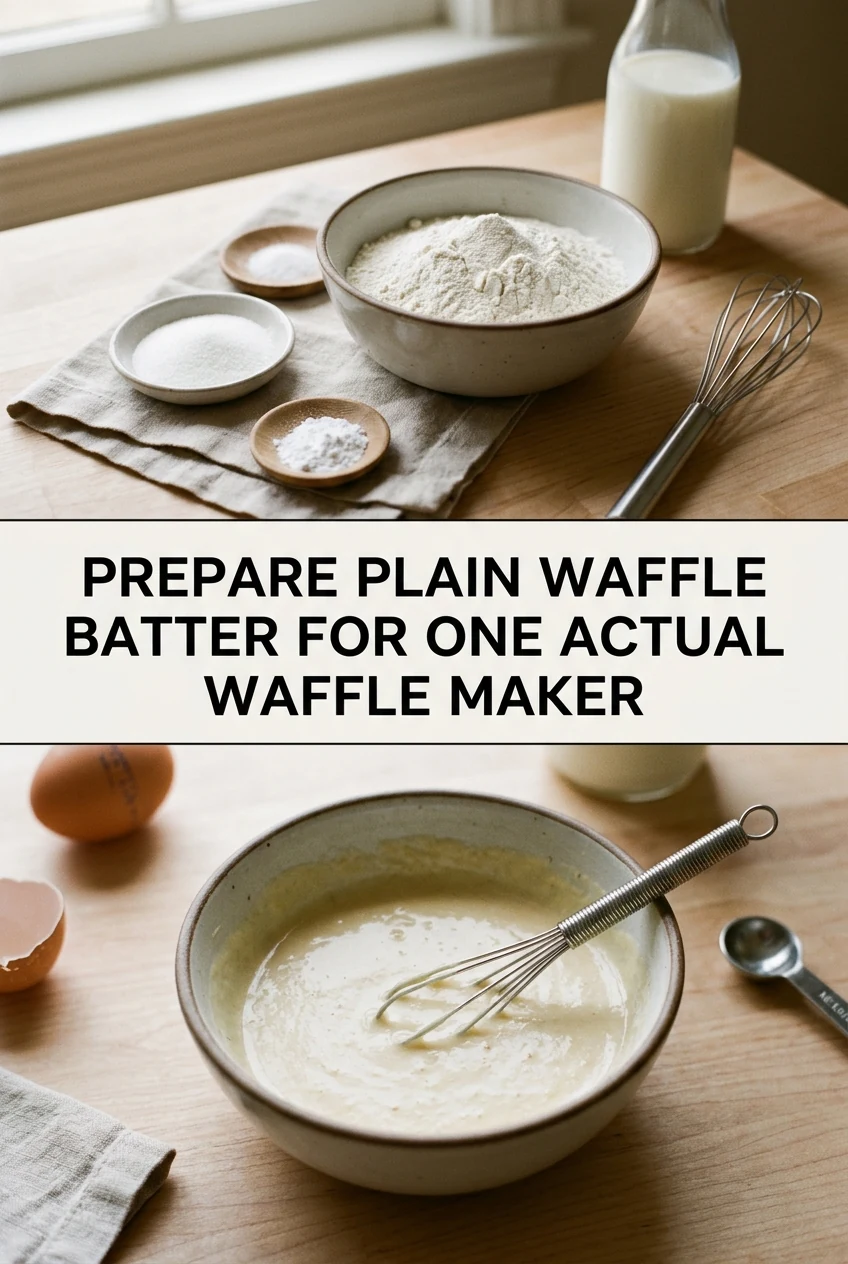
AI-generated editorial concept created for this article. The image is not a technical diagram or a tested result.
Understand What Your Waffle Maker Actually Needs
Before you measure a single gram of flour, open your appliance manual and find the recommended batter volume per cycle. Waffle makers vary widely: a compact round model might call for roughly 120 ml of batter per pour, while a deep Belgian-style plate may need 240 ml or more. Write that number down. Every quantity in your batter plan should trace back to that figure, because overfilling causes overflow and underfilling produces thin, uneven results. Your manual is the only reliable source for this number. Do not rely on a general internet estimate or a figure from a different model.
Gather Halal Ingredients in the Right Proportions
A plain waffle batter uses five core ingredients: plain wheat flour, a leavening agent such as baking powder, a small amount of fine sugar, one egg, and a fat such as neutral cooking oil or melted butter. If your recipe calls for vanilla, use only a product explicitly labeled alcohol-free vanilla flavoring. Milk or a plant-based alternative provides the liquid base. All dairy and eggs should come from halal-certified or otherwise permissible sources according to your own standard. A useful starting ratio for a single small batch is 120 g flour to roughly 180 ml liquid, with one egg and two tablespoons of oil, but adjust this ratio to match the volume your manual specifies. This ratio is an illustrative plan, not a tested formula.
Mix the Batter Correctly Without Overworking It
Separate your dry ingredients from your wet ingredients before combining them. In one bowl, whisk together the flour, baking powder, and sugar until the leavening is evenly distributed. In a second bowl, beat the egg lightly, then stir in the milk and oil. Pour the wet mixture into the dry mixture and stir only until no large dry pockets remain. A few small lumps are acceptable and preferable to a batter that has been stirred until completely smooth, because excessive mixing develops gluten and can affect the texture of the finished waffle. Do not add extra liquid to chase a smoother appearance.
A Worked Example for One Compact Round Waffle Maker
Suppose your manual states that your compact round waffle maker takes 120 ml of batter per cycle and you want to prepare enough for two cycles. Your target total is 240 ml of finished batter. Working from the illustrative ratio above and scaling it down, you might use 80 g of flour, one small egg, approximately 120 ml of milk, one tablespoon of neutral oil, half a teaspoon of baking powder, and one teaspoon of fine sugar. Measure the finished batter in a jug after mixing to check that you are close to your 240 ml target. Adjust the milk in small increments if the volume falls noticeably short. This example is a planning illustration only. Your actual quantities must be guided by your manual's stated capacity and your own trial.
Handle Perishables Promptly and Follow Your Manual for Cooking
Batter containing egg and milk is perishable. If you are not cooking immediately, cover the bowl and place it in the refrigerator. Do not leave it at room temperature for an extended period. Use the refrigerated batter within a timeframe that reflects safe food handling in your household; no specific shelf life is stated here because conditions vary. When you are ready to cook, follow your appliance manual precisely for preheating, greasing the plates if required, pouring the batter, closing the lid, and determining when the waffle is done. Those steps are the responsibility of your specific machine and its documentation, not this article.
A little more
to know.
Can I prepare the batter the night before?
You can mix the batter ahead of time and refrigerate it in a covered container, but because it contains egg and milk it must be kept cold and used within a timeframe consistent with safe food handling in your home. No specific number of hours is guaranteed here. Give the batter a gentle stir before use, as some settling may occur.
What if my batter seems too thick or too thin after mixing?
Add milk one tablespoon at a time if the batter appears very stiff, or add a small spoonful of flour if it looks very runny. Make changes gradually and stir briefly after each addition. Keep in mind that the target consistency is a pourable batter that holds together, and that the final texture of the waffle also depends on your specific appliance and its settings as described in your manual.
Original editorial guidance and recipe formulations, not independently kitchen-tested. Times are estimates and depend on equipment and product directions. Cooked bases need additional cooling and refrigeration before cold serving. Images are AI-generated illustrations; appearance and yield may vary. Check actual ingredient labels, allergens, and any certification you require. We do not certify products. Read our approach.
Save to Pinterest ↗ANOTHER IDEA FOR THE COUNTER