Prepare a Small Tamarind and Pear Base for Still and Sparkling Cold Drinks
Tamarind paste dissolves unevenly in cold water, and fresh pear juice oxidises quickly, so combining them in a single small base requires a specific order of steps. This guide covers dissolving the paste in warm water, straining out fibres, and folding in pear juice to produce a concentrated liquid that pours cleanly into both still and sparkling drinks without needing two separate preparations or additional sweetening steps at serving time.
Read the note ↓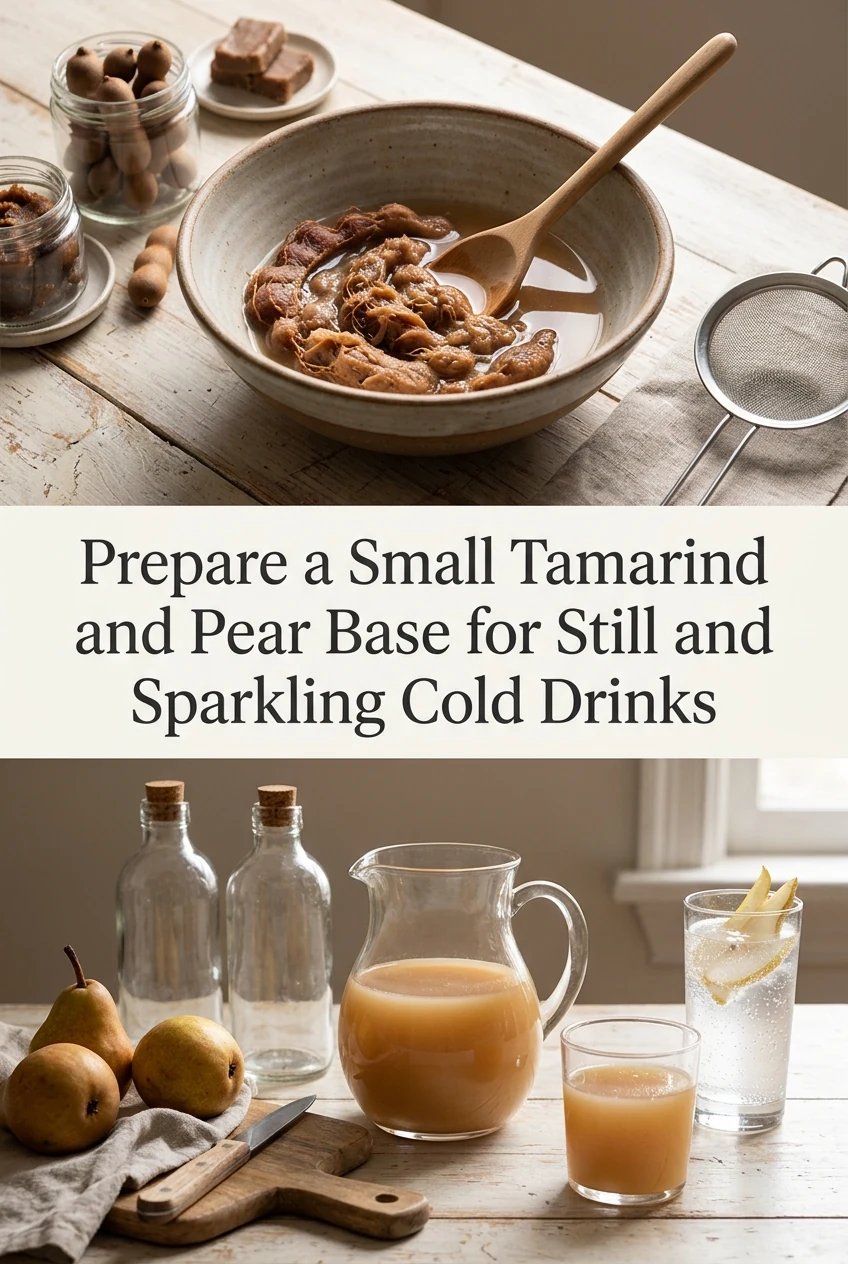
AI-generated editorial concept created for this article. The image is not a technical diagram or a tested result.
Choose your tamarind paste quantity and warm water ratio
Start with 30 grams of block tamarind paste or seedless tamarind concentrate and 120 millilitres of hot water. Warm or hot water softens the compacted pulp so it breaks apart readily, whereas cold water leaves dense, unyielding lumps. If you use jarred concentrate rather than block paste, reduce the quantity to about 20 grams because commercial concentrate is pre-strained and more concentrated. This small batch yields enough base for three to four single servings.
Dissolve and strain the tamarind liquid cleanly
Press the softened paste against the side of a small bowl using the back of a spoon, working it into the warm water until no large lumps remain. Pour the mixture through a fine mesh strainer into a clean jug, pressing the pulp firmly to extract all liquid. Discard the dry fibre mat left in the strainer. The strained liquid should be smooth and pourable. Cloudy liquid is normal and does not indicate a problem with the process.
Juice the pear and add it at the right moment
Juice one medium ripe pear using a hand juicer or press the grated flesh through a fine cloth to extract roughly 80 to 100 millilitres of juice. Add the pear juice only after the tamarind liquid has cooled to room temperature. Adding it while the liquid is still warm or hot accelerates browning and dulls the fresh fruit flavour. Stir gently rather than whisking to avoid introducing air bubbles that would make sparkling assembly uneven.
Sweeten the base as a single decision before storing
Taste the combined liquid and add cane sugar or a simple syrup made from equal parts sugar and water if needed, stirring until fully dissolved. Sweetening the base now means you will not need to adjust each glass individually. As an illustrative example, one batch prepared with 30 grams of block paste and 90 millilitres of pear juice required approximately 25 grams of sugar to balance the tartness, though your result will depend on pear ripeness and paste strength.
Store safely and assemble still or sparkling drinks
Transfer the finished base to a clean sealed jar and refrigerate at 4 degrees Celsius or below within one hour of preparation. Use within two days. For a still drink, combine 60 millilitres of base with 180 millilitres of cold water over ice. For a sparkling version, pour the base into the glass first, then add sparkling water slowly down the side of the glass to reduce fizz loss. Do not shake or stir vigorously once sparkling water is added.
A little more
to know.
Can I use bottled pear juice instead of fresh?
Yes, but choose a pasteurised, unsweetened variety and reduce or omit added sugar since bottled juice is often sweeter than fresh. Check that no preservatives are listed that might affect flavour balance with the tamarind.
Why does the base sometimes separate in the jar overnight?
Natural pear solids and tamarind particles settle with time. This is normal. Stir or gently swirl the jar before measuring your serving portion. The separation does not indicate spoilage if the base was stored correctly and used within two days.
Original editorial guidance and recipe formulations, not independently kitchen-tested. Times are estimates and depend on equipment and product directions. Cooked bases need additional cooling and refrigeration before cold serving. Images are AI-generated illustrations; appearance and yield may vary. Check actual ingredient labels, allergens, and any certification you require. We do not certify products. Read our approach.
Save to Pinterest ↗ANOTHER IDEA FOR THE COUNTER