Prepare a Small Tamarind and Lime Base for Still and Sparkling Cold Drinks
A tamarind and lime base gives cold drinks a tart, slightly earthy sourness that works in both still water and sparkling fruit assemblies without requiring a blender or specialist equipment. The process involves dissolving tamarind paste in warm water, straining out fibrous material, then balancing the flavor with lime juice and sugar. Because the base is concentrated, a small batch of around 200 ml yields enough for several drinks. This guide covers the preparation steps, quantities, and how to use the base in two different drink formats.
Read the note ↓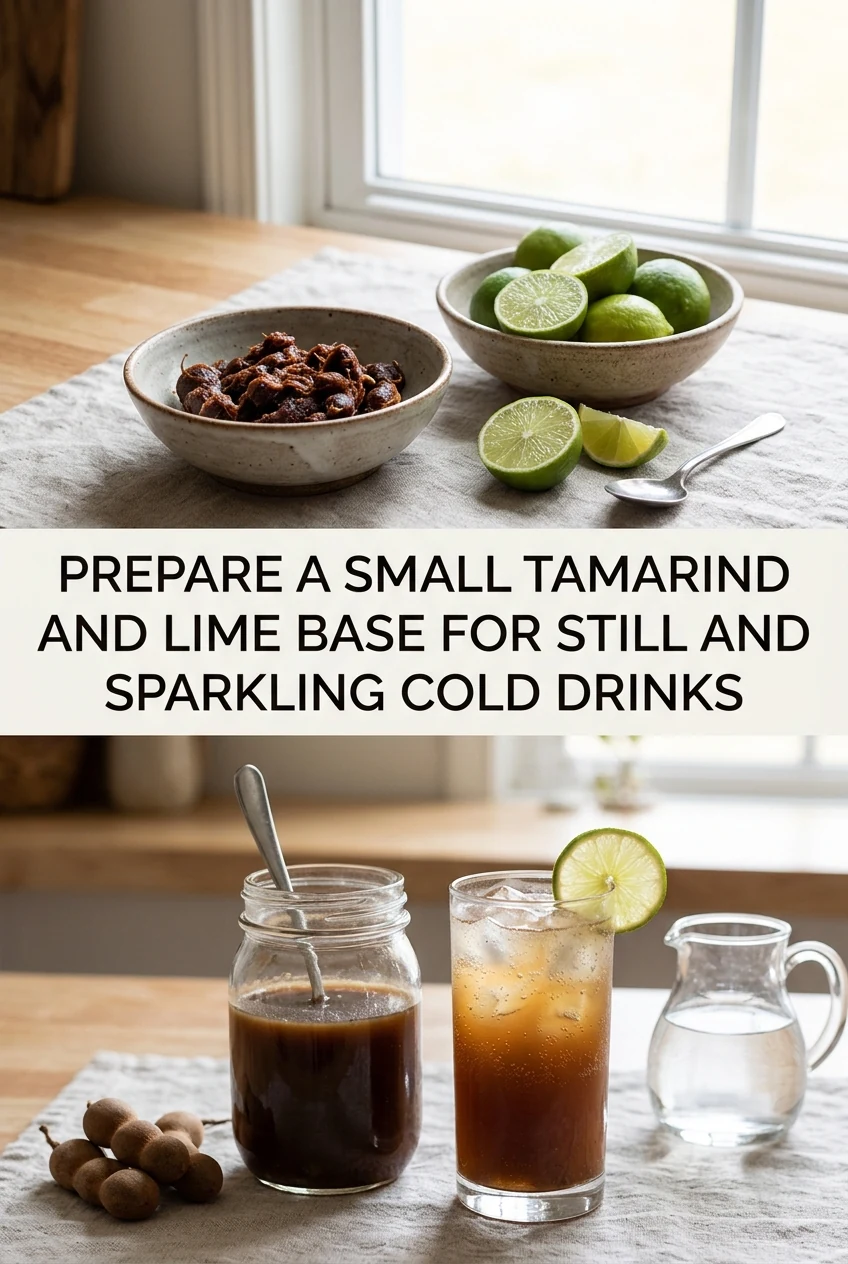
AI-generated editorial concept created for this article. The image is not a technical diagram or a tested result.
Choose and Measure the Tamarind Paste
Use a commercially prepared tamarind paste or concentrate sold in jars, not a compressed tamarind block, which requires a longer soaking and straining process. Measure 3 tablespoons of paste into a small saucepan or heatproof bowl. Tamarind paste varies in tartness and salt content by brand; some products contain added salt, which will affect how much additional seasoning the base needs. Read the ingredient label before you begin so you can adjust the sugar and salt balance at the end rather than guessing.
Dissolve the Paste in Warm Water
Add 150 ml of warm water, not boiling, to the tamarind paste and stir until the paste fully dissolves into a smooth, dark liquid. If you use water that is too hot, it can make the mixture difficult to handle and may affect the fresh tartness of the lime juice added later. Stir for about 2 minutes until no lumps remain. If the paste is particularly thick, let it sit in the warm water for 3 minutes before stirring; this softens it without requiring heat.
Strain Out the Fibres
Pour the dissolved mixture through a fine mesh strainer into a clean bowl or jug, pressing gently with the back of a spoon to push the liquid through while leaving fibrous material and any seeds behind. Discard the solids. The strained liquid should be smooth and pourable. If your paste was already very smooth and the strainer catches almost nothing, that is acceptable; the straining step is a precaution against texture in the finished drink rather than a required step for all paste types.
Add Lime Juice and Sugar, Then Taste
Stir in the juice of one medium lime, approximately 25 ml, and 2 tablespoons of fine white sugar. Stir until the sugar fully dissolves; fine sugar dissolves more readily in a cool liquid than coarse sugar. Taste the base and adjust: add more lime juice for brightness, more sugar if the tartness is too sharp, or a small pinch of fine salt to round the flavor. The base should taste noticeably concentrated and tart, since it will be diluted when assembled into a drink.
Assemble Into Still and Sparkling Drinks
For a still drink, add 40 to 50 ml of the base to a glass filled with ice, then top with 200 ml of cold still water and stir. For a sparkling version, add the base to the glass first, then pour sparkling water gently down the side of the glass to preserve carbonation. Do not stir vigorously. These are starting proportions; adjust the base quantity to taste. Refrigerate unused base promptly at 4 degrees Celsius or below and use within 3 days. Discard if the aroma or appearance changes.
A little more
to know.
Can I use bottled lime juice instead of fresh?
Bottled lime juice works but often tastes more muted than fresh. If using bottled juice, start with the same quantity and taste carefully before adding more, as some brands have a cooked or preserved note that can become prominent in a tart base.
Why does my base taste too salty even though I did not add salt?
Some commercial tamarind pastes contain added salt as a preservative. Check the label before use and reduce or omit any additional salt in the recipe. Balancing with extra sugar and lime juice can help correct an already-salty batch.
Original editorial guidance and recipe formulations, not independently kitchen-tested. Times are estimates and depend on equipment and product directions. Cooked bases need additional cooling and refrigeration before cold serving. Images are AI-generated illustrations; appearance and yield may vary. Check actual ingredient labels, allergens, and any certification you require. We do not certify products. Read our approach.
Save to Pinterest ↗ANOTHER IDEA FOR THE COUNTER