Prepare a Small Lemon and Honey Syrup Base for Warm Drinks and Cold Dilutions
Honey stirred directly into a cold drink often sinks and leaves a sticky layer at the bottom of the glass. Simmering a small batch of fresh lemon juice and honey together creates a light syrup that dissolves quickly in both warm cups and cold water without residue. This guide covers a practical small-batch method, the right heat level to avoid scorching, and how to store and use the finished syrup safely across a short window.
Read the note ↓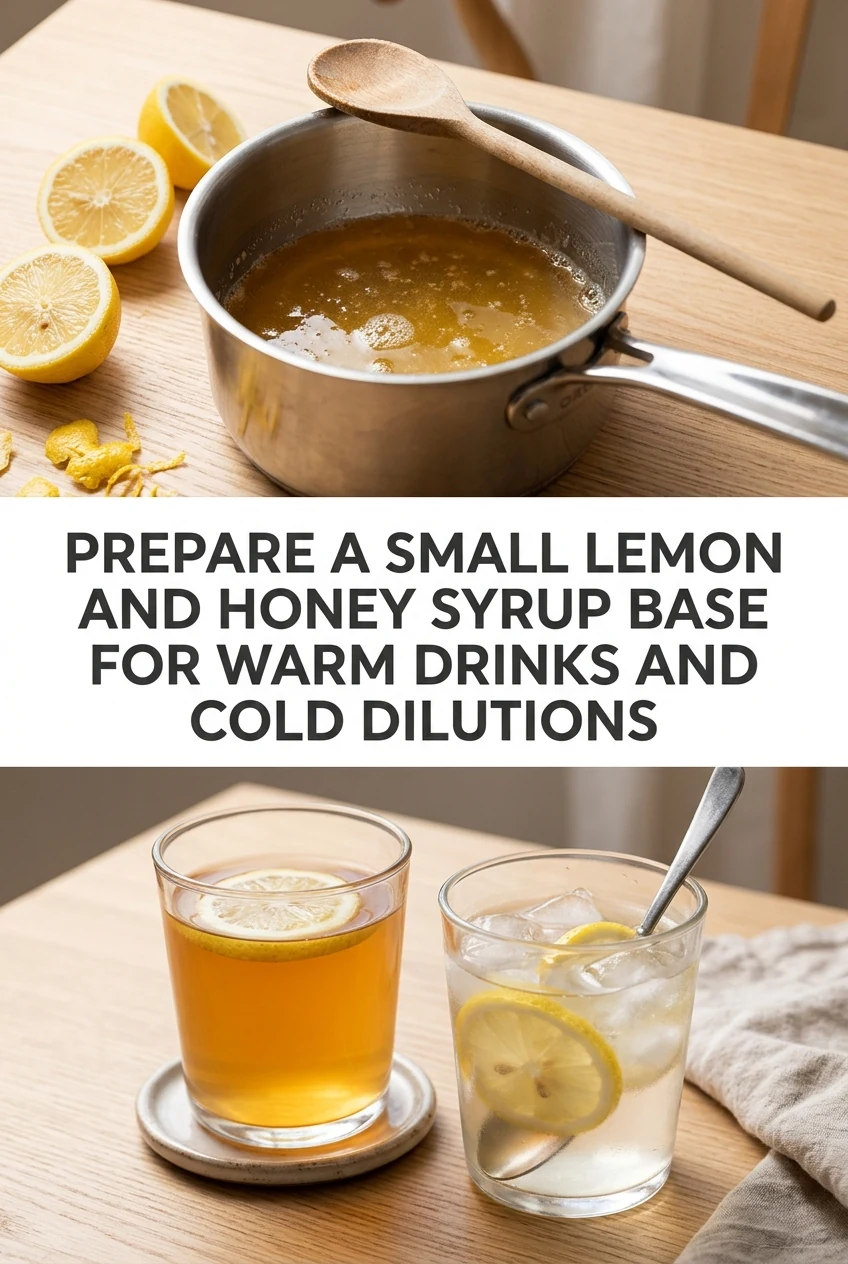
AI-generated editorial concept created for this article. The image is not a technical diagram or a tested result.
Measure a Small Batch to Match Your Weekly Use
A workable small batch uses 60 ml of freshly squeezed lemon juice and 60 ml of honey. This produces roughly 100 ml of finished syrup after some evaporation, enough for approximately eight to ten single-serve drinks depending on how much you use per cup. Avoid making larger batches than you can use within a few days, since the syrup contains no preservatives and must be refrigerated. Squeeze lemons fresh rather than using bottled juice for a cleaner flavor.
Combine and Simmer Over Low Heat Only
Add the lemon juice and honey to a small saucepan and stir briefly to combine before applying heat. Set the burner to low. Stir continuously as the mixture warms. You are aiming for a gentle simmer where small bubbles appear at the edges, not a rolling boil. Boiling drives off lemon aroma quickly and can make the syrup taste flat. Remove the pan from heat as soon as the mixture is fully integrated and slightly thickened, typically within three to four minutes.
Cool Completely Before Transferring to a Storage Container
Pour the finished syrup into a clean glass jar or bottle and allow it to cool down before sealing. Sealing hot syrup tightly traps condensation under the lid, which drips onto the surface and introduces excess moisture. Once the syrup has cooled to room temperature, seal the container securely and refrigerate it promptly. Always use a clean spoon each time you measure from the jar to avoid introducing contaminants.
Use the Syrup in Warm Drinks and Cold Dilutions
For a warm drink, stir 15 to 20 ml of syrup into a cup of hot water or tea and adjust to taste. The syrup dissolves within a few seconds of contact with hot liquid. For a cold drink, add the syrup to the glass first, then pour cold water or sparkling water over it and stir briefly. Starting with syrup at the bottom and liquid on top creates enough agitation to mix without extended stirring, which is useful when the glass is already full of ice.
Recognize When the Syrup Should Be Discarded
Refrigerated lemon and honey syrup made from fresh juice is a perishable product that should be kept chilled and used promptly while fresh. Because this homemade syrup contains no added preservatives, it does not have the extended shelf life of commercial shelf-stable syrups. Check the syrup before each use and discard it if you observe any off odors, unusual cloudiness that was not present when freshly prepared, or signs of mold growth. Never taste-test syrup that shows any indications of spoilage.
A little more
to know.
Can I substitute lime juice for lemon juice in this syrup?
Yes. Lime juice works in the same quantity and follows the same method. The flavor will be sharper and slightly more bitter than lemon. Taste the finished syrup before using it in a drink and adjust the amount per serving accordingly, as lime intensity varies by fruit.
Will the syrup crystallize in the refrigerator?
Honey-based syrups can thicken noticeably when cold but should not crystallize solid at normal refrigerator temperatures. If the syrup becomes very thick, allow the jar to sit at room temperature for a few minutes before measuring. Do not microwave the jar to loosen it.
Original editorial guidance and recipe formulations, not independently kitchen-tested. Times are estimates and depend on equipment and product directions. Cooked bases need additional cooling and refrigeration before cold serving. Images are AI-generated illustrations; appearance and yield may vary. Check actual ingredient labels, allergens, and any certification you require. We do not certify products. Read our approach.
Save to Pinterest ↗ANOTHER IDEA FOR THE COUNTER