Prepare a Small Hibiscus and Ginger Base for Warm and Cold Drinks
A hibiscus and ginger concentrate made in a small batch gives you a flexible base that works in a warm cup topped with hot water or as a cold sparkling drink over ice. The process involves simmering, straining and refrigerating, and takes under 20 minutes of active time. Keeping the batch small means you use it within a safe window without waste, and the quantities here are sized for a realistic home session of two to four drinks.
Read the note ↓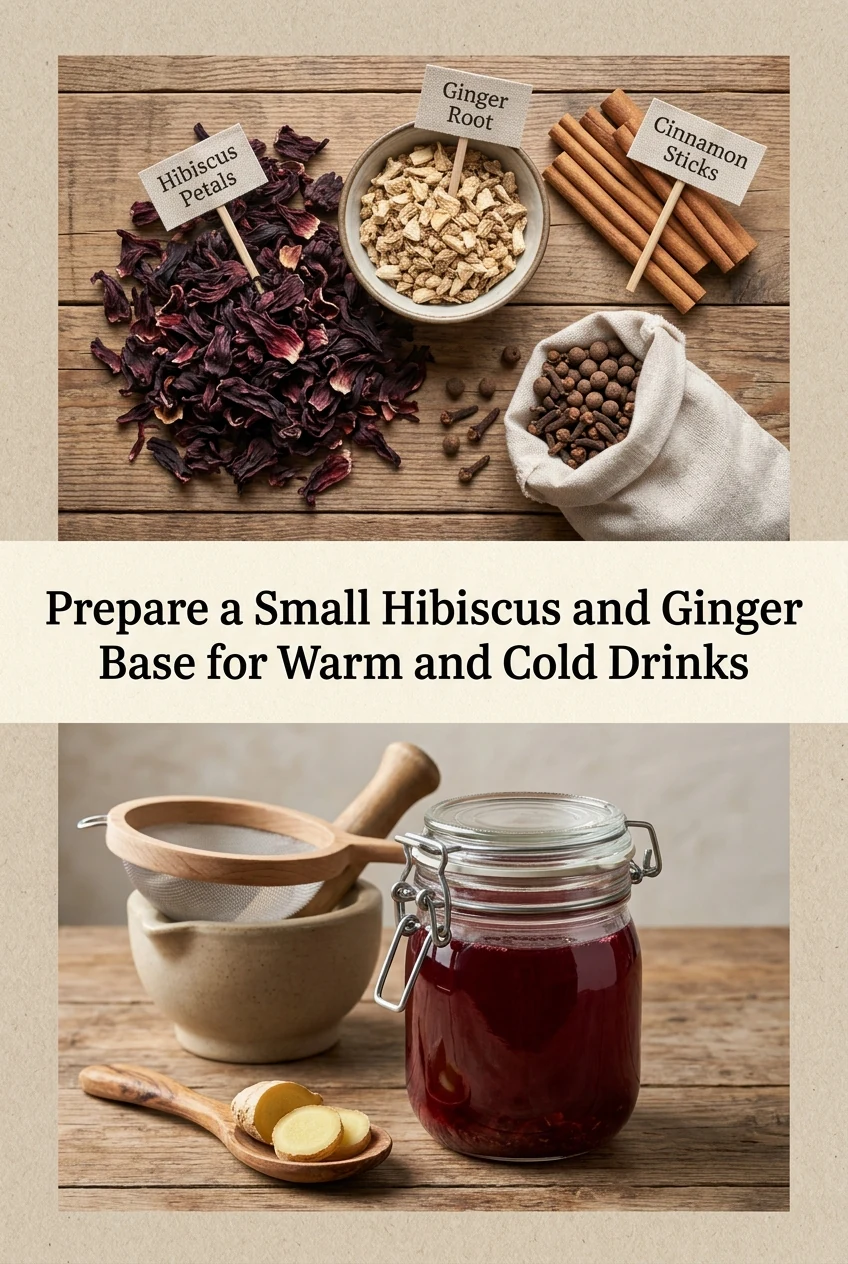
AI-generated editorial concept created for this article. The image is not a technical diagram or a tested result.
Ingredients and Quantities for a Small Batch
Use 10 grams of dried hibiscus flowers, four to five thin slices of fresh ginger approximately three millimetres thick each, 400 millilitres of water and two tablespoons of sugar or honey to start. This produces roughly 300 millilitres of strained concentrate after evaporation and absorption by the flowers. That volume is enough for two to four drinks depending on how much you dilute each serving. Adjust sweetener after straining rather than before, since the flavour concentrates as it cools.
Simmering Method and Timing
Combine hibiscus, ginger and water in a small saucepan. Bring to a gentle simmer over medium heat, then reduce to low and hold for eight minutes. Do not boil vigorously, as this can make the hibiscus taste sharper than intended. After eight minutes, remove from heat and allow to steep for a further five minutes with the lid on. The liquid will be a deep red. Add your sweetener now and stir until fully dissolved before straining. Taste and adjust sweetness at this stage.
Straining and Storing the Concentrate
Pour the liquid through a fine mesh strainer into a clean jar or heatproof jug, pressing the solids gently with the back of a spoon to extract remaining liquid. Discard the spent flowers and ginger. Allow the concentrate to cool to room temperature, then transfer to a sealed jar and refrigerate at 4 degrees Celsius or below within two hours of preparation. Use within three days. Label the jar with the date. Do not store at room temperature after cooling.
Assembling a Warm Drink From the Concentrate
For a warm cup, measure 60 millilitres of concentrate into a mug and top with 150 to 180 millilitres of hot water. This ratio produces a lightly tart, gently spiced drink. If you want it stronger, increase concentrate to 80 millilitres and reduce hot water accordingly. Stir once and serve immediately. You can add a small slice of fresh ginger to the cup for presentation, but it does not significantly change the flavour at this stage. Serve in a ceramic mug to retain heat.
Assembling a Cold Sparkling Drink
Fill a tall glass with ice, pour in 60 millilitres of chilled concentrate, then top slowly with 150 millilitres of plain sparkling water. Pour the sparkling water down the side of the glass to preserve carbonation. Stir once from the bottom with a long spoon. The drink is tart and lightly sweet; add a small squeeze of fresh lime if you want more brightness. This is an illustrative serving example, not a fixed formula. Adjust concentrate volume to your preference.
A little more
to know.
Can I use hibiscus tea bags instead of loose dried flowers?
Yes. Standard commercial tea bags typically contain around two grams of dried hibiscus, so use four to five tea bags in place of 10 grams of loose flowers. Remove the bags at the end of the steep time rather than pressing them hard, as over-squeezing can add bitterness to the concentrate.
Why add sweetener after simmering rather than at the start?
Adding sweetener after simmering lets you taste the concentrate at its actual final strength and adjust accurately. Sugar added at the start can mask the natural tartness until the liquid cools, making it easy to over-sweeten.
Original editorial guidance and recipe formulations, not independently kitchen-tested. Times are estimates and depend on equipment and product directions. Cooked bases need additional cooling and refrigeration before cold serving. Images are AI-generated illustrations; appearance and yield may vary. Check actual ingredient labels, allergens, and any certification you require. We do not certify products. Read our approach.
Save to Pinterest ↗ANOTHER IDEA FOR THE COUNTER