Prepare a Small Batch of Walnut and Date Paste for Cold Milk Drinks
Blending soaked pitted dates with lightly toasted walnuts produces a thick, naturally sweet paste that disperses into cold milk without clumping, provided you measure both components by weight rather than volume. This guide covers soaking time, toasting level, blending order, and how to portion the finished paste so each drink starts from a consistent base rather than a rough estimate.
Read the note ↓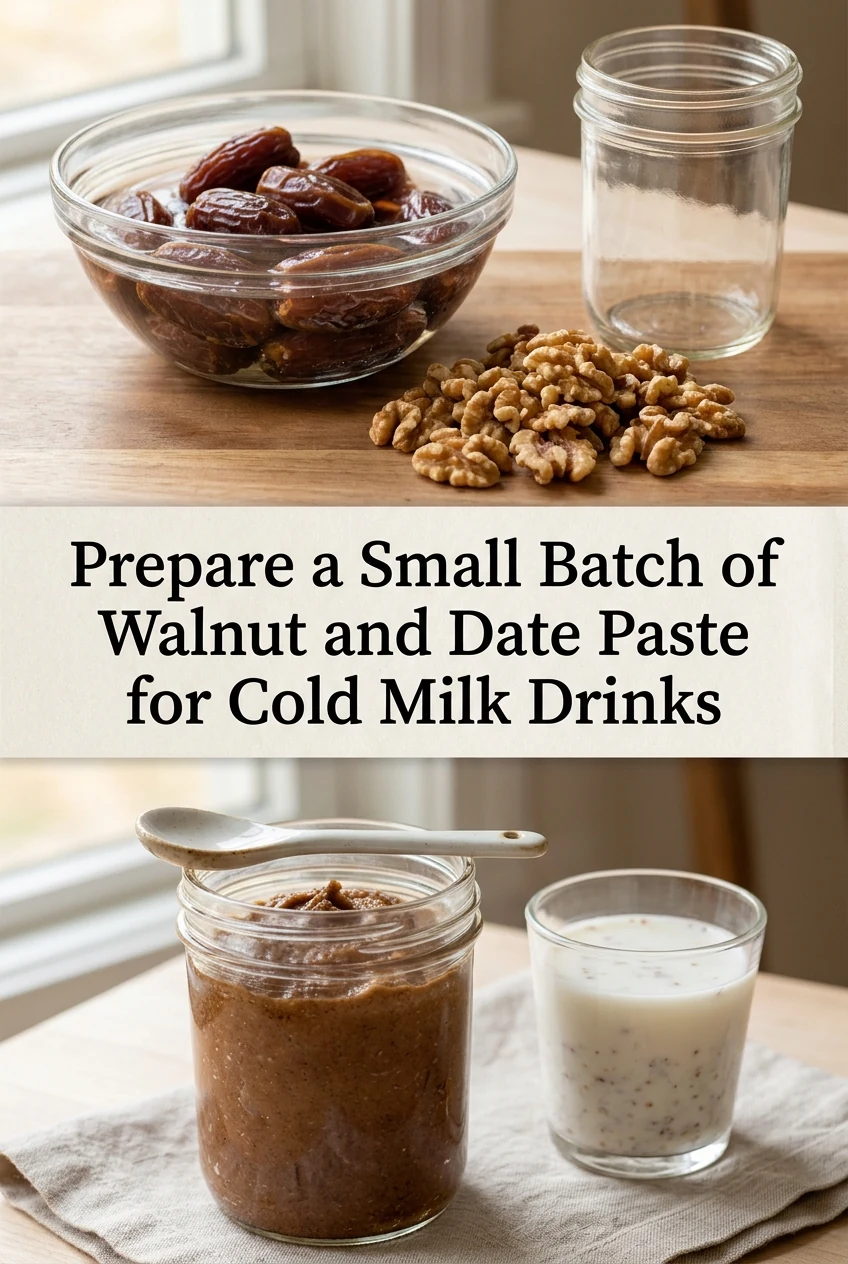
AI-generated editorial concept created for this article. The image is not a technical diagram or a tested result.
Choosing and Soaking the Dates
Use soft, moist pitted dates rather than dried pressed blocks, which need longer soaking and often leave fibrous threads in the paste. Weigh out 100 g of pitted dates and place them in a small bowl. Cover with 80 ml of room-temperature water and leave for 20 minutes. The water softens the flesh and later becomes part of the paste liquid, so do not drain it. Harder dates may need 10 additional minutes before the flesh yields easily when pressed.
Toasting the Walnuts Lightly
Weigh 40 g of walnut halves and spread them in a single layer in a dry, cold pan. Set the heat to medium-low and stir continuously for 3 to 4 minutes until the pieces smell nutty and turn one shade darker. Remove them immediately onto a plate; residual pan heat continues cooking them for another 30 seconds. Let them cool completely before blending. Warm walnuts release oil too quickly in the blender, which can make the paste grainy rather than smooth.
Blending to a Smooth Paste
Transfer the soaked dates and all their soaking water into a small blender jar. Add the cooled walnuts. Blend on high for 30 seconds, scrape the sides down with a spatula, then blend again for 20 seconds. The paste should be thick enough to hold a slow ribbon when dropped from a spoon. If it looks coarse after the second blend, add 10 ml of water and blend for a further 15 seconds. This batch yields roughly 180 g of finished paste, which is an illustrative estimate, not a guaranteed weight.
Portioning for Drinks
Spoon the paste into a small jar and mark the side with a piece of tape showing the total weight. For a 250 ml glass of cold milk, 25 g of paste is a workable starting point for a moderately sweet drink. Weigh each portion directly into the glass on a kitchen scale before adding milk. Stir briskly with a long spoon for about 15 seconds; the paste dissolves more readily in cold milk when stirred from the bottom upward rather than in circles at the surface.
Storage and Safe Handling
Transfer any unused paste into a clean, lidded jar and refrigerate it promptly. Because the paste contains no preservatives and uses soaked fruit, it should be kept at 4 degrees Celsius or below and used within three days. Do not leave the jar at room temperature for more than two hours, or one hour if your kitchen is above 32 degrees Celsius. Stir the paste again before each use, as the walnut oil can separate slightly during refrigeration.
A little more
to know.
Can I use a different nut instead of walnuts?
Blanched almonds work in the same weight ratio and produce a milder flavour, but they need a longer blend time to break down fully. Cashews blend faster and give a creamier texture. Adjust soaking time and blending duration accordingly rather than assuming identical results.
Why does the paste sometimes look oily on top after refrigeration?
Walnut oil separates when chilled, which is normal. Stir the paste thoroughly from the bottom of the jar before portioning each drink. The oil reincorporates with brief stirring and does not affect the flavour or how the paste dissolves in milk.
Original editorial guidance and recipe formulations, not independently kitchen-tested. Times are estimates and depend on equipment and product directions. Cooked bases need additional cooling and refrigeration before cold serving. Images are AI-generated illustrations; appearance and yield may vary. Check actual ingredient labels, allergens, and any certification you require. We do not certify products. Read our approach.
Save to Pinterest ↗ANOTHER IDEA FOR THE COUNTER