Prepare a Small Batch of Hibiscus Concentrate for Iced Drinks
Dried hibiscus flowers steeped in hot water produce a deeply coloured, tart liquid that works as a reusable base for iced drinks. Making a large batch often leads to waste before it is used. A small concentrate, made from a measured quantity of dried flowers and water, gives you enough for several drinks over a few days without filling the refrigerator with a jug you cannot finish. Straining while warm and refrigerating promptly keeps the concentrate clean and ready to use.
Read the note ↓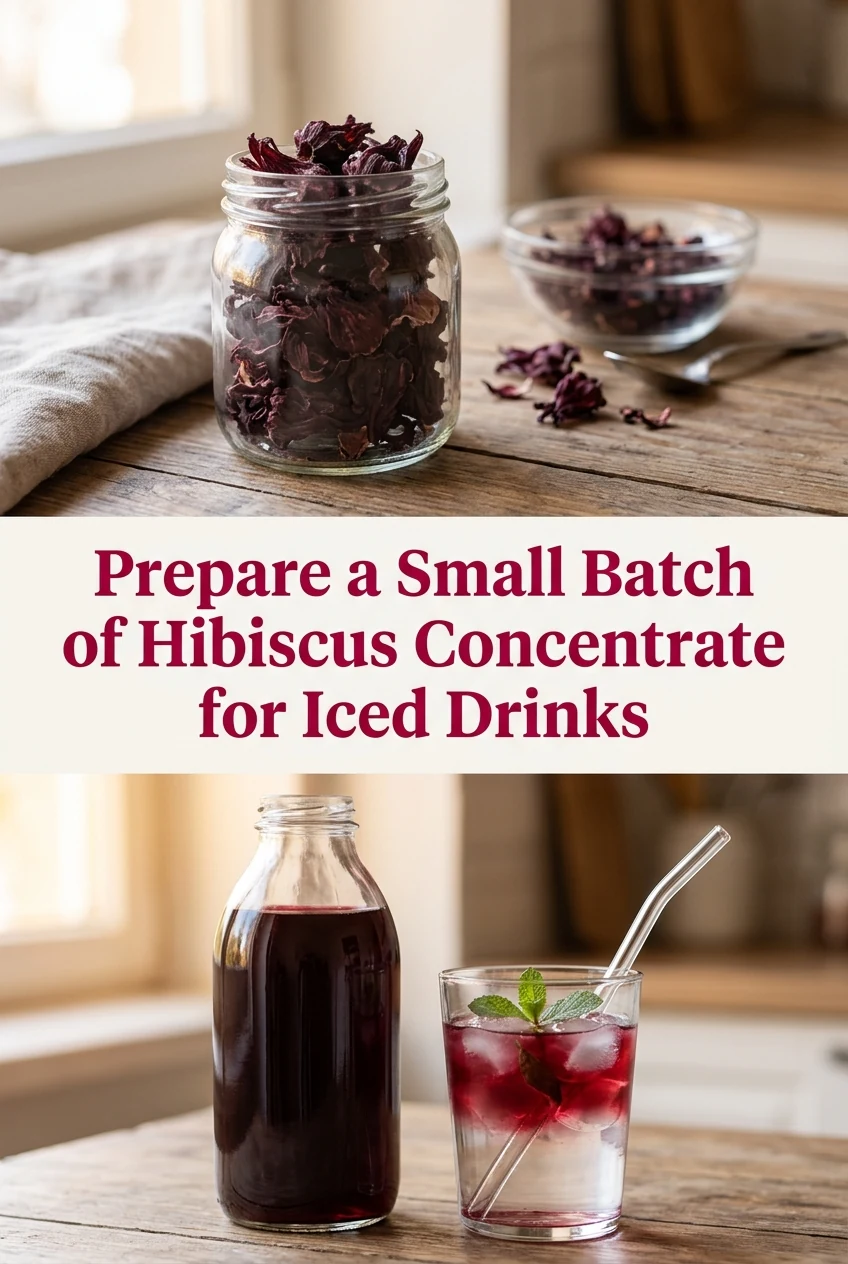
AI-generated editorial concept created for this article. The image is not a technical diagram or a tested result.
Choosing a Batch Size That Suits Actual Use
A practical small batch uses 10 grams of dried hibiscus flowers steeped in 250 millilitres of just-boiled water. This produces a concentrated liquid that, when diluted at roughly one part concentrate to two or three parts water or sparkling water, yields approximately three to five individual drinks. This is an illustrative ratio; the tartness of dried hibiscus varies between suppliers, so taste the concentrate before deciding on your dilution. Starting small means you can adjust the ratio without discarding a large batch.
Steeping Time and Temperature
Pour just-boiled water over the dried flowers in a heatproof jug or saucepan and allow them to steep for eight to ten minutes. Longer steeping deepens the colour and increases tartness but does not improve the drink proportionally beyond that window. Steeping for much longer can introduce a slightly astringent quality. Keep the vessel covered during steeping to retain heat and reduce evaporation. Do not boil the flowers directly in water on the stove, as this is not necessary and may alter the flavour.
Straining the Concentrate While Warm
Strain the steeped liquid through a fine mesh strainer into a clean heatproof container while it is still warm. Straining warm is easier than straining once cooled because the liquid flows through the mesh more freely and the flowers release cleanly. Press the spent flowers gently with the back of a spoon to extract remaining liquid, then discard the flowers. Do not re-steep the same flowers; they have given their colour and flavour to the first steep and will produce a very weak result.
Cooling and Refrigerating Safely
Allow the strained concentrate to cool at room temperature for no more than 30 minutes, then transfer it to a clean lidded jar and refrigerate at 4 degrees Celsius or below. Do not leave it at room temperature for longer than two hours before refrigerating. Use the concentrate within three to four days. If you notice any off smell, unusual cloudiness beyond the natural deep red colour, or visible changes, discard it. Label the jar with the preparation date so you track its age accurately.
Assembling an Iced Drink From the Concentrate
To build one iced drink, add 60 to 80 millilitres of hibiscus concentrate to a glass filled with ice, then top with still or sparkling water to taste. Sweeten with simple syrup added by the teaspoon rather than granulated sugar, which will not dissolve in the cold liquid. A squeeze of fresh lime juice alongside the hibiscus is a straightforward addition that complements the tartness. Stir once to combine and serve immediately. Adjust the concentrate-to-water ratio based on how intense you want the flavour.
A little more
to know.
Can I sweeten the concentrate itself before refrigerating rather than sweetening each drink separately?
You can stir sugar into the warm concentrate before cooling so it dissolves fully. This commits the whole batch to one sweetness level, which is convenient if everyone using it prefers the same amount. If preferences vary, keeping the concentrate unsweetened and sweetening each glass individually gives more flexibility.
Does the colour of the concentrate indicate whether it is still good to use?
Hibiscus concentrate is naturally a deep ruby red and may lighten slightly over a few days in the refrigerator. Significant colour change, cloudiness beyond the natural hue, or any off smell are signs to discard it. Colour alone is not a reliable safety indicator, so always check smell and appearance together.
Original editorial guidance and recipe formulations, not independently kitchen-tested. Times are estimates and depend on equipment and product directions. Cooked bases need additional cooling and refrigeration before cold serving. Images are AI-generated illustrations; appearance and yield may vary. Check actual ingredient labels, allergens, and any certification you require. We do not certify products. Read our approach.
Save to Pinterest ↗ANOTHER IDEA FOR THE COUNTER