Prepare a Small Batch of Dried Cranberry and Orange Syrup for Warm Milk Drinks
Dried cranberries simmered with fresh orange juice and sugar produce a tart, deeply colored concentrate that dissolves cleanly into warm milk without leaving fruit solids in the cup. The tartness of the cranberry balances the natural sweetness of milk in a way that fresh cranberries, which require far more sugar to become palatable, do not. This guide covers the full process from measuring to straining, with notes on how the syrup behaves in warm milk and how to store the small finished batch safely.
Read the note ↓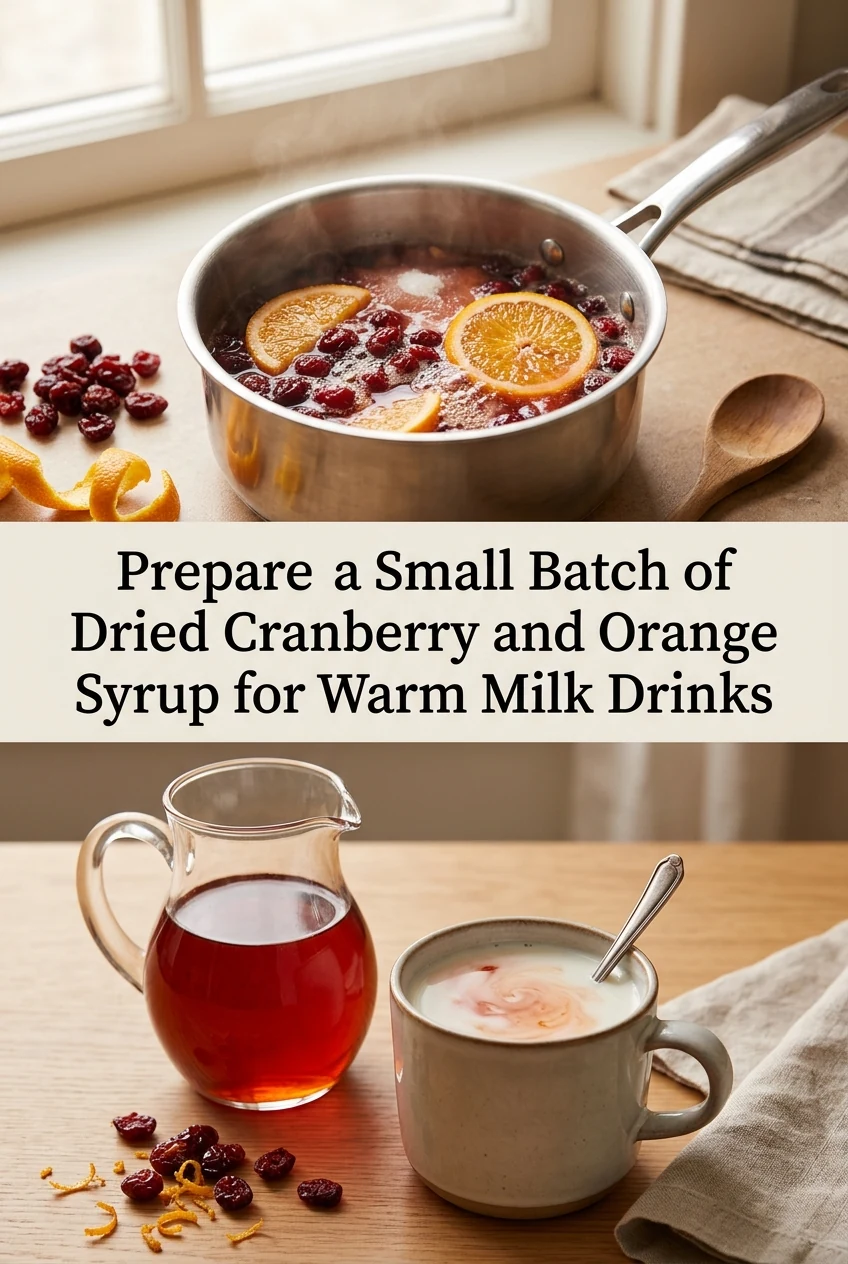
AI-generated editorial concept created for this article. The image is not a technical diagram or a tested result.
Measuring the Batch Ingredients
Combine 90 g of dried cranberries, the juice of one medium orange (approximately 60 to 70 ml), 60 ml of water, and 90 g of white sugar in a small saucepan. The orange juice contributes both acidity and natural pectin, which helps the syrup thicken slightly during simmering. Freshly squeezed juice gives a brighter result than shelf-stable juice. This batch yields approximately 150 to 170 ml of finished syrup, enough for around eight single-serve drinks at two tablespoons per cup.
Simmering to a Concentrated Base
Heat the mixture over medium heat, stirring until the sugar dissolves fully. Reduce to a low simmer and cook uncovered for twelve to fifteen minutes, stirring every few minutes. The cranberries will soften and begin to break down, and the liquid will reduce and deepen in color. The syrup is ready when it coats the back of a spoon and a line drawn through the coating holds for two to three seconds. Remove from heat and rest for five minutes before straining.
Straining for a Smooth Syrup
Pour the mixture through a fine mesh strainer into a clean heatproof bowl. Press the softened cranberry solids firmly with the back of a spoon to extract as much liquid as possible. The pressed solids will be quite dry when fully spent. Discard them. The strained liquid should be smooth, glossy, and deep red. If the syrup appears very thin at this stage, return it to the pan and simmer for a further three to five minutes, then strain again into a clean container.
Cooling and Bottling Safely
Allow the strained syrup to cool to room temperature before transferring to a clean glass jar or bottle with a tight-fitting lid. Do not seal a hot syrup in a closed container and assume it is preserved; this is a refrigerator syrup, not a shelf-stable product. Label the jar with the preparation date. Refrigerate promptly at 4 degrees Celsius or below and use within one week. If the syrup develops any off smell or visible changes, discard it without tasting.
Dissolving the Syrup Into Warm Milk
Add one to two tablespoons of syrup to 200 ml of warm milk and stir for about fifteen seconds. The syrup's sugar content and the absence of fruit solids allow it to dissolve evenly without clumping or settling. The finished drink is tart and lightly sweet with a clear orange note. If the tartness is too pronounced for your preference, reduce the syrup to one tablespoon and add a small amount of plain sugar to the milk separately. Avoid boiling the milk after adding the syrup, as high heat can cause the mixture to separate.
A little more
to know.
Can I use sweetened dried cranberries instead of unsweetened ones?
Sweetened dried cranberries are more common and work well in this recipe. Reduce the added sugar to 60 g instead of 90 g to compensate, then taste the finished syrup before bottling and adjust if needed. The tartness level will be slightly lower than with unsweetened cranberries.
Does this syrup work in cold milk drinks as well as warm ones?
It dissolves less readily in cold milk and may require more vigorous stirring. Shaking the syrup and cold milk together in a lidded jar for ten seconds is more effective than stirring. The flavor works well cold, though the tart note becomes more pronounced without the softening effect of warmth.
Original editorial guidance and recipe formulations, not independently kitchen-tested. Times are estimates and depend on equipment and product directions. Cooked bases need additional cooling and refrigeration before cold serving. Images are AI-generated illustrations; appearance and yield may vary. Check actual ingredient labels, allergens, and any certification you require. We do not certify products. Read our approach.
Save to Pinterest ↗ANOTHER IDEA FOR THE COUNTER