Prepare a Small Batch of Cardamom and Rose Water Syrup for Warm and Cold Milk Drinks
A small measured batch of cardamom and rose water syrup gives you a ready flavoring for warm steamed milk cups and cold milk drinks without committing to a large quantity that sits unused. Simmering sugar and water with ground cardamom, then finishing with food-grade rose water off the heat, produces a clear, fragrant syrup. Keeping the batch small means you use it within a practical window and refrigerate it promptly after cooling.
Read the note ↓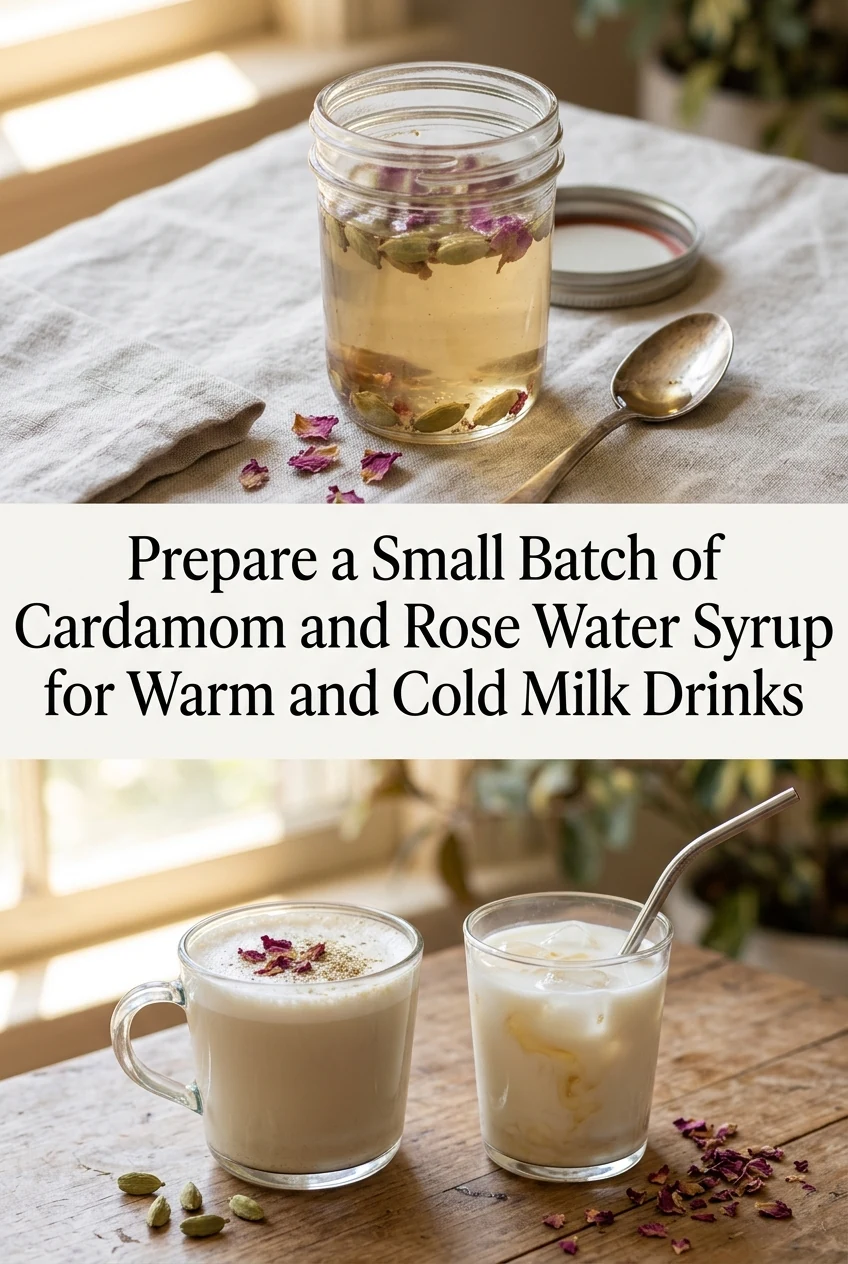
AI-generated editorial concept created for this article. The image is not a technical diagram or a tested result.
Measure Your Ingredients Before You Start
Use 120 ml of cold water and 100 g of white granulated sugar for a single small batch yielding roughly 150 ml of finished syrup. Measure half a teaspoon of ground cardamom and set aside two to four drops of food-grade rose water in a small dish. Having everything measured before the pan goes on the heat prevents you from rushing measurements while the liquid is already reducing, which leads to inconsistent results each time you make it.
Simmer Until the Sugar Fully Dissolves
Combine the water and sugar in a small saucepan over medium-low heat. Stir gently until the sugar dissolves completely, which typically takes two to three minutes. Add the ground cardamom once the liquid is clear and allow the mixture to reach a gentle simmer, not a rolling boil. A rolling boil can cause the syrup to reduce faster than intended and concentrate the cardamom flavor beyond the point where it balances with rose water.
Add Rose Water Off the Heat
Remove the pan from the heat before adding the rose water. Rose water is volatile, and adding it to actively boiling liquid drives off the floral aroma quickly. Start with two drops, stir, and smell the syrup before deciding whether a third or fourth drop is needed. Food-grade rose water varies in concentration by brand, so tasting cautiously is more reliable than following a fixed number. The syrup should smell floral but not soapy.
Strain and Cool Before Storing
Pour the warm syrup through a fine mesh strainer into a clean glass jar or bottle to remove cardamom particles, which can turn gritty in cold drinks. Cover the container loosely and allow the syrup to cool near room temperature, then seal it tightly and refrigerate it at 4 degrees Celsius or below within two hours of cooking. Because unpreserved homemade syrups do not have a tested shelf life, keep the jar chilled and inspect it for signs of spoilage, such as off odors, cloudiness, or mold, discarding the batch if any changes appear.
Dose the Syrup for Warm and Cold Drinks
For a warm 200 ml milk cup, start with 15 ml of syrup stirred in after steaming or heating the milk. For a cold drink built over ice in a 300 ml glass, 20 ml works as a starting point because cold temperatures suppress sweetness perception slightly. These are illustrative starting points, not fixed ratios; adjust by taste on your first cup before committing to a larger serving. Write your preferred dose on a small label attached to the jar.
A little more
to know.
Can I use cardamom pods instead of ground cardamom?
Yes. Lightly crush four to five green cardamom pods and simmer them with the sugar and water, then strain thoroughly. The flavor is slightly cleaner and less bitter than pre-ground cardamom, though steeping time may need a small adjustment based on your preference.
Why does my syrup crystallize in the refrigerator?
Crystallization usually means the sugar concentration is high relative to water. Adding an extra 15 ml of water during the next batch and ensuring the sugar fully dissolves before simmering reduces the likelihood. Warming the jar briefly in warm water re-dissolves crystals before use.
Original editorial guidance and recipe formulations, not independently kitchen-tested. Times are estimates and depend on equipment and product directions. Cooked bases need additional cooling and refrigeration before cold serving. Images are AI-generated illustrations; appearance and yield may vary. Check actual ingredient labels, allergens, and any certification you require. We do not certify products. Read our approach.
Save to Pinterest ↗ANOTHER IDEA FOR THE COUNTER