Prepare a Small Apricot and Honey Syrup for Warm Milk Drinks
A smooth apricot and honey syrup that stirs cleanly into warm milk solves a specific problem: whole fruit pieces and fibres do not dissolve in milk and leave an unpleasant texture in the cup. Cooking fresh apricot down with a small amount of water, then straining the solids out completely, produces a pourable syrup that blends evenly into warm oat or whole milk. This guide covers fruit preparation, honey timing, straining technique, and how to store and use the finished syrup.
Read the note ↓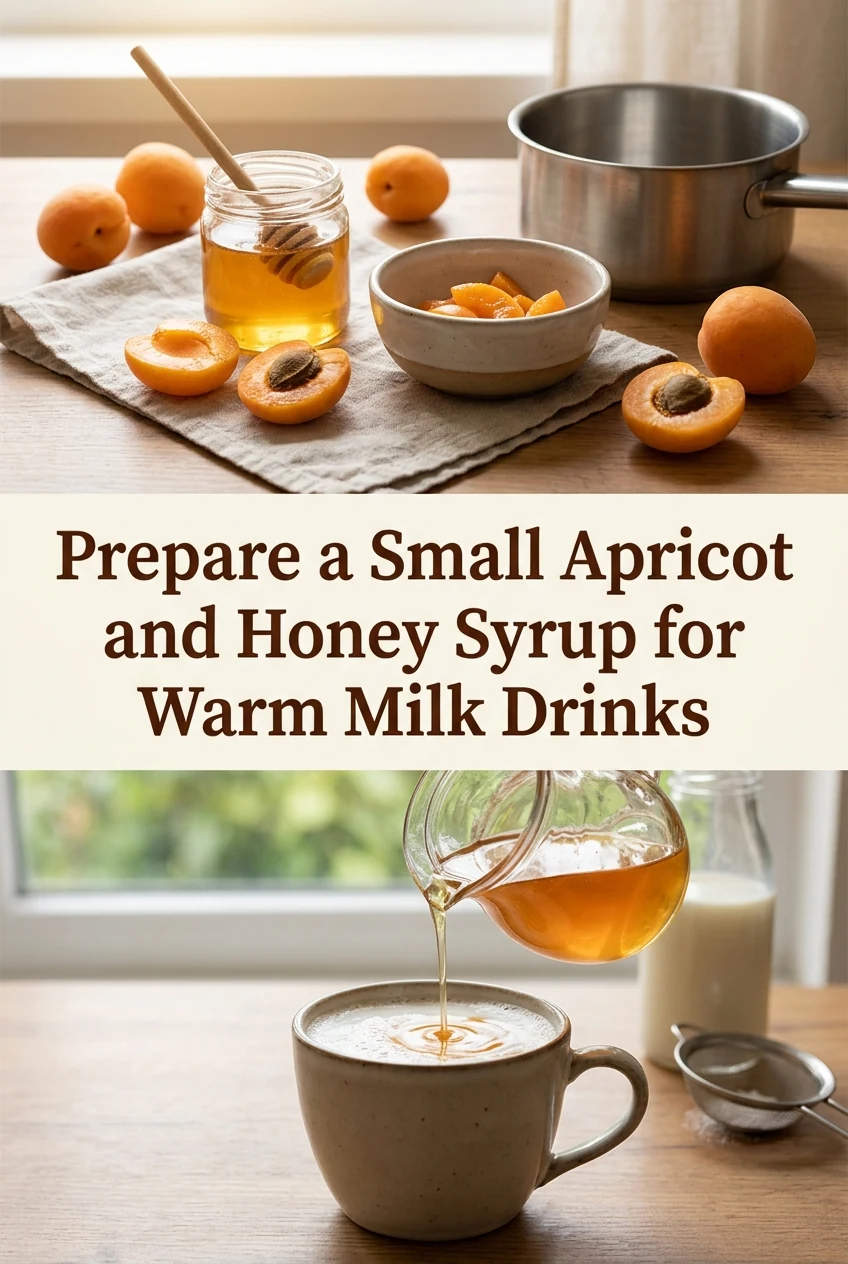
AI-generated editorial concept created for this article. The image is not a technical diagram or a tested result.
Prepare the Apricot
Use four medium fresh apricots, approximately 280 g, halved and stoned. Peel is fine to leave on during cooking as it softens completely and is removed during straining. Cut each half into three or four rough pieces and place them in a small saucepan with 100 ml of cold water. The water prevents scorching during the early stage of cooking before the fruit releases its own juice. Frozen apricot pieces, fully thawed, are a practical alternative when fresh fruit is not available.
Cook the Apricot Until Fully Broken Down
Bring the pan to a gentle simmer over medium-low heat. Cook uncovered for 15 to 18 minutes, stirring occasionally, until the apricot pieces have completely collapsed into a soft pulp and the mixture looks uniform rather than chunky. Press any remaining pieces against the side of the pan with a spoon. The goal is thorough breakdown so that straining removes all fibre efficiently. Undercooked fruit leaves more solid matter that clogs the strainer and reduces syrup yield.
Add Honey Off the Heat
Remove the pan from heat before adding honey. Stir in three tablespoons of a mild-flavoured honey, such as acacia or clover, while the mixture is still hot but no longer on the burner. Adding honey off the heat preserves more of its flavour compared to boiling it directly. Stir until the honey is fully dissolved into the apricot pulp. Taste the mixture at this stage; if it needs more sweetness, add one additional tablespoon and stir again before straining.
Strain Out All Solids
Set a fine mesh strainer over a heatproof jug and pour the apricot and honey mixture through it in stages. Use the back of a spoon to press the pulp firmly against the mesh, extracting as much liquid as possible. Discard the dry pulp and any skin fragments left in the strainer. The finished syrup should be smooth, translucent, and amber-coloured. A second pass through the strainer is worthwhile if you notice any fibre in the jug after the first strain.
Store and Use the Syrup
Pour the cooled syrup into a clean sealed jar, label it with the preparation date, and refrigerate at 4 degrees Celsius or below within two hours of cooking. Use within four days. To serve, warm 200 ml of whole or oat milk in a small saucepan over low heat until steaming but not boiling, then stir in 25 to 35 ml of the syrup. Adjust the amount to taste. The syrup dissolves evenly without clumping because all fibrous solids have been removed during straining.
A little more
to know.
Can I use dried apricots instead of fresh or frozen?
Dried apricots work but produce a more intensely sweet and concentrated flavour. Use 120 g of unsulphured dried apricots soaked in 200 ml of water for 30 minutes before cooking, and reduce added honey to one tablespoon initially, tasting before adding more.
Will this syrup work in cold milk drinks as well?
It can be stirred into cold milk, but honey-based syrups blend less smoothly into cold liquids than warm ones. Stir vigorously for at least 30 seconds, or shake the milk and syrup together in a closed container before pouring over ice.
Original editorial guidance and recipe formulations, not independently kitchen-tested. Times are estimates and depend on equipment and product directions. Cooked bases need additional cooling and refrigeration before cold serving. Images are AI-generated illustrations; appearance and yield may vary. Check actual ingredient labels, allergens, and any certification you require. We do not certify products. Read our approach.
Save to Pinterest ↗ANOTHER IDEA FOR THE COUNTER