Pour-Over, French Press or Moka Pot: Matching a Brewer to Your Morning
Three manual brewers sit on most cafe-inspired shortlists, yet each asks something different from your counter space, your clock and your cleanup patience. Before spending money, the useful question is not which brewer tastes best in the abstract but which one fits the number of cups you actually need on a given morning and how much active attention you can give it. This guide walks through those practical differences so you can match one brewer to a weekday solo mug and another to a relaxed weekend table for two.
Read the note ↓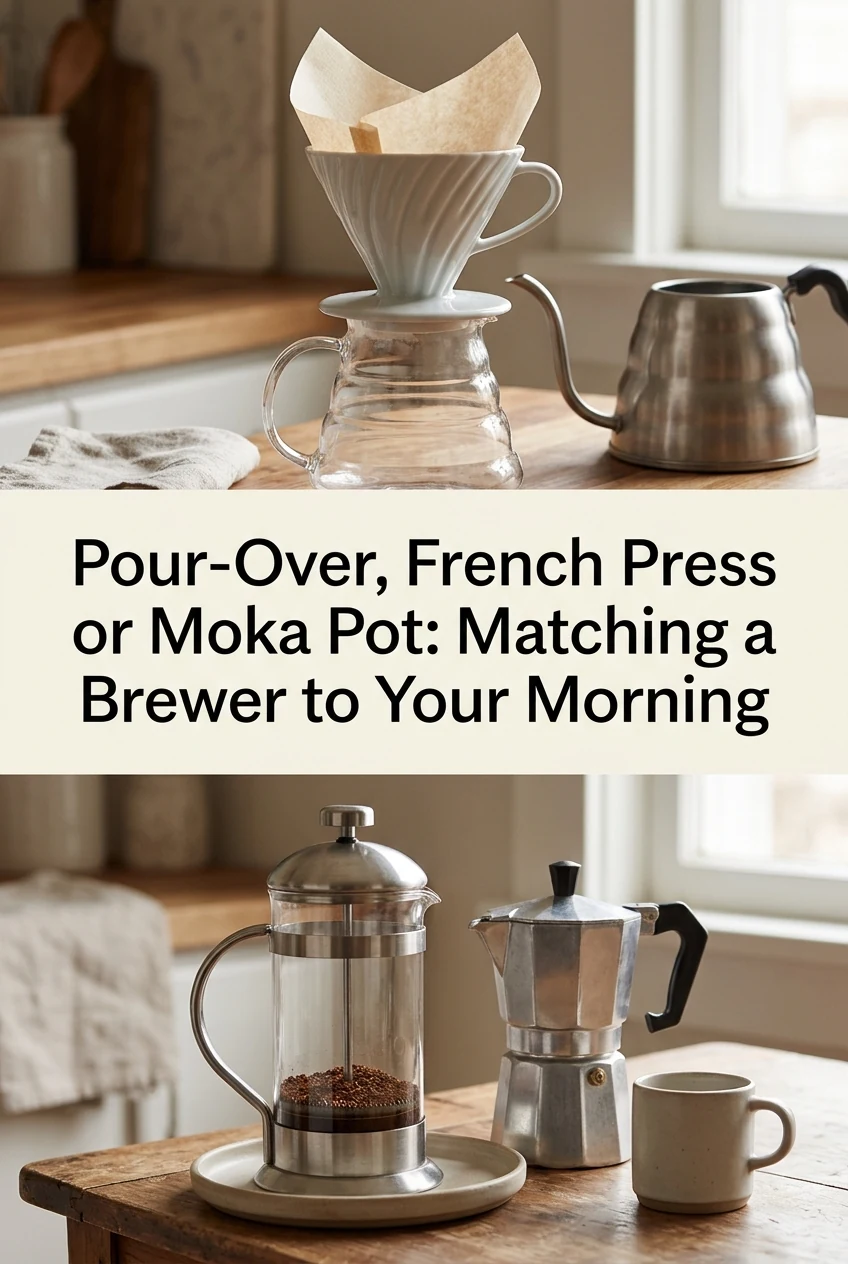
AI-generated editorial concept created for this article. The image is not a technical diagram or a tested result.
How Many Cups Each Brewer Realistically Produces
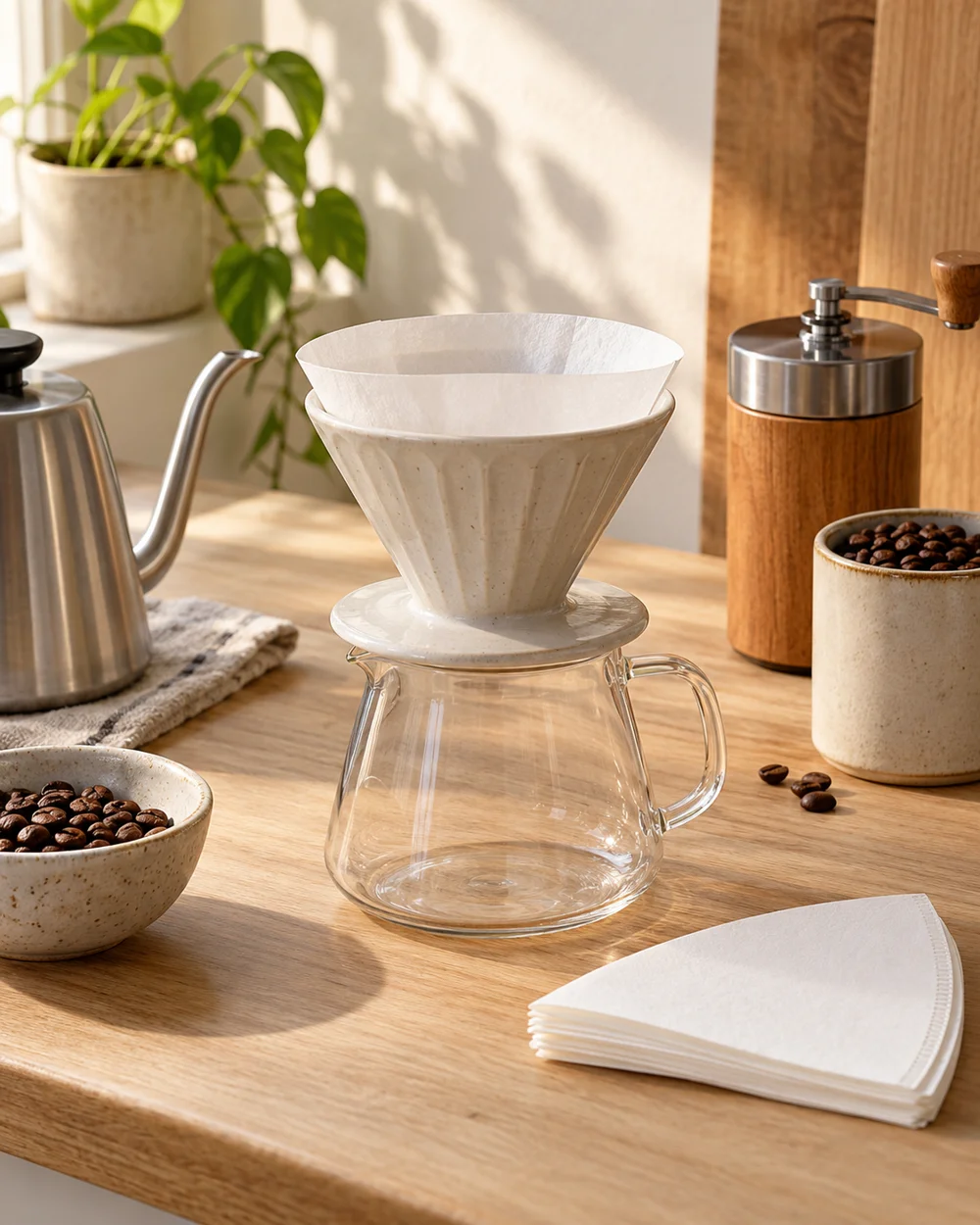
A single-serve pour-over dripper sitting over one mug is genuinely designed for one cup at a time. Brewing a second cup means repeating the full pour sequence, which takes additional minutes. A French press is available in sizes that commonly yield two to four cups per press, making it practical when two people want coffee simultaneously. A moka pot is sized by espresso-style cup count, typically one, three or six, and the maker's instructions specify filling the basket only to its intended level, not beyond. Matching brewer size to your actual headcount avoids waste and under-extraction.
Hands-On Attention Each Method Requires
Pour-over demands the most active presence. You control the pour rate, the pause after the first small bloom pour, and the steady circles that follow. Stepping away mid-pour changes the result noticeably. French press is more forgiving: add water, set a timer for the steep time shown in your brewer's guide, then press slowly. The moka pot requires you to stay nearby, watch for the gurgling sound that signals the brew is rising, and remove it from heat promptly as your maker's instructions direct. None of these methods are fully unattended.
Filters, Mesh and What They Retain
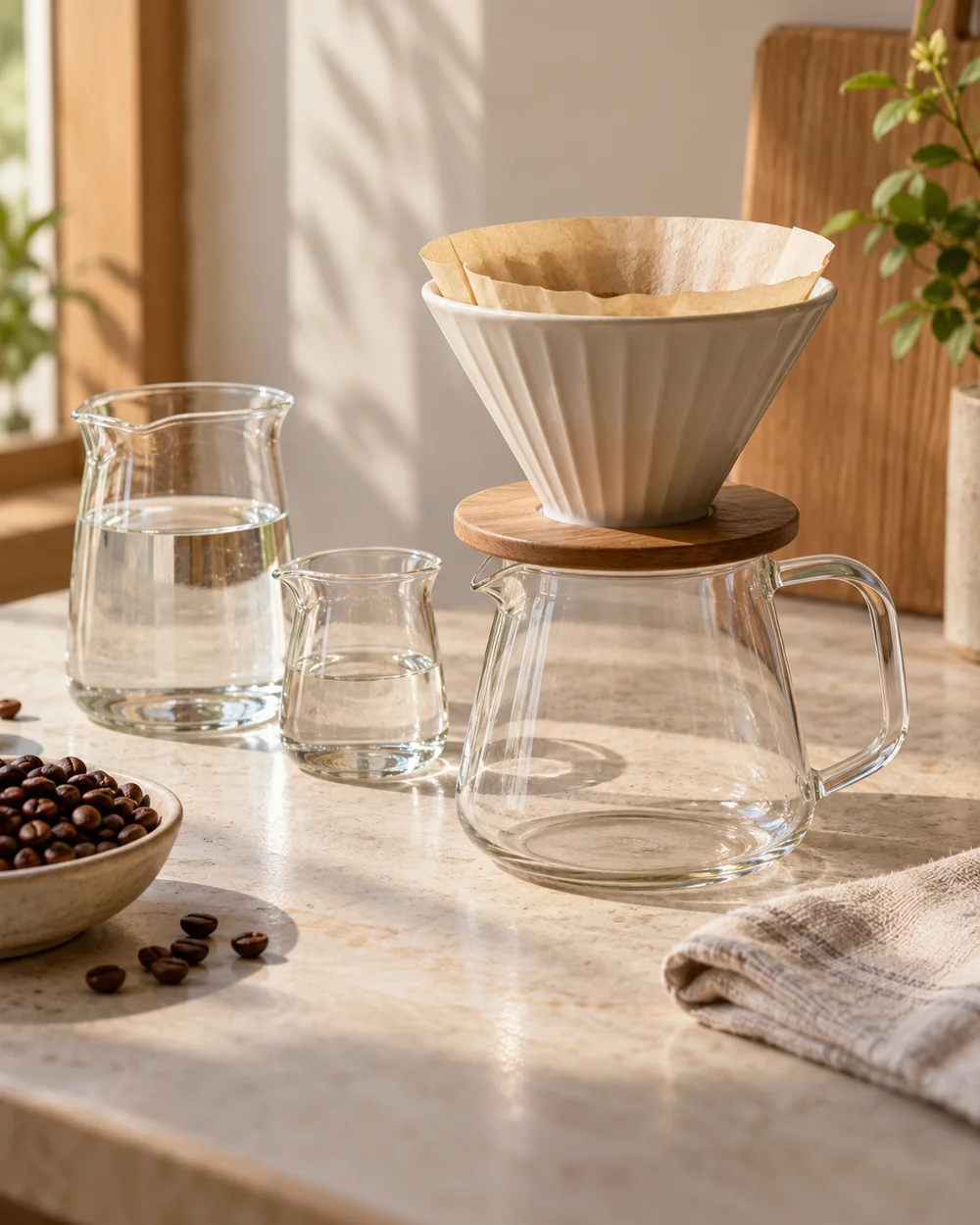
Pour-over uses a paper or reusable cone filter placed in the dripper. Paper filters are discarded after each use; reusable metal or cloth filters need rinsing. French press uses a metal mesh plunger that stays in the carafe and is disassembled for washing. Fine particles pass through the mesh and settle at the bottom of the cup, which is normal for this method. The moka pot has a built-in metal filter basket and a rubber gasket; both are rinsed after each use. Your brewer's manual will show how to seat the gasket correctly.
Heat Source and Safe Handling for Each Brewer
Pour-over needs only a kettle; the dripper itself sits over your mug or carafe and receives no direct heat. A gooseneck kettle gives better pour control, though a standard kettle works. French press also uses only kettle water; the glass or stainless carafe never goes on a burner. The moka pot goes directly on a stovetop burner or induction adapter if the maker confirms compatibility. Always follow your specific moka pot maker's instructions for burner size and handle position. Never invert or force the brewer while it is pressurized.
Two Morning Scenarios Matched to One Brewer Each
Illustrative example, not a verified timed result: on a weekday when one person has roughly ten minutes before leaving, a single-serve pour-over dripper fits well. The process is linear, the cleanup is one filter and one mug, and the counter footprint is small. On a weekend morning when two people want coffee together without rushing, a larger multi-cup French press suits the situation. Both mugs steep simultaneously, providing enough coffee for two people with volume to spare for a second pour, and the unhurried pace matches the method's required steep time. Start from the grind and ratio guidance packed with your specific brewer.
A little more
to know.
Can I use the same coffee for all three brewers without adjusting anything?
Grind size affects extraction noticeably across these methods. Each brewer's included instructions or the grinder manufacturer's guide will suggest a starting point. Using the same grind for all three without adjustment is likely to produce uneven results in at least one brewer.
How should I store brewed coffee if I make more than I can drink immediately?
Transfer leftover brewed coffee to a clean, sealed container and refrigerate it at 4 degrees Celsius or 40 degrees Fahrenheit or below within two hours of brewing. Quality declines over time even when refrigerated, so smaller batches matched to your actual consumption reduce waste.
Original editorial guidance and recipe formulations, not independently kitchen-tested. Times are estimates and depend on equipment and product directions. Cooked bases need additional cooling and refrigeration before cold serving. Images are AI-generated illustrations; appearance and yield may vary. Check actual ingredient labels, allergens, and any certification you require. We do not certify products. Read our approach.
Save to Pinterest ↗ANOTHER IDEA FOR THE COUNTER