Mix a Warm Cocoa Cup with Plain Coconut Cream
A single cup of warm cocoa made with plain coconut cream alongside pasteurized milk or a suitable labeled plant drink is a simple, satisfying preparation. Unsweetened cocoa powder disperses through liquid rather than dissolving the way sugar does, so stirring matters throughout the process. This article walks through one illustrative approach using everyday stovetop equipment. The example is not kitchen-tested, so treat the quantities and sequence as a starting point you can adjust to your own taste and cookware.
Read the note ↓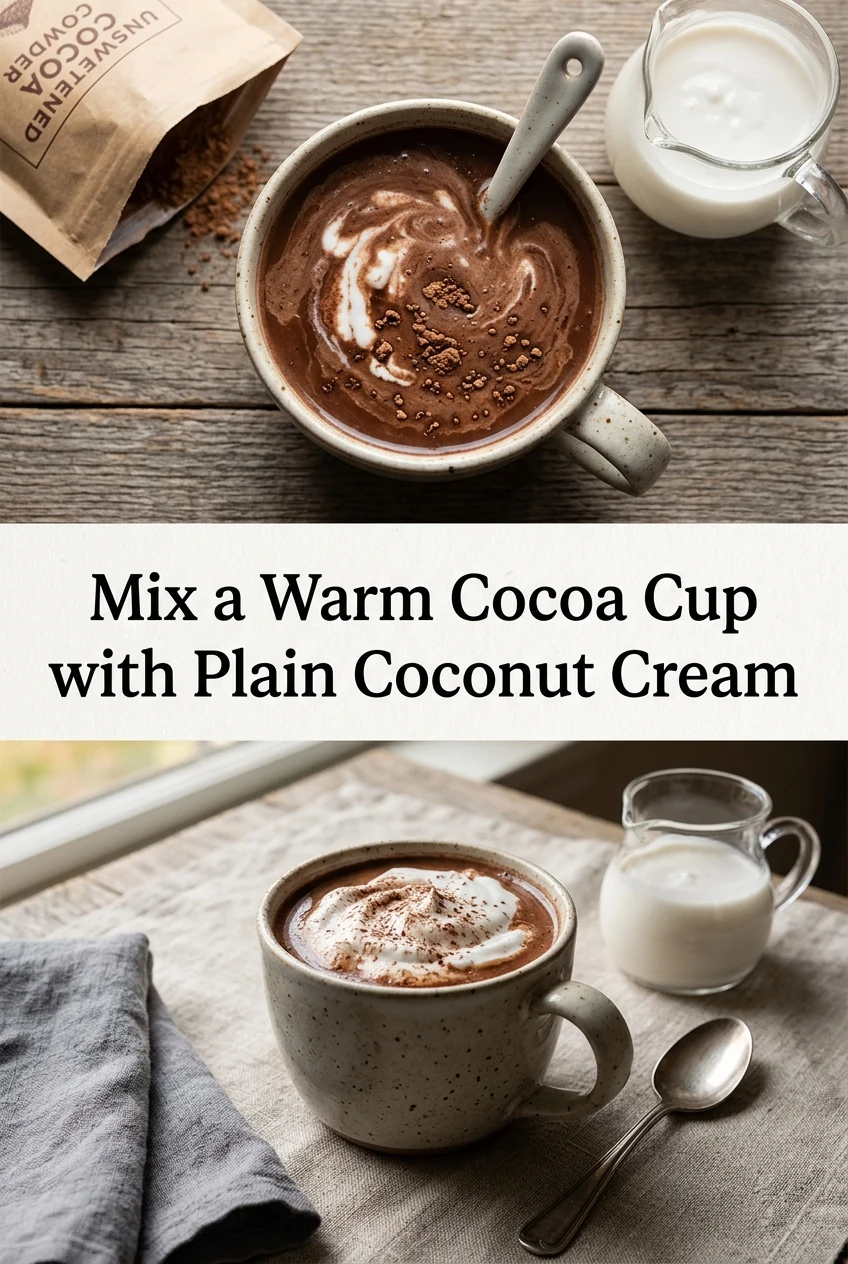
AI-generated editorial concept created for this article. The image is not a technical diagram or a tested result.
Gather Your Ingredients and Equipment
For one cup you will need roughly one heaped teaspoon of unsweetened cocoa powder, two tablespoons of plain coconut cream, approximately 180 millilitres of pasteurized whole milk or a suitable labeled plant drink such as oat or soy, and two to three tablespoons of water. Optional additions include sugar to taste and a small amount of alcohol-free vanilla flavoring if you choose to use one. On the equipment side, select a small saucepan that is clearly rated for stovetop use by its manufacturer. Do not use a heatproof serving jug or any vessel that carries no stovetop rating, even if it feels sturdy, because heatproof and stovetop-safe are not the same designation. Have a heatproof stirring spoon or silicone spatula ready, along with your serving cup.
Pre-Mix the Cocoa into a Paste
Place the cocoa powder in the saucepan before any heat is applied. Add the two to three tablespoons of cold water and stir steadily until the powder is fully wetted and forms a loose, even paste with no dry pockets. This short step helps cocoa particles distribute more evenly once the remaining liquid is added, because dry cocoa powder can clump when it meets warm liquid directly. If you are using sugar, you can stir it into the paste at this stage so it is ready to dissolve as the liquid warms.
Add the Coconut Cream and Liquid
Spoon the plain coconut cream into the saucepan with the cocoa paste and stir gently to combine them before adding the milk or plant drink. Pour in your chosen liquid gradually while stirring. Coconut cream formulations vary between brands, and some products may show visible separation or leave a thin layer on the surface depending on their fat content and any stabilizers present. Gentle, consistent stirring as you add the liquid is the practical way to encourage an even mixture, though the final appearance can differ from one product to another.
Heat Gently on the Stovetop
Place the saucepan on a burner set to low or medium-low heat, following the guidance in your cookware instructions for that setting. Stir the mixture gently and continuously as it warms. Do not leave it unattended. Avoid judging the temperature by touching the outside of the pan or by the appearance of steam alone, as neither gives a reliable reading. Heat until the drink is warm enough for your preference, watching for small bubbles beginning to form at the edges as a general sign of warmth, then remove the pan from the heat promptly. If you are adding alcohol-free vanilla flavoring, stir it in off the heat according to the quantity suggested on its label.
Pour and Serve
Pour the finished drink carefully into your serving cup. Give it one final gentle stir in the cup, because cocoa particles can begin to settle once movement stops. Taste and adjust sweetness if needed. The drink is best enjoyed soon after preparation. Coconut cream can continue to behave differently as the drink cools, so the texture and surface appearance may change over time. This illustrative single-cup plan gives you a workable framework, and your own adjustments to ratios and heat level will shape the result you prefer.
A little more
to know.
Why does cocoa powder sometimes clump even after stirring?
Cocoa particles disperse through liquid rather than dissolving, and dry powder can trap air that resists wetting. Forming a paste with a small amount of cold water before adding the main liquid gives the particles a better chance to wet evenly, which reduces but does not always eliminate clumping entirely.
Can I use a plant drink instead of dairy milk in this preparation?
Yes. A suitable labeled plant drink such as oat milk or soy milk can replace pasteurized dairy milk in the same quantity. Different plant drinks vary in fat content, sweetness and thickness, so the flavor and body of the finished cup will reflect whichever product you choose. Follow the storage and handling guidance on the plant drink packaging.
Original editorial guidance and recipe formulations, not independently kitchen-tested. Times are estimates and depend on equipment and product directions. Cooked bases need additional cooling and refrigeration before cold serving. Images are AI-generated illustrations; appearance and yield may vary. Check actual ingredient labels, allergens, and any certification you require. We do not certify products. Read our approach.
Save to Pinterest ↗ANOTHER IDEA FOR THE COUNTER