Melt Solidified Honey Smoothly into Cold Tea Concentrates
Stirring thick, crystallized, or firm honey directly into chilled tea often leaves stubborn ribbons stuck to the bottom of the glassware. Cold temperatures increase honey viscosity and slow dissolution, so stirring simply pushes the firm sweetener around without blending it. The solution is to dissolve the honey before chilling the full drink. By reserving a small portion of warm tea to create a quick, pourable syrup, the honey mixes evenly throughout the base beverage without dulling tea flavors or leaving sticky residue clinging to the glass.
Read the note ↓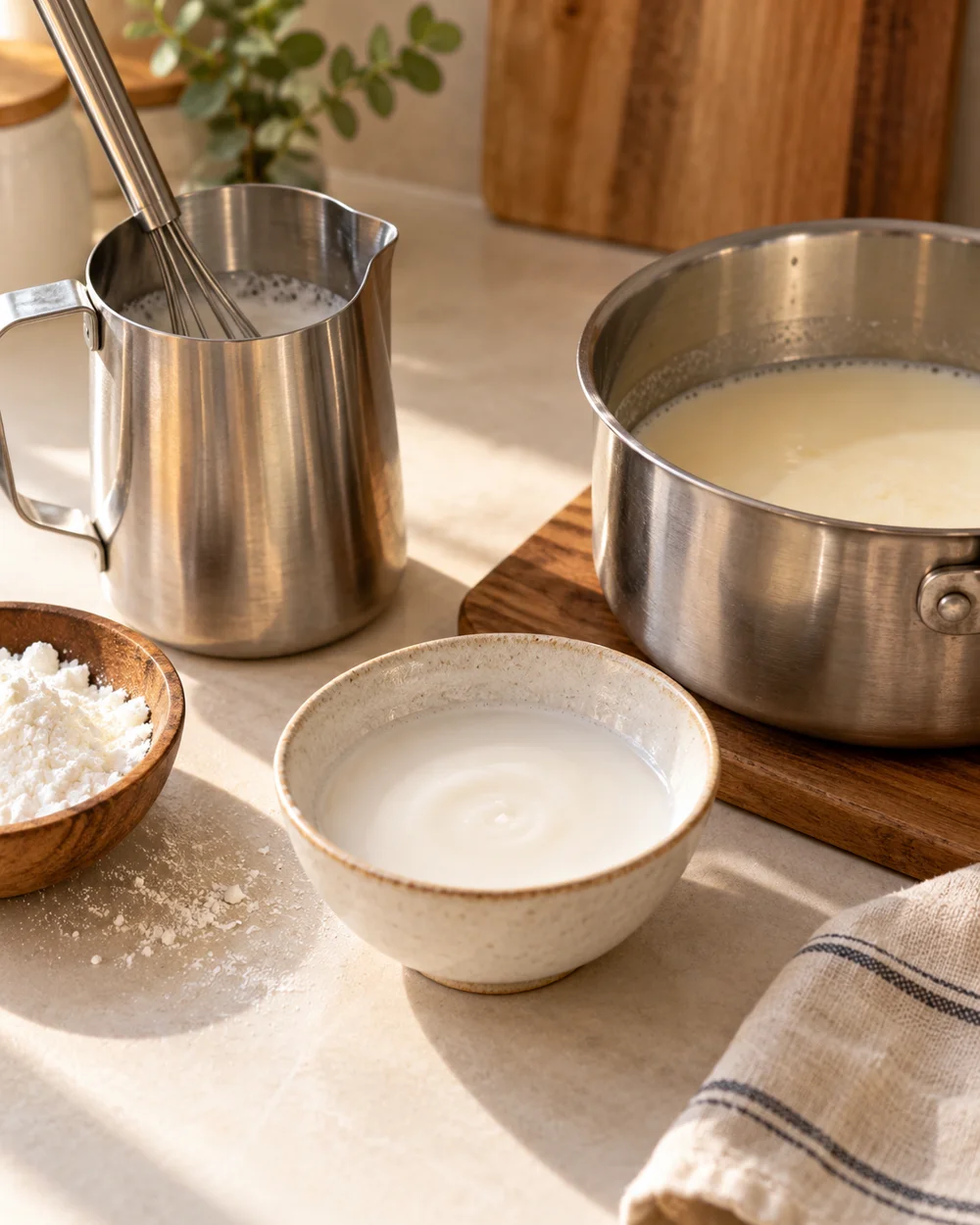
Representative category illustration reused from our editorial library; it does not depict this specific project or a tested result.
Why Crystallized Honey Resists Cold Blending
Honey naturally contains high concentrations of natural sugars with very little water, which causes crystals to precipitate during storage. When crystallized or firm honey is added directly to cold liquid, the low temperature increases its viscosity and dramatically slows sugar dissolution. Stirring with a spoon simply pushes the dense mass around the bottom of the glass rather than incorporating it into the tea. Dissolving the honey in a small quantity of warm tea first creates a smooth, fluid syrup, allowing it to integrate fully before the beverage is chilled.
Partitioning the Warm Brewing Liquor
Achieving seamless integration requires setting aside a small fraction of hot tea before introducing ice cubes. For a single glass containing two hundred milliliters of finished tea, steep your leaves normally in hot water. Pour thirty milliliters of this hot infusion into a separate small pitcher or heatproof glass. Allow the remaining one hundred seventy milliliters to begin cooling separately. This designated hot volume serves as the sole dissolving vessel, preserving the total target water volume without diluting the finished strength.
Mixing Honey with Warm Tea
As an illustrative planning example, combine twenty grams of crystallized honey with twenty milliliters of the reserved warm tea. Stir steadily with a small whisk or spoon until the honey fully dissolves into a flowing syrup. Using a small, roughly equal portion of warm liquid provides sufficient heat and volume to melt sugar crystals quickly while keeping the mixture concentrated, so adding it later will not reheat the larger portion of cooled tea.
Blending the Concentrate into Chilled Tea
Once the honey syrup is smooth and free of undissolved sugar granules, pour it into the remaining tea base. Stir gently for a few seconds to distribute the sweetness evenly throughout the beverage. Because the honey is already thinned into a fluid state, it blends readily with the rest of the tea rather than sinking to the bottom and forming an isolated, heavy layer of syrup.
Final Ice Addition and Service Temperature
Add clean ice cubes only after the honey syrup has integrated into the tea liquid. Adding ice before the honey is blended chills the liquid prematurely, which can cause dense honey to stiffen and cling to the ice rather than dispersing. Once chilled, serve immediately or store covered. If using perishable additions like milk or pasteurized cream, transfer the beverage to refrigeration at four degrees Celsius or below within two hours, reducing this window to one hour if ambient kitchen temperatures exceed thirty-two degrees Celsius.
A little more
to know.
Can I use boiling water directly from the kettle instead of warm tea?
Boiling water works to dissolve honey, but it adds extra unflavored liquid that dilutes the beverage. Using reserved warm tea ensures the exact target strength remains balanced without washing out subtle aromatic notes.
Will this method work if the honey is completely rock hard in the jar?
Very hard honey can be measured directly into the heatproof vessel and combined with hot tea; let it rest undisturbed for one minute so heat penetrates the mass before initiating gentle stirring.
Original editorial guidance and recipe formulations, not independently kitchen-tested. Times are estimates and depend on equipment and product directions. Cooked bases need additional cooling and refrigeration before cold serving. Images are AI-generated illustrations; appearance and yield may vary. Check actual ingredient labels, allergens, and any certification you require. We do not certify products. Read our approach.
Save to Pinterest ↗ANOTHER IDEA FOR THE COUNTER