Measure Syrup Into a Drink Using a Small Jigger Instead of Pouring Free-Hand
Pouring syrup directly from a bottle into a glass feels fast, but the volume changes with bottle angle, pour speed, and how distracted you are. A drink developed with 15 milliliters of vanilla syrup tastes noticeably different with 25 milliliters. Using a small jigger or a calibrated measuring spoon removes that variable and makes every serving match the one before it, which matters when you are making the same drink repeatedly across a service period.
Read the note ↓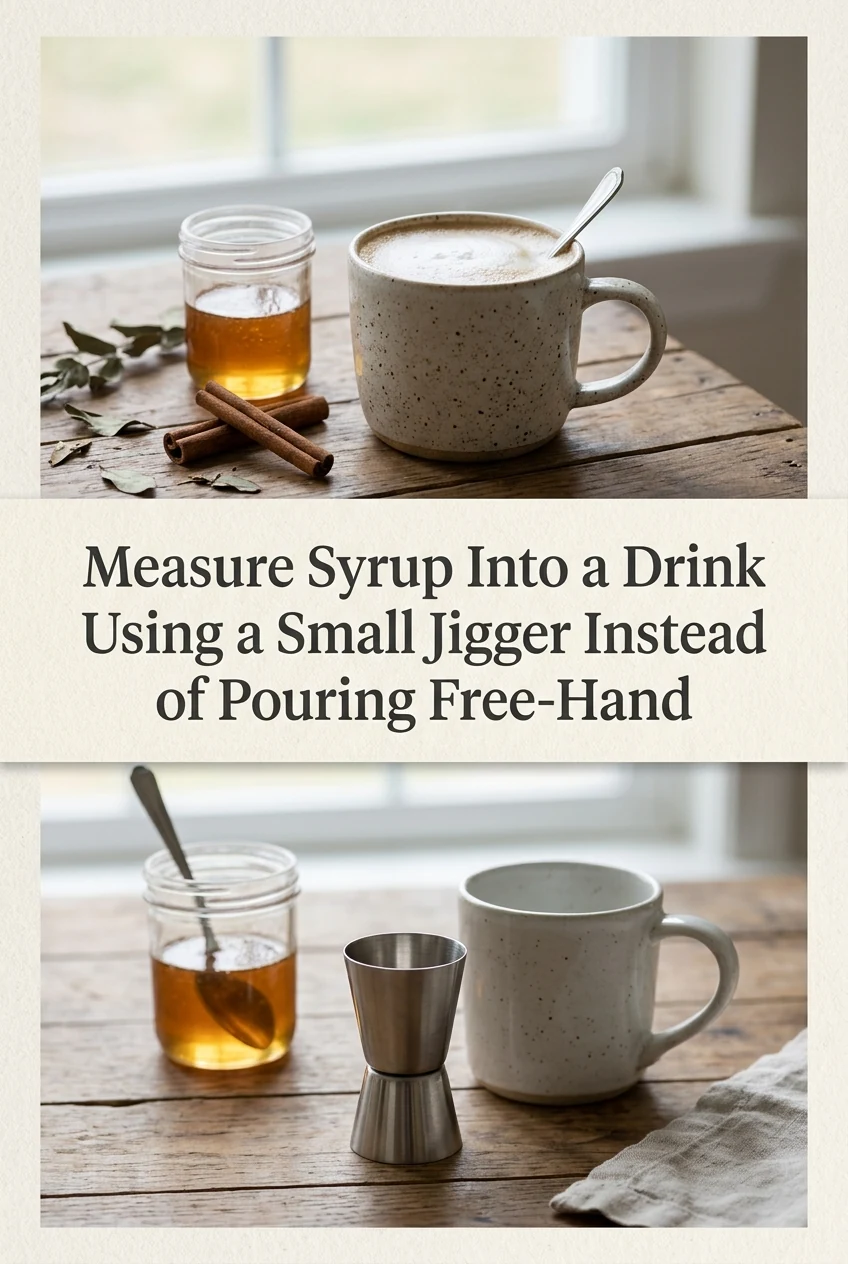
AI-generated editorial concept created for this article. The image is not a technical diagram or a tested result.
Choose the Right Measuring Tool
A double-sided jigger with 15 milliliter and 30 milliliter cups covers the most common syrup quantities in cafe drinks. For amounts smaller than 15 milliliters, a set of measuring spoons is more accurate; 5 milliliters equals one standard teaspoon and 15 milliliters equals one tablespoon. Both tools cost little and sit flat on a counter. A jigger with interior graduation markings is useful when a recipe calls for partial measures such as 7.5 or 20 milliliters rather than a full cup.
Read the Meniscus Correctly
Syrup is viscous and forms a curved surface, called a meniscus, when poured into a jigger. Read the volume at the bottom of that curve, not the top edge where the liquid climbs the wall. Holding the jigger at eye level rather than looking down at it from above makes this easier and reduces the chance of over-reading. An illustrative example: a jigger that appears full when viewed from above may actually hold 2 to 3 milliliters less than the marked line.
Pour Syrup Before Adding Ice or Liquid
Add syrup to the glass or shaker before ice and before the main liquid. Syrup poured onto ice can stick to cubes and not fully incorporate into the drink. Pouring it first onto the bare glass bottom means the liquid added afterward washes it off the surface and distributes it evenly. This order also lets you confirm the measured amount visually before committing to the rest of the build, making it easy to correct an error.
Clean the Jigger Between Different Syrups
If you use the same jigger for vanilla syrup and then for a caramel syrup in the next drink, residue from the first will carry over and alter the flavor of the second. A quick rinse with cold water and a wipe with a clean cloth between uses is enough for back-to-back drinks of the same service. At the end of a session, wash the jigger with warm soapy water and rinse thoroughly before storing. Do not leave syrup residue to dry inside the cup.
Record Your Measured Quantities for Consistency
Once you settle on a syrup amount that tastes right in a given drink, write it down in milliliters rather than relying on memory. A simple note card kept near the station with drink names and syrup volumes removes guesswork when someone else prepares the same drink. If a recipe lists a quantity in pumps from a pump bottle, measure one pump into the jigger once to confirm its actual volume, then record that number. Pump volumes vary by bottle brand and model.
A little more
to know.
Is a measuring spoon accurate enough if I do not have a jigger?
Yes, for most cafe drinks a standard measuring spoon is sufficiently accurate. One teaspoon is 5 milliliters and one tablespoon is 15 milliliters. Use a level spoon rather than a heaped one for repeatable results across servings.
How do I handle a recipe that calls for a half-pump or partial teaspoon of syrup?
Measure the smallest full unit you can and note it. For amounts around 2 to 3 milliliters, a half-teaspoon measuring spoon (2.5 milliliters) is the most practical tool. Estimating partial pumps free-hand defeats the purpose of measuring.
Original editorial guidance and recipe formulations, not independently kitchen-tested. Times are estimates and depend on equipment and product directions. Cooked bases need additional cooling and refrigeration before cold serving. Images are AI-generated illustrations; appearance and yield may vary. Check actual ingredient labels, allergens, and any certification you require. We do not certify products. Read our approach.
Save to Pinterest ↗ANOTHER IDEA FOR THE COUNTER