Measure Oat Milk by Weight and by Cup to See Where the Numbers Differ
A recipe calling for one cup of oat milk and a recipe specifying 240 grams of oat milk look equivalent, but they often produce slightly different volumes in practice. Oat milk is denser than water and its density varies by brand and formulation. Understanding where the numbers diverge helps you build drink recipes that stay consistent from session to session, especially when you switch between measuring by eye, by cup, and by scale.
Read the note ↓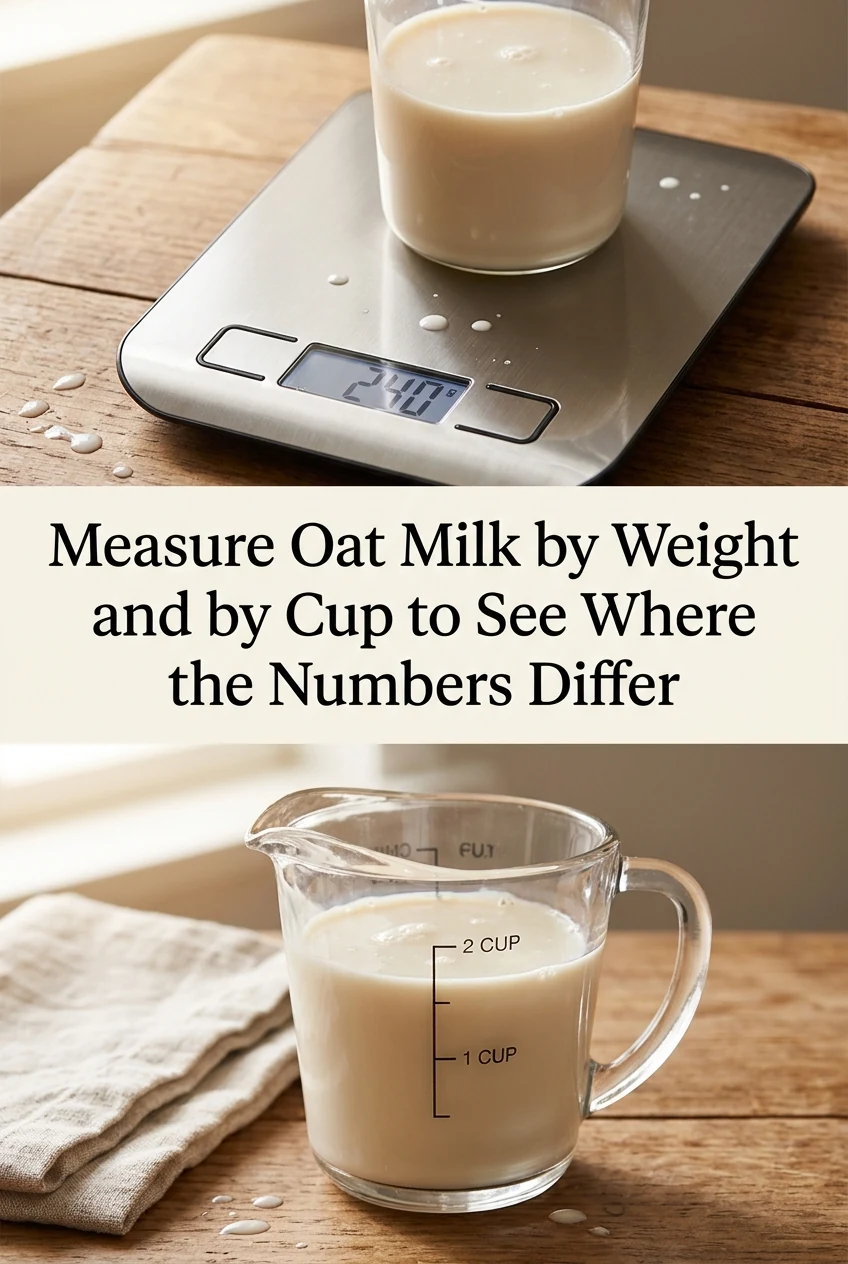
AI-generated editorial concept created for this article. The image is not a technical diagram or a tested result.
Why Oat Milk Weight and Volume Do Not Match Water
Water measures 240 grams at 240 millilitres, a one-to-one relationship. Oat milk contains dissolved oats, added oils, and sometimes thickeners, making it slightly denser than water. A 240 millilitre cup of oat milk typically weighs between 245 and 255 grams depending on the brand. This is an illustrative range based on the general density of commercial oat milks, not a specification for any single product. The actual figure for your brand may sit anywhere within or slightly outside that range.
How to Run the Comparison in Your Own Kitchen
Place a measuring jug on your scale and tare it to zero. Pour oat milk to the 240 millilitre line as you would for a cup measure, then note the weight displayed. Next, empty the jug, set it back on the scale, and tare it to zero again. Pour oat milk until the scale reads 240 grams, then check the volume marking on the jug. The difference between the two readings is the gap you are working with for that specific carton. Record both numbers so you have a practical baseline rather than an assumed one.
What the Gap Means for a Single Drink Recipe
For a single drink using roughly 200 millilitres of oat milk, a difference of 10 to 15 grams between a cup measure and a weight measure is unlikely to change the taste noticeably. The gap becomes more relevant when you are scaling a recipe for four or more drinks, where small per-serving differences accumulate. If you are building a recipe to repeat reliably, choosing one measurement method and sticking to it matters more than which method you choose.
Choosing Between Cup and Scale for Your Workflow
A cup measure is faster for single drinks when you are already holding the carton. A scale is more precise for batch prep, such as making a base for multiple iced drinks at once. If your recipe was developed using weight, measure by weight. If it was developed using volume, measure by volume. Switching methods mid-recipe without adjusting the number introduces the gap described above. The simplest rule is to match the measurement method to the one used when the recipe was first tested.
Accounting for Brand Differences When You Switch Products
If you switch oat milk brands, run the comparison again. Barista-style oat milks often contain more added oil and may have a slightly different density than standard oat milks from the same manufacturer. The difference is usually small but worth checking if you are building recipes you want to reproduce consistently. Shaking or stirring the carton before measuring also matters, as some separation can occur in stored oat milk that affects the density of the first pour.
A little more
to know.
Does the temperature of the oat milk affect the weight reading when I measure it?
Cold oat milk from the fridge is very slightly denser than room-temperature oat milk, but the difference at typical kitchen temperatures is small enough that it will not meaningfully affect a single-drink recipe. Measure at the temperature you normally use.
If I froth oat milk, should I measure before or after frothing?
Always measure before frothing. Frothed oat milk incorporates air and increases in volume, so measuring after frothing gives an inconsistent reading that depends on how much air was incorporated rather than how much liquid you started with.
Original editorial guidance and recipe formulations, not independently kitchen-tested. Times are estimates and depend on equipment and product directions. Cooked bases need additional cooling and refrigeration before cold serving. Images are AI-generated illustrations; appearance and yield may vary. Check actual ingredient labels, allergens, and any certification you require. We do not certify products. Read our approach.
Save to Pinterest ↗ANOTHER IDEA FOR THE COUNTER