Measure Loose Leaf Hibiscus by Volume and by Weight to See Where the Numbers Differ
Dried hibiscus petals are among the most inconsistently sized ingredients in a home cafe pantry. A tablespoon of loosely packed petals from one supplier may weigh nearly half as much as a tablespoon from another, depending on how the flowers were dried and cut. Comparing a volume measure against a gram weight for your specific batch lets you decide which method gives you a more repeatable concentrate, rather than discovering the difference only when the drink turns out too weak or too sharp.
Read the note ↓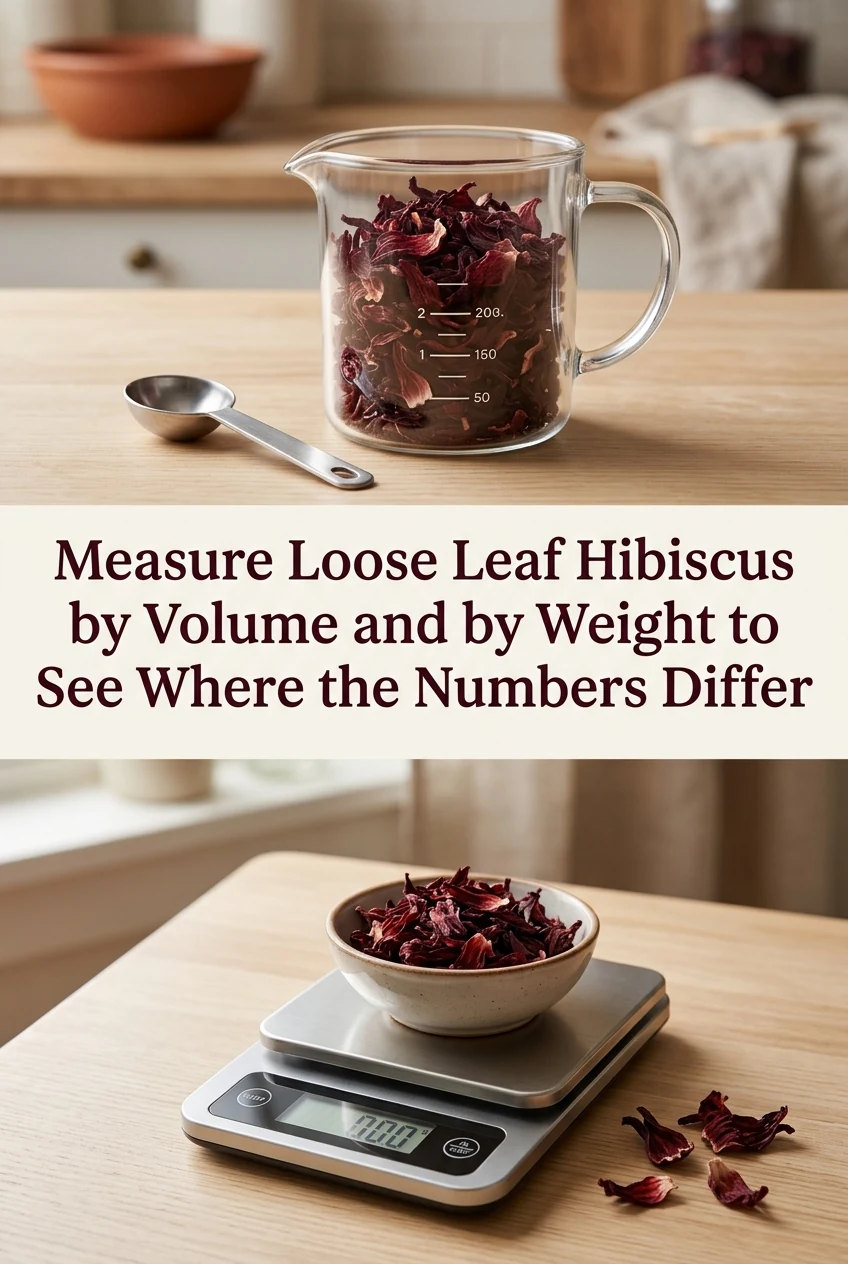
AI-generated editorial concept created for this article. The image is not a technical diagram or a tested result.
Why hibiscus petals resist consistent volume measurement
Whole or roughly torn hibiscus petals are irregular in shape and trap air between them. A tablespoon measure filled with large curled pieces holds far fewer petals by mass than the same spoon filled with finely broken fragments. Unlike a dense powder such as cocoa, hibiscus does not settle predictably when you tap the spoon. This means that a recipe written in tablespoons can produce noticeably different results depending on the cut size of the petals in your current bag.
How to run the volume-to-weight comparison at home
Measure one level tablespoon of your hibiscus petals using a standard 15 millilitre measuring spoon, then tip the contents onto a kitchen scale and record the gram weight. Repeat with a second tablespoon from the same bag without repacking. Compare the two readings. If they differ by more than one gram, your petals are too irregular for reliable tablespoon measurement. This two-step check takes under two minutes and tells you whether to switch to weighing for your concentrate recipe.
Worked example showing a realistic range
As an illustrative example only: one tablespoon of coarsely dried hibiscus petals might weigh between two and four grams depending on how loosely they sit in the spoon, while a tablespoon of finely broken petals from a different supplier might weigh five to seven grams. That difference translates directly to concentrate strength. These figures are not universal standards; they are the kind of range you might observe when running your own comparison with petals from different sources.
Choosing a consistent method for your concentrate
Once you have compared both measures, choose the method that gives you the smaller variation between repeated scoops. For most home batches of hibiscus concentrate, weighing in grams is more repeatable than using a tablespoon, particularly when petals are large and irregular. If you prefer volume for convenience, use a fine-mesh sieve to break larger pieces into smaller fragments before measuring, which reduces the air gaps and brings the volume measure closer to a consistent weight.
Applying your chosen measure to a small concentrate batch
A small hibiscus concentrate might use 10 to 15 grams of dried petals steeped in 250 millilitres of just-boiled water for 10 to 15 minutes, strained and cooled before refrigerating. Using a gram weight rather than a tablespoon count gives you a fixed starting point you can adjust up or down on the next batch based on how the first one tasted. Refrigerate the finished concentrate promptly and use within a few days, as it is not shelf-stable.
A little more
to know.
Does the steeping time matter more than the petal quantity for concentrate strength?
Both matter, but petal quantity sets the ceiling for how much colour and tartness can extract. Steeping longer past around 15 minutes adds bitterness without proportionally increasing the hibiscus flavour, so getting the quantity right first gives you a better foundation to adjust from.
Can I use a kitchen scale that only reads in one-gram increments for hibiscus?
A one-gram resolution scale is workable for batches of 10 grams or more. For very small test batches under five grams, a scale with 0.1-gram resolution gives you more useful data when comparing tablespoon weights, since the differences between scoops may be less than one gram.
Original editorial guidance and recipe formulations, not independently kitchen-tested. Times are estimates and depend on equipment and product directions. Cooked bases need additional cooling and refrigeration before cold serving. Images are AI-generated illustrations; appearance and yield may vary. Check actual ingredient labels, allergens, and any certification you require. We do not certify products. Read our approach.
Save to Pinterest ↗ANOTHER IDEA FOR THE COUNTER