Measure Loose Leaf Chamomile by Volume and by Weight to See Where the Numbers Differ
Chamomile flowers are among the lightest ingredients you will handle in a home cafe setting. A tablespoon that looks generously full may weigh only one gram or less, while a tablespoon of something like ground coffee might weigh six to eight grams. This gap matters when you are making a chamomile iced infusion repeatedly and want the flavour to stay consistent. Understanding exactly where volume and weight diverge helps you choose which measurement method to rely on for your setup.
Read the note ↓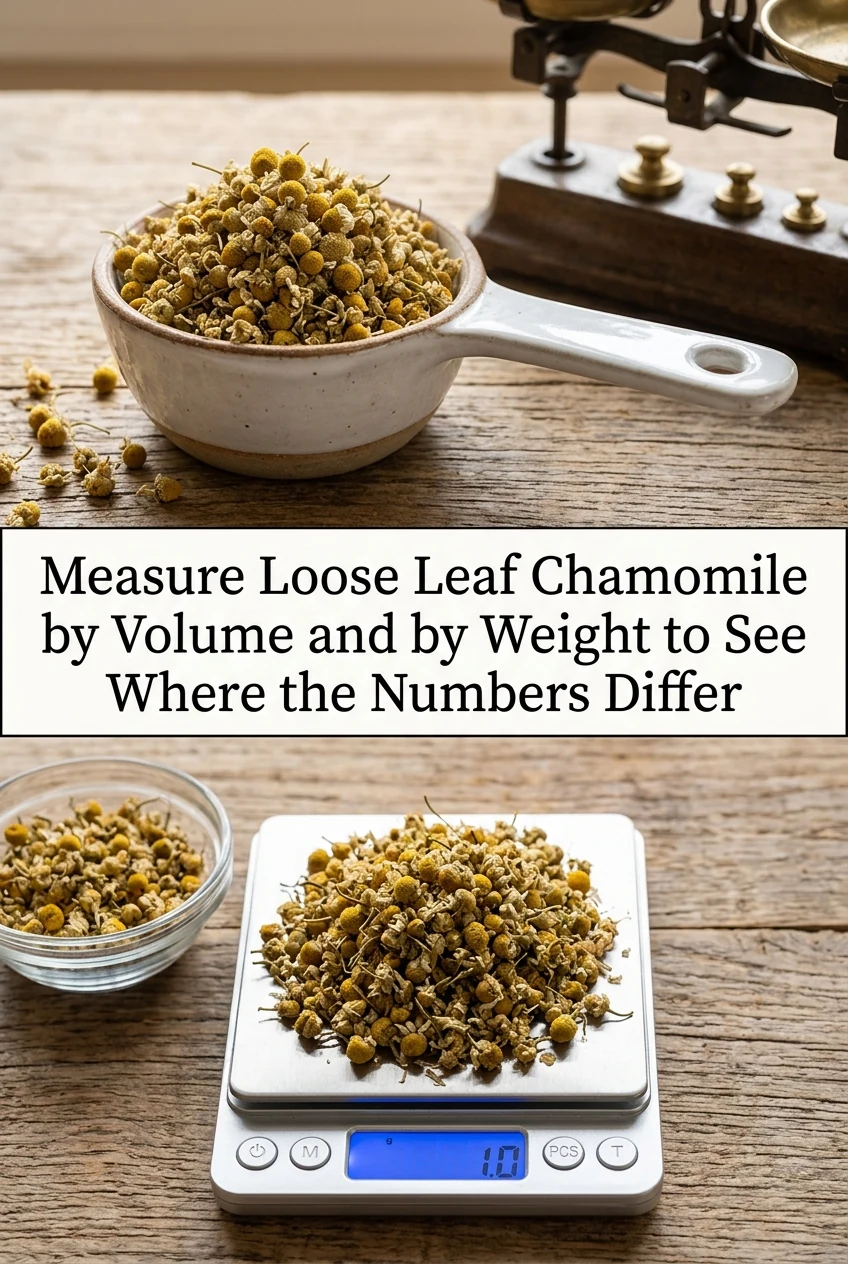
AI-generated editorial concept created for this article. The image is not a technical diagram or a tested result.
Why Chamomile Flowers Behave Differently from Dense Ingredients
Whole dried chamomile flowers are mostly air. The petals and hollow flower heads trap space between them, so a given volume holds very little actual plant material by weight. This is unlike ground spices or sugar, where particles pack closely together. The practical consequence is that a small change in how loosely you scoop chamomile into a tablespoon can shift the weight by 30 to 50 percent. This variability is why volume alone is an unreliable measure for this particular ingredient.
Run a Side-by-Side Comparison at Home
To see the gap clearly, scoop one level tablespoon of loose chamomile using a standard 15 ml measuring spoon and weigh it on a digital scale. Then scoop a second tablespoon by pressing the flowers lightly into the spoon and weigh that too. As an illustrative example, a loosely scooped tablespoon might weigh around 0.8 grams while a lightly pressed one reaches 1.2 grams. Your results will vary by brand and flower size. Record both numbers so you have a personal reference for your specific chamomile.
Decide Which Method Suits Your Brewing Routine
If you brew chamomile infusions daily, weighing is more repeatable because it removes the scooping variable entirely. A digital scale that reads to 0.1 gram increments is sufficient for this purpose. If you prefer volume for speed, use the same spoon each time and develop a consistent scooping habit, such as always levelling without pressing. The key is choosing one method and sticking to it rather than alternating, which reintroduces the inconsistency you are trying to eliminate.
Apply Consistent Measurement to a Chamomile Iced Infusion
For a cold infusion using 500 ml of cold filtered water, a starting point of 3 to 4 grams of dried chamomile flowers steeped in the refrigerator for 6 to 8 hours produces a mild, floral result in many home kitchens, though actual strength depends on the flowers used and personal preference. This is an illustrative range, not a universal formula. Measure the chamomile by weight each time, steep covered in the refrigerator, and taste before serving to decide whether to adjust for the next batch.
Store Chamomile in a Way That Preserves Consistent Density
How chamomile is stored affects how it measures. Flowers compressed at the bottom of a nearly empty bag will pack more densely into a spoon than flowers from a freshly opened, loosely filled container. Transfer chamomile to a rigid airtight container rather than leaving it in a resealable bag, which allows the contents to compress over time. Keep the container away from heat and light. Consistent storage conditions mean the flowers maintain a similar density from one brew session to the next.
A little more
to know.
Does the same volume-to-weight gap apply to other herbal flowers like hibiscus or rose petals?
Yes, though the exact ratio differs by ingredient. Hibiscus petals are denser than chamomile and will weigh more per tablespoon. Rose petals vary by cut size. Running the same side-by-side comparison for each ingredient gives you an accurate personal reference rather than relying on general estimates.
How long can a chamomile cold infusion be safely kept in the refrigerator?
Strain out the flowers after steeping and store the liquid covered at 4 degrees Celsius or below. Consume within two days for best flavour and safety. Discard any infusion left at room temperature for more than two hours, or one hour if ambient temperature exceeds 32 degrees Celsius.
Original editorial guidance and recipe formulations, not independently kitchen-tested. Times are estimates and depend on equipment and product directions. Cooked bases need additional cooling and refrigeration before cold serving. Images are AI-generated illustrations; appearance and yield may vary. Check actual ingredient labels, allergens, and any certification you require. We do not certify products. Read our approach.
Save to Pinterest ↗ANOTHER IDEA FOR THE COUNTER