Make a Strained Tamarind and Date Cooler with Still Water
A tamarind and date cooler is a water-based drink that draws its character from two pantry staples: plain seedless tamarind paste and soft pitted dates. Tamarind contributes a sharp, fruity tang, while dates add body and a gentle sweetness. Combined with cold still water and strained to remove fibrous material, the result is a lightly tart, naturally dark-colored drink. The proportions below are an illustrative starting point, not a tested recipe with a guaranteed outcome, because paste strength and date sweetness vary considerably between brands and batches. Read your actual product labels before you begin.
Read the note ↓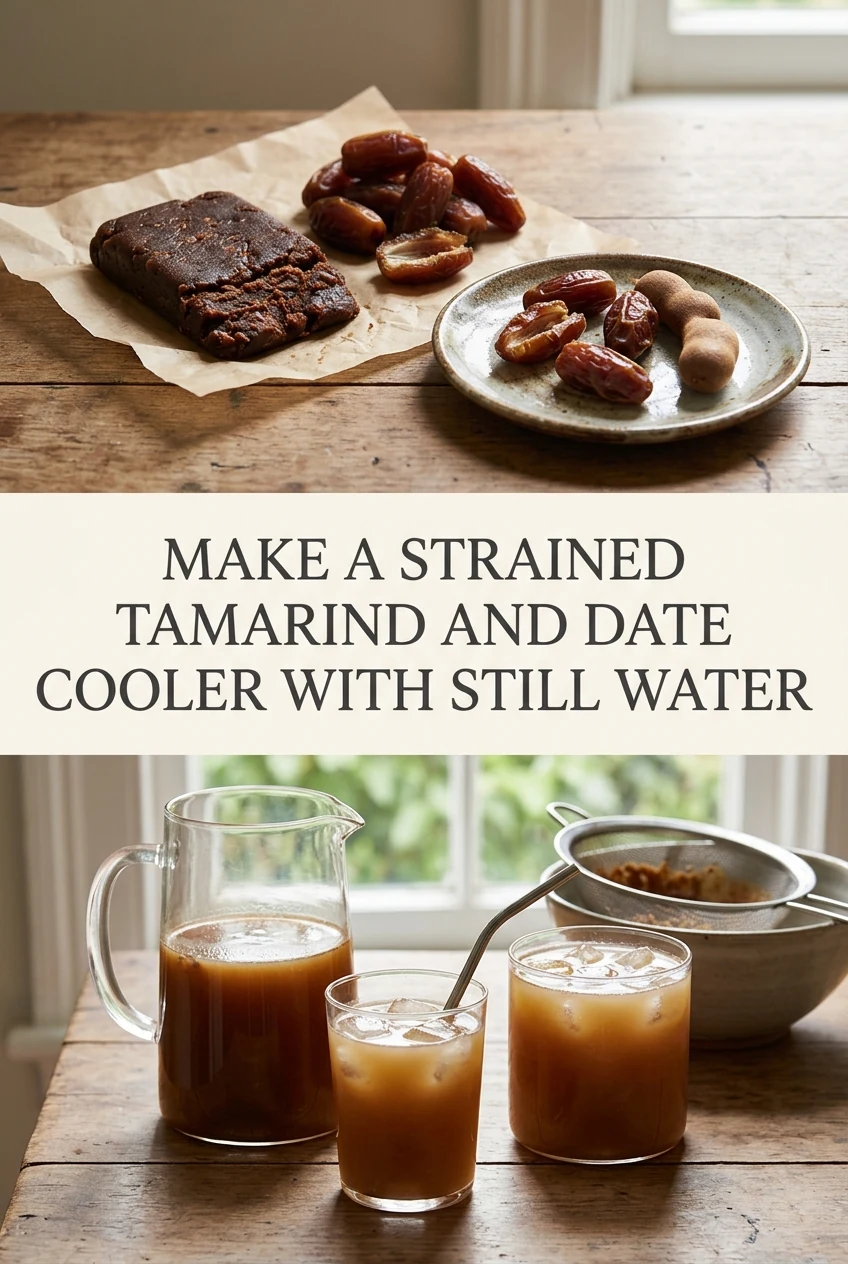
AI-generated editorial concept created for this article. The image is not a technical diagram or a tested result.
Choose and Check Your Ingredients
Select a product labeled plainly as seedless tamarind paste with no added flavoring agents, preservatives, or alcohol-based ingredients. Read the ingredient list on the jar or pouch and follow any preparation notes printed there. For dates, choose a pack labeled pitted, but run each date through your fingers before use to feel for any remaining pit fragments, as packing lines occasionally miss one. Soft, moist dates blend more easily than dry ones. If your dates feel firm or leathery, check the package for the maker's recommended softening method, which often involves soaking in a small amount of water at room temperature for a period the maker specifies. Use only the water amount the package suggests, and keep the soaking water cool rather than hot, since you will be blending cool ingredients.
Understand the Illustrative Quantities
This worked example uses 40 g of soft pitted dates, 10 g of plain tamarind paste, and 400 g of potable cold water. These figures are chosen to give a manageable batch for a single serving session and to keep the ratio easy to scale mentally. They are not derived from laboratory testing and carry no guarantee of a specific flavor intensity or volume of finished drink. Tamarind paste sold in one country may be considerably more concentrated than a product with an identical name sold elsewhere, so your result may be sharper or milder than expected. Treat the quantities as a starting framework that you will adjust by tasting.
Blend the Mixture Safely
Place the 40 g of checked, pitted dates into your blender jar. Add the 10 g of tamarind paste. Pour in approximately 300 g of the 400 g of cold water, reserving the remaining 100 g for later adjustment. Check that the total contents sit well below the maximum fill line marked on your blender, and fit the lid securely following the manufacturer's instructions. Blend until the dates appear broken down and the liquid looks uniform in color. Do not add hot or warm water, as blending warm liquids in a sealed jar can create pressure. Blend only according to your blender's actual operating instructions.
Strain and Taste Before Serving
Set a fine-mesh strainer over a jug or bowl large enough to hold the full batch. Pour the blended mixture through the strainer in stages, pressing gently with the back of a spoon to move liquid through while leaving fibrous pulp behind. Discard the strained solids. Pour a small amount of the strained liquid into a cup and taste it. If the drink tastes sharper than you prefer, stir in a portion of the reserved 100 g of cold water and taste again. Add water gradually rather than all at once, since small additions are easier to control. If you want more sweetness, you may add a small quantity of sugar or honey and stir until dissolved, then taste again. Serve the cooler promptly over ice if desired.
Handle and Store Responsibly
Because this drink contains no preservatives and is prepared from fresh ingredients, it is perishable. Serve it as soon as possible after preparation. If you are not drinking it immediately, transfer it to a clean covered container and refrigerate it at 4 degrees Celsius or 40 degrees Fahrenheit or below. Do not leave the drink at room temperature for more than two hours, or more than one hour if the surrounding temperature is above 32 degrees Celsius or 90 degrees Fahrenheit. Do not attempt to can or otherwise shelf-preserve this drink at home. Discard any portion that smells off or has been left unrefrigerated beyond the time limits above.
A little more
to know.
Can I use block tamarind instead of paste?
Block tamarind requires soaking and manual seed and fiber removal before use, which is a different preparation process from using a ready paste. If your block tamarind package includes preparation instructions, follow those directions. The resulting tamarind liquid will vary in concentration depending on how much water you use during soaking, so you will need to taste and adjust your cooler accordingly. The 10 g paste figure in this example does not translate directly to an equivalent weight of block tamarind.
Why does the recipe ask me to reserve some water rather than add it all at once?
Tamarind paste strength and date sweetness differ between products, so the flavor of your finished drink may be more intense or more dilute than anticipated. Starting with 300 g of water and reserving 100 g gives you room to dilute the strained drink to a level you find pleasant without overshooting. Once you have added all the water and the drink still tastes too sharp or too sweet, you can continue adjusting in small increments using additional cold water or a sweetener of your choice.
Original editorial guidance and recipe formulations, not independently kitchen-tested. Times are estimates and depend on equipment and product directions. Cooked bases need additional cooling and refrigeration before cold serving. Images are AI-generated illustrations; appearance and yield may vary. Check actual ingredient labels, allergens, and any certification you require. We do not certify products. Read our approach.
Save to Pinterest ↗ANOTHER IDEA FOR THE COUNTER