Make a Small Dish of Bread Pudding
Bread pudding is a cooked egg-and-milk dessert that transforms day-old bread into a soft, custardy bake. This article walks through one illustrative home-cafe plan sized for a single small baking dish. It is a planning guide, not a kitchen-tested result, so treat temperatures and timings as starting points and verify doneness in your own oven using the visual and tactile checks described below.
Read the note ↓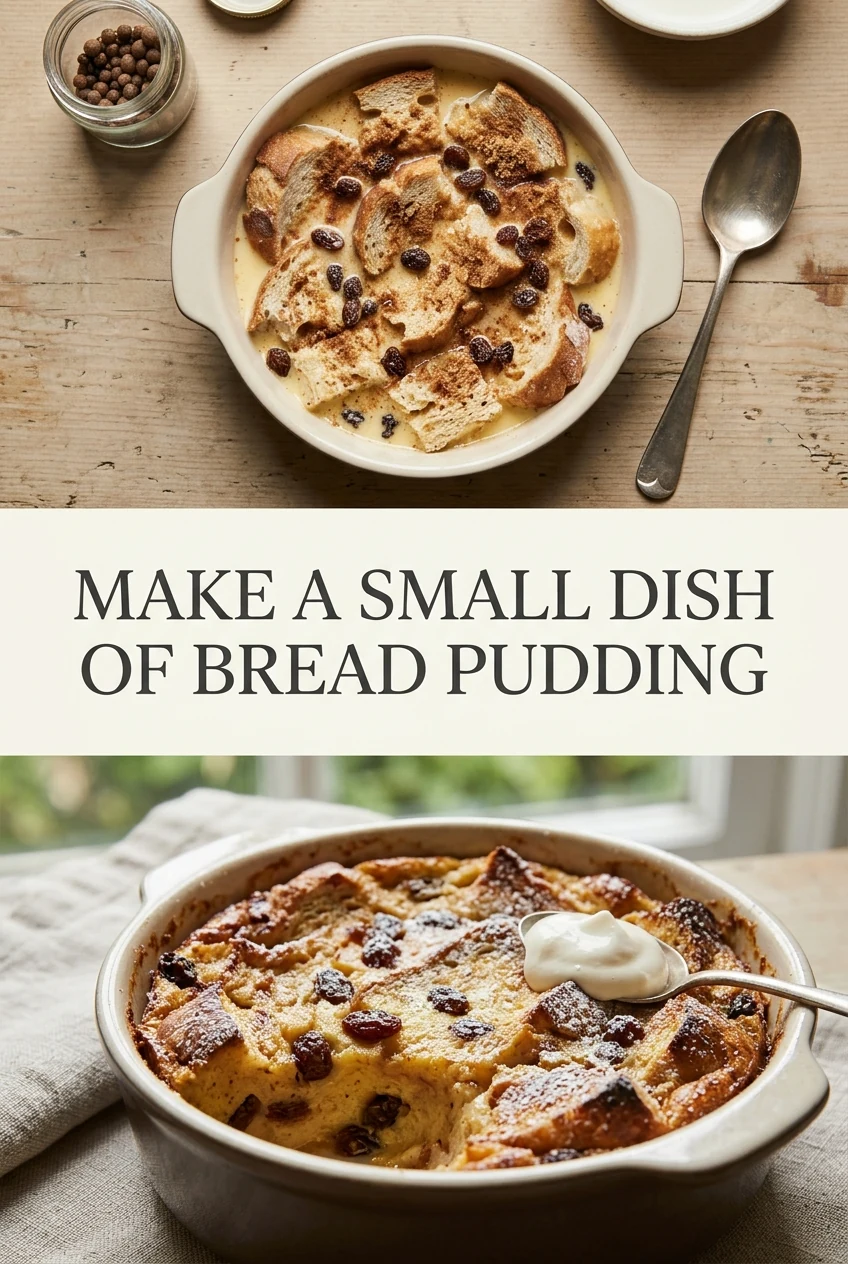
AI-generated editorial concept created for this article. The image is not a technical diagram or a tested result.
Choose Your Dish and Weigh Your Bread
Select a ceramic or glass baking dish that holds roughly 500 ml to 600 ml of water when filled to the rim. A dish measuring approximately 18 cm by 12 cm by 5 cm deep fits this range well. Weigh your bread on a kitchen scale. For this plan, use 120 g of day-old white sandwich bread or brioche-style bread, crusts on. Tearing the slices into roughly 3 cm pieces and leaving them uncovered on a plate for one hour before mixing helps them absorb custard evenly. Weighing rather than counting slices matters because bread density varies significantly between brands and loaf styles.
Build the Custard Base
Crack 2 large eggs into a bowl and whisk them until the yolks and whites are fully combined. Add 240 ml of full-fat dairy milk and 2 tablespoons of white granulated sugar, then whisk again until the sugar begins to dissolve. Stir in half a teaspoon of alcohol-free vanilla flavoring, checking the product label to confirm it contains no ethanol. Add a small pinch of ground cinnamon if you like. Pour this custard over the torn bread pieces in a separate bowl, press the bread gently into the liquid, and allow it to soak for at least 20 minutes. The bread should feel saturated but not falling apart before it goes into the dish.
Fill the Dish and Prepare for Baking
Lightly grease the inside of your baking dish with a small amount of unsalted butter, spreading it across the base and up the sides. Spoon the soaked bread and any remaining custard liquid into the dish. Press the mixture down lightly so it sits in an even layer. Scatter a teaspoon of granulated sugar across the top surface if you would like a lightly caramelized crust. Place the filled dish inside a larger roasting pan and pour hot tap water into the roasting pan until it reaches approximately halfway up the outside of the baking dish. This water bath, sometimes called a bain-marie, helps the egg custard cook gently and evenly rather than curdling at the edges.
Bake and Check for Doneness
Preheat your oven following your oven manufacturer's instructions. A commonly published starting point for egg custard desserts baked in a water bath is 160 degrees Celsius for a conventional oven, though your oven may run hotter or cooler. Place the roasting pan with the dish inside on a centre rack. Begin checking at around 35 minutes. The pudding is ready when the edges are set and the centre has only a slight wobble when you gently nudge the dish. A clean knife inserted into the centre should come out without wet custard clinging to it. If the surface browns before the centre sets, lay a small piece of foil loosely over the top. Actual baking time will depend on your specific oven and dish material.
Cool, Serve and Store Promptly
Carefully lift the baking dish out of the water bath using oven mitts and set it on a wire rack. Allow the pudding to cool for at least 15 minutes before serving so the custard can firm up slightly. Serve warm in spoonfuls directly from the dish, accompanied by a drizzle of honey or a spoonful of thick cream if you like. Because this dessert contains cooked eggs and dairy milk, it is perishable. Cover any uneaten portion with a lid or cling film and refrigerate it promptly. Follow current food-safety guidance in your region regarding how long cooked egg-and-milk dishes may be safely kept refrigerated, as this varies by authority and household conditions.
A little more
to know.
Can I use a different type of bread for this plan?
Yes. Denser breads such as a plain white loaf or a milk bread will absorb custard more slowly than an airy brioche-style bread, so you may need to extend the soaking time. Keep the weight at 120 g regardless of bread type so the custard-to-bread ratio in this plan stays consistent. Avoid breads that contain fillings, strong flavourings or added fats that could alter the flavour of the finished pudding.
What should I do if the centre is still liquid after the suggested baking window?
Return the dish to the oven in the water bath and check again every five to eight minutes. The water bath temperature, your oven's actual output and the thickness of your dish all affect how long the custard takes to set. Do not increase the oven temperature sharply to speed things up, as a rapid rise in heat can cause the eggs to curdle and the texture to become grainy rather than smooth.
Original editorial guidance and recipe formulations, not independently kitchen-tested. Times are estimates and depend on equipment and product directions. Cooked bases need additional cooling and refrigeration before cold serving. Images are AI-generated illustrations; appearance and yield may vary. Check actual ingredient labels, allergens, and any certification you require. We do not certify products. Read our approach.
Save to Pinterest ↗ANOTHER IDEA FOR THE COUNTER