Make a Plain Stovetop Flatbread for a Savory Cafe Plate
A plain stovetop flatbread sits comfortably between a soft wrap and a firm roti without belonging to either category. It uses a short measured dough, rolls out in a consistent sequence, and cooks directly on a dry pan. The result is a neutral, slightly charred round that pairs well with hummus, labneh, roasted vegetables, or a poached egg on a home-cafe plate. This article outlines one illustrative plan for eight portions. It is a technique guide, not a kitchen-tested recipe with guaranteed outcomes, so treat every timing and heat reference as a starting point you will adjust to your own stove and pan.
Read the note ↓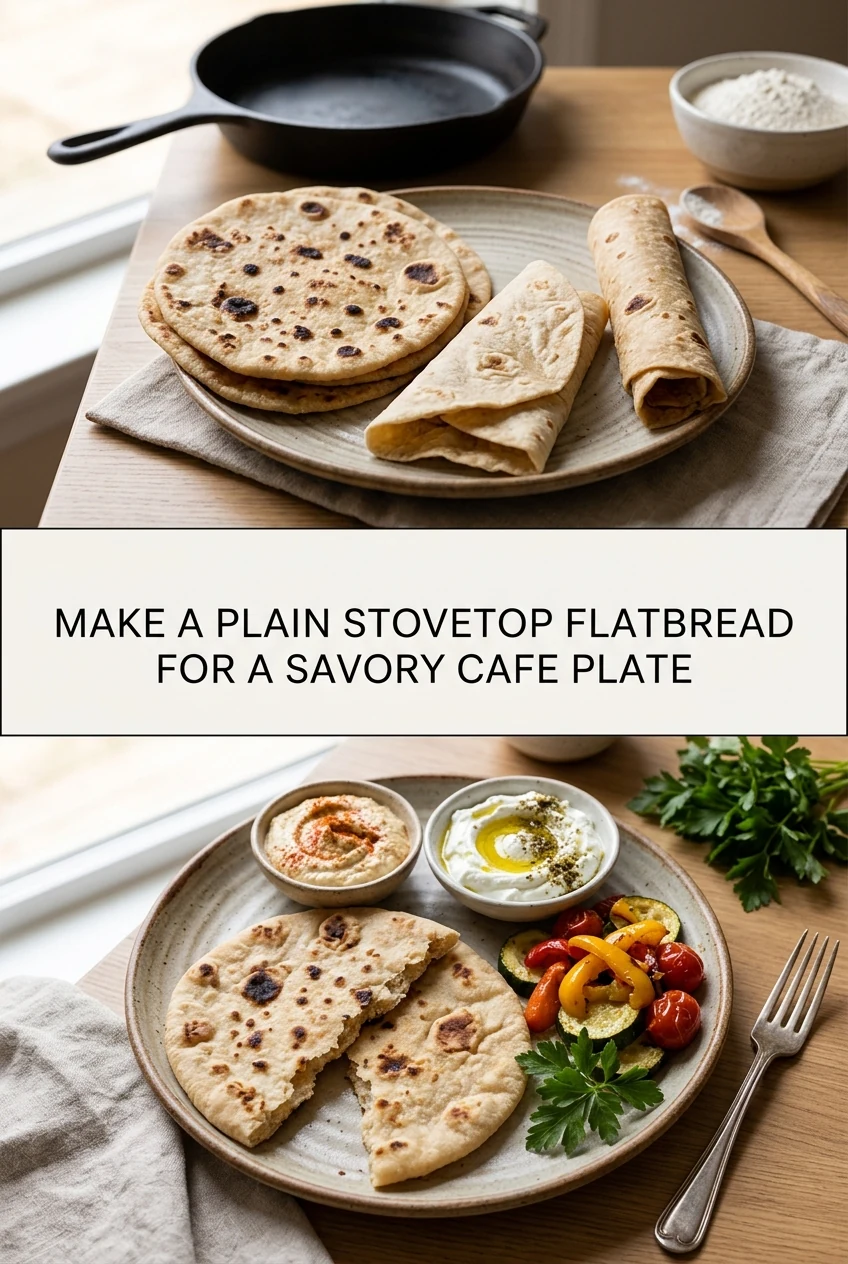
AI-generated editorial concept created for this article. The image is not a technical diagram or a tested result.
Measure the Dough for Eight Portions
Combine 300 grams of plain all-purpose flour with half a teaspoon of fine salt and one teaspoon of baking powder in a wide bowl. Stir the dry ingredients together so the salt and baking powder are evenly distributed through the flour. Add 180 millilitres of warm water gradually, mixing with a fork or your hand until a shaggy mass forms. Turn the mass onto a lightly floured surface and knead for roughly four to five minutes until the dough feels smooth and no longer sticky. If it tears when stretched slightly, knead for another minute. Divide the dough into eight equal pieces by first halving the ball, then halving each half, then halving again. Each piece will weigh approximately 60 grams. Roll each piece into a smooth ball and cover all eight with a clean damp cloth. Rest for 15 minutes at room temperature before rolling.
Roll Each Piece in a Consistent Sequence
Work with one ball at a time and keep the others covered so they do not dry out. Lightly dust your surface and rolling pin. Flatten the ball with your palm first, then roll from the centre outward in four directions, rotating the dough a quarter turn between each pass. Aim for a round roughly 18 to 20 centimetres across and about 1.5 to 2 millimetres thick. Thinner rounds will cook faster and turn crisper; thicker rounds stay softer in the centre. Neither outcome is wrong, but decide on a consistent thickness before you begin so all eight portions cook in a similar time. Stack rolled rounds between small squares of baking paper to prevent sticking while you prepare the pan.
Cook on a Dry Pan Without Oil
Place a heavy flat pan, such as a cast-iron skillet or a thick-based frying pan, over a medium heat. Allow it to warm for two to three minutes before adding the first round. Lay one flatbread flat onto the dry surface. You should hear a quiet sizzle. Cook until the underside shows pale brown patches and small bubbles push up through the surface, which may take roughly one and a half to two minutes depending on your stove. Flip once using tongs or a wide spatula. Cook the second side for a similar period. The finished flatbread will have irregular brown spots on both sides and feel firm at the edges but still slightly pliable in the centre. Transfer to a clean cloth and fold loosely to keep it warm while you cook the remaining seven rounds in the same sequence.
Arrange the Cafe Plate in a Simple Sequence
A savory cafe plate built around this flatbread works best when the components are assembled just before serving. Place one or two warm flatbreads slightly overlapping on one side of a wide plate. Add a generous spoonful of hummus or labneh in the centre, spreading it lightly with the back of the spoon to create a shallow well. Arrange roasted cherry tomatoes, sliced cucumber, or a handful of dressed leaves alongside. A soft poached egg placed on top of the spread adds substance. Finish with a drizzle of good olive oil and a pinch of dried chilli flakes or za'atar if you have it. The flatbread acts as both an edible utensil and a base, so keep the toppings proportionate to the bread size rather than piling them high.
Handle Leftovers and Perishable Toppings Promptly
Cooked flatbreads that are not served immediately should be cooled completely on a rack, then wrapped and refrigerated. Use refrigerated flatbreads within a day or two and reheat briefly in a warm dry pan before serving. Do not leave assembled plates with dairy-based spreads such as labneh or poached eggs at room temperature for extended periods. Refrigerate any unused labneh or hummus promptly according to the storage guidance on the product packaging. Raw dough portions that you do not plan to cook immediately can be covered tightly and refrigerated; bring them back to room temperature before rolling and cooking. These are general handling notes, not precise storage guarantees, so follow the guidance on any packaged ingredient you use.
A little more
to know.
Can I add any flavoring to the dough itself?
Yes. A pinch of cumin or nigella seeds mixed into the dry ingredients before adding water works well and does not affect the rolling or cooking process. If you want a subtle savory note, a small amount of dried herbs such as thyme can be added the same way. Avoid liquid flavorings that would change the hydration balance of the dough unless you reduce the water by an equivalent amount.
What if I do not have a cast-iron skillet?
Any thick-based frying pan that can hold steady heat without hot spots will work as a starting point. Thin pans tend to create uneven browning because they respond quickly to temperature changes. If your pan is thin, keep the heat lower and watch the bread closely. The goal is even contact between the dough and the pan surface, so a flat-bottomed pan is more useful here than one with a ridged surface.
Original editorial guidance and recipe formulations, not independently kitchen-tested. Times are estimates and depend on equipment and product directions. Cooked bases need additional cooling and refrigeration before cold serving. Images are AI-generated illustrations; appearance and yield may vary. Check actual ingredient labels, allergens, and any certification you require. We do not certify products. Read our approach.
Save to Pinterest ↗ANOTHER IDEA FOR THE COUNTER