Layer Fresh Dairy Over High-Density Spiced Purees
Layered specialty beverages depend on differences in ingredient density to keep layers visually distinct. High-density bases, such as thick date or spiced fruit purees, contain substantial fruit solids and dissolved sugars that naturally settle at the bottom of a glass. However, pouring fresh dairy directly onto these bases can disturb the boundary line if added too quickly. Achieving clean visual separation requires preparing a smooth base layer and introducing the dairy gently to avoid disrupting the puree.
Read the note ↓
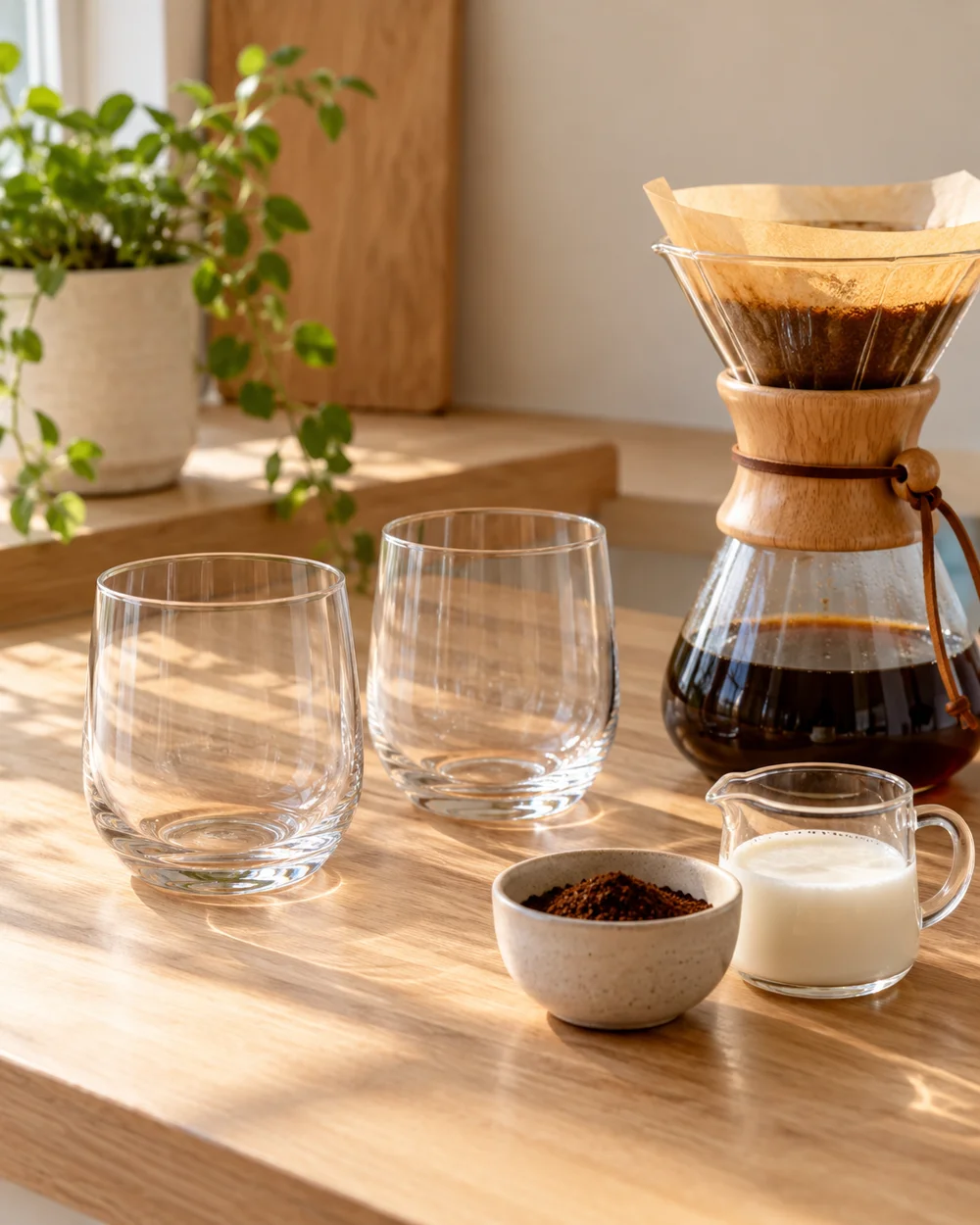
Representative category illustration reused from our editorial library; it does not depict this specific project or a tested result.
Base Viscosity and Density Preparation
Prepare the bottom layer by thoroughly blending the spiced date puree until completely smooth, ensuring no large fruit chunks remain. For an illustrative preparation, place roughly 45 milliliters of smooth puree at the bottom of a straight-sided 250-milliliter glass. Because this base contains concentrated fruit sugars, its high density keeps it settled at the bottom of the vessel. Level the top surface gently with a small spoon or spatula before chilling.
Temperature Equalization and Settling
Allow the spiced base to rest in the refrigerator at 4 degrees Celsius or lower for at least twenty minutes prior to beverage assembly. Chilling thickens the fruit puree and firms its surface, making it far more resistant to being disturbed when liquid is poured over it. A warm or room-temperature puree remains looser and blends more readily upon contact with incoming milk, making a sharp separation line harder to maintain.
Pouring Over the Back of a Spoon
Position a stainless steel bar spoon inside the glass with its rounded back facing upward, holding the dome just above the surface of the settled puree. Pour cold pasteurized whole milk steadily onto the back of the spoon rather than straight into the glass. The curved surface deflects the falling stream, spreading the milk outward gently across the puree without piercing or disturbing the dense bottom layer.
Ascending the Spoon During Fill
As the milk level rises within the glass, gradually lift the spoon upward, keeping the dome near the rising surface. Pour roughly 120 milliliters of cold milk at a steady, deliberate pace. Sudden surges in pouring speed can create turbulence that breaks into the puree foundation. Keeping the stream continuous and lifting the spoon steadily helps maintain a clear boundary line between the spiced puree and the dairy layer.
Serving and Consumption Considerations
Serve the layered beverage immediately alongside a long spoon or straw so the drinker can choose between enjoying the layers separately or stirring them together. If the beverage must wait briefly before serving, keep it refrigerated at 4 degrees Celsius or below. Over extended storage, the liquids will gradually begin to bleed together at the interface, so serving promptly after assembly yields the best presentation.
A little more
to know.
Can I add ice cubes to this layered beverage format?
Yes, but add the ice cubes into the milk layer extremely gently using bar tongs after the dairy has been poured, or float crushed ice only on top to avoid disturbing the puree layer.
Why did my milk feather and curdle at the boundary line?
Feathering occurs if the puree base contains excessive citric acid or unbuffered acidic fruit juice. Ensure your spiced date blend relies on sweet bases rather than high-acid additions to keep dairy proteins stable.
Original editorial guidance and recipe formulations, not independently kitchen-tested. Times are estimates and depend on equipment and product directions. Cooked bases need additional cooling and refrigeration before cold serving. Images are AI-generated illustrations; appearance and yield may vary. Check actual ingredient labels, allergens, and any certification you require. We do not certify products. Read our approach.
Save to Pinterest ↗ANOTHER IDEA FOR THE COUNTER