Keep a Serving Portion Separate from a Recipe's Batch Yield
A recipe tells you how much to make in one session. A serving portion tells you how much goes onto one plate or into one cup. Treating those two numbers as the same thing is one of the most common planning slip-ups in a home café setup. This article walks through a straightforward technique for keeping batch yield and serving size clearly separated from the moment you write a recipe card to the moment you hand a drink or dessert across the counter.
Read the note ↓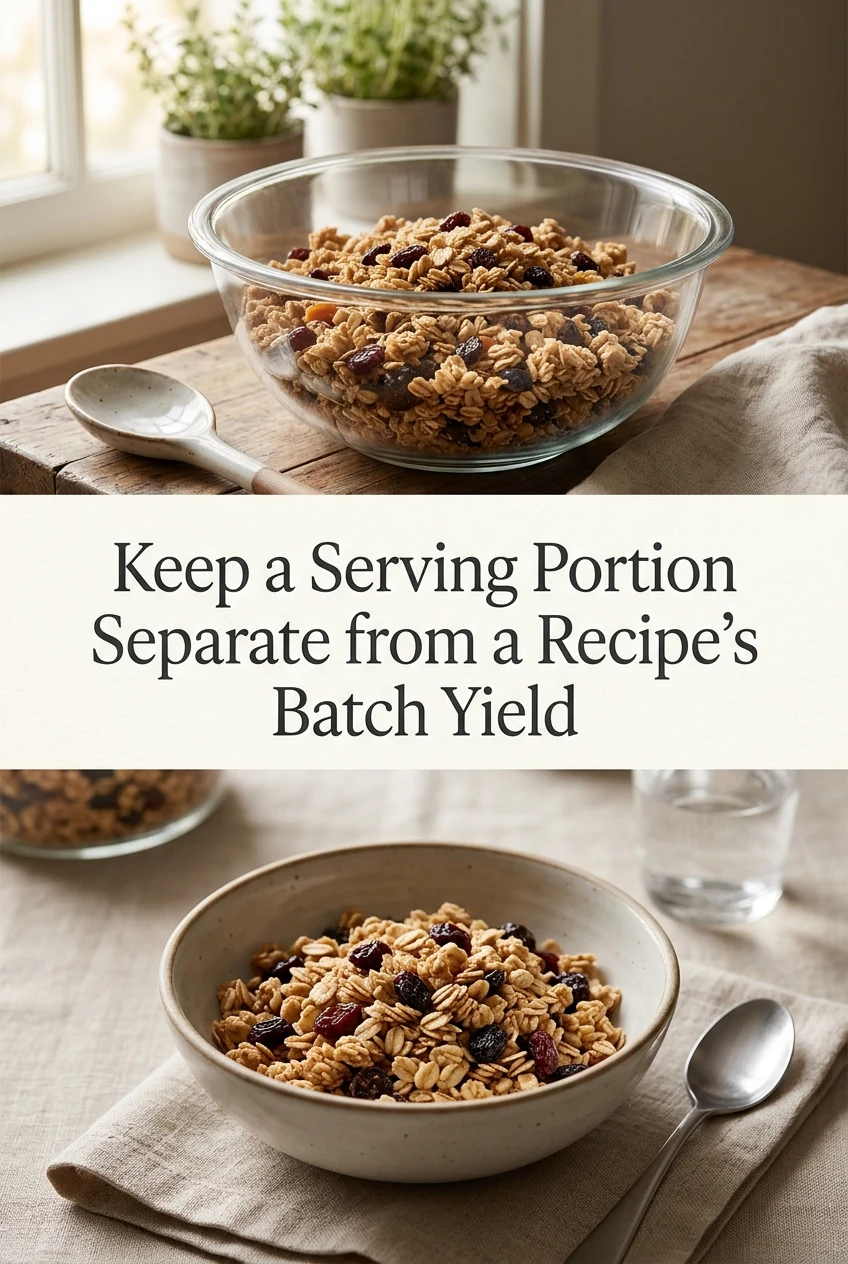
AI-generated editorial concept created for this article. The image is not a technical diagram or a tested result.
Why the Two Numbers Are Different
Batch yield is the total usable quantity a recipe produces in a single preparation run. Serving portion is the fixed amount allocated to one guest. A cold-brew concentrate recipe might yield 800 ml, but each drink uses 100 ml of concentrate topped with water, giving you eight potential servings from that one batch. If you write only the yield on your recipe card and forget to note the per-serving figure, you may over-pour early in a service session and run short before the last guest is served. Keeping both numbers visible on the same card removes that guesswork entirely.
Writing a Recipe Card That Shows Both Figures
At the top of every recipe card, write two clearly labelled lines before the ingredient list: Batch Yield and Serving Portion. Underneath those, add a third line called Servings Per Batch, calculated simply by dividing yield by portion size. For a syrup recipe that produces 500 ml and uses 25 ml per drink, the card reads: Batch Yield 500 ml, Serving Portion 25 ml, Servings Per Batch 20. That arithmetic stays fixed regardless of how busy service becomes. If you scale the recipe up to a 1,000 ml batch, the serving portion stays at 25 ml and servings per batch becomes 40. The portion never changes just because the batch grew.
A Worked Example: Vanilla Oat Milk Latte Syrup
This is an illustrative plan, not a kitchen-tested result. Suppose you prepare a simple vanilla syrup using sugar, water, and an alcohol-free vanilla flavoring. Your recipe card notes a batch yield of 600 ml. You decide each latte receives 20 ml of syrup, giving 30 servings per batch. During a morning session you plan to serve 12 lattes. Before service begins, you pour 240 ml (12 servings multiplied by 20 ml) into a small labeled pouring bottle and return the remaining 360 ml to a sealed container in the refrigerator promptly, following standard food-safety practice for perishable syrups. The pouring bottle on the counter holds only what the current session needs. If you sell out and need more, you retrieve the refrigerated remainder rather than leaving the full batch sitting at room temperature. This physical separation makes over-pouring nearly impossible and keeps unused syrup properly chilled.
Applying the Same Logic to Solid Preparations
The batch-versus-portion split works equally well for solid café items. If a tray of date and oat bars yields 16 pieces and your serving size is one piece per order, your recipe card records Batch Yield 16 pieces, Serving Portion 1 piece, Servings Per Batch 16. Before service, you plate the number of pieces you expect to sell in the current session and keep the remainder covered and refrigerated. You do not need to plate the entire tray at once. Deciding the serving portion in advance also helps with consistent presentation: every plate looks the same because the portion was fixed before service began, not estimated by eye during a busy moment.
Keeping Records Across Multiple Batches
Once you establish a serving portion for a recipe, that figure becomes a standing reference. A simple log with columns for Date, Batch Yield, Serving Portion, Servings Available, and Servings Sold lets you track how many portions remain after each session without re-reading the full recipe. If you prepared two batches of the vanilla syrup on different days, each logged separately, you can add their remaining portions together to know your total available servings before the next session. This running count is more reliable than estimating by looking at a container. The log also reveals whether your batch size is well matched to your typical session demand, which can inform future preparation quantities without requiring any formal testing.
A little more
to know.
What if a guest asks for a double portion?
A double portion is simply two serving units. If your standard serving portion is 20 ml of syrup, a double is 40 ml. Record it as two servings sold in your log, not as a different portion size. This keeps your arithmetic consistent and your remaining-servings count accurate.
Does the serving portion change if I use a different cup size?
The serving portion is a decision you make when you write the recipe card, and it should reflect the cup or plate size you intend to use. If you switch to a larger cup and decide the drink needs more syrup, update the serving portion figure on the card and recalculate servings per batch before your next preparation session. Do not adjust the portion mid-session without also updating your log, or your remaining-servings count will become inaccurate.
Original editorial guidance and recipe formulations, not independently kitchen-tested. Times are estimates and depend on equipment and product directions. Cooked bases need additional cooling and refrigeration before cold serving. Images are AI-generated illustrations; appearance and yield may vary. Check actual ingredient labels, allergens, and any certification you require. We do not certify products. Read our approach.
Save to Pinterest ↗ANOTHER IDEA FOR THE COUNTER