Keep a Reusable Cloth Filter Rinsed and Stored Between Brews
A reusable cloth coffee filter traps oils and fine particles during brewing, which means coffee residue begins accumulating in the fabric immediately after each use. Leaving that residue to dry or sit at room temperature encourages off-flavors in subsequent brews and shortens the filter's usable life. Rinsing promptly and storing correctly between uses keeps the filter performing consistently and follows the basic care logic that most filter makers recommend.
Read the note ↓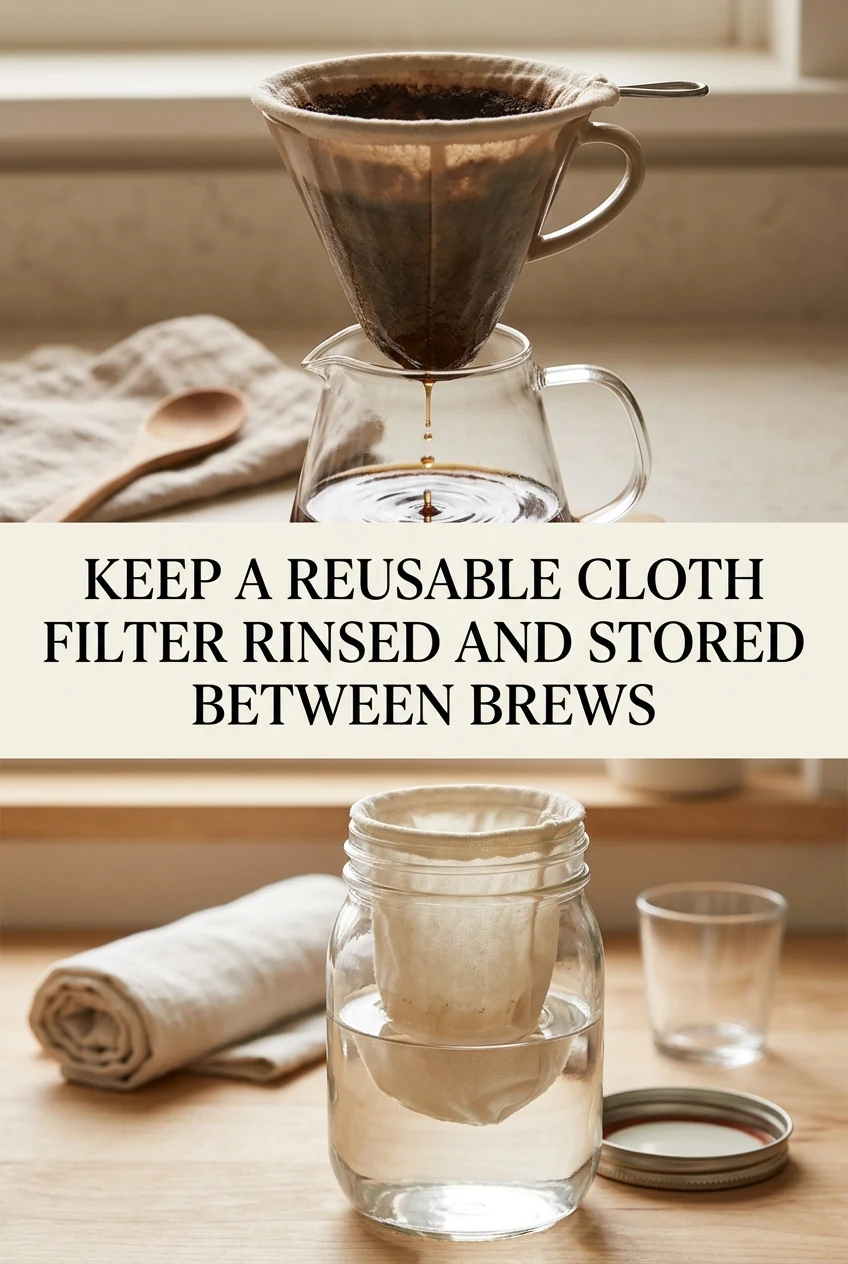
AI-generated editorial concept created for this article. The image is not a technical diagram or a tested result.
Rinse the Filter Immediately After Each Use
As soon as you finish brewing, remove the spent grounds and hold the filter under a stream of clean, cool or lukewarm running water. Gently rub the fabric with your fingers to release trapped fine particles. Do not use dish soap unless your filter's maker explicitly permits it, as soap residue can absorb into the cloth and affect coffee flavor in future brews. Rinse until the water running through the filter runs clear.
Follow Your Maker's Specific Care Instructions
Different cloth filter materials, cotton, hemp, flannel, and others, have different care requirements. Some makers allow occasional gentle hand washing with unscented soap; others specify water-only rinsing. Some recommend periodic boiling to clear oils; others advise against it. Your filter's care card or the maker's website is the authoritative source. Applying a care method designed for a different filter type can damage the weave or alter how the filter flows.
Choose Between Damp Refrigerator Storage and Dry Storage
If you brew daily, storing the rinsed, damp filter in a small sealed container in the refrigerator at 4 degrees Celsius or below is a common approach that keeps the fabric from drying out and developing stale odors. If you brew less frequently, allow the filter to air-dry completely in a clean, ventilated spot before placing it in a dry, lidded container. A damp filter left at room temperature for more than a couple of hours can develop an off smell.
Inspect the Filter Before Each Brew Session
Before placing the filter in your brewer, hold it up to a light source and look for thin spots, small holes, or areas where the weave has loosened. A compromised filter will allow fine grounds to pass into your cup and may flow unevenly, affecting extraction. If you see visible damage, replace the filter rather than brewing through it. Most cloth filters are designed to last a defined number of uses; track roughly how many brews you have completed.
Avoid Common Storage Mistakes That Shorten Filter Life
Do not store a cloth filter touching raw meat, fish, or strongly scented foods in the refrigerator, as cloth absorbs surrounding odors readily. Do not wring the filter aggressively; squeeze gently to remove excess water and preserve the weave shape. Do not leave the filter sitting in a pool of standing water, which promotes uneven breakdown of the fabric. These are practical precautions, not guarantees of a specific lifespan, which varies by material and use frequency.
A little more
to know.
How do I know when a cloth filter needs to be replaced rather than just cleaned?
Replace the filter when you notice grounds consistently appearing in your brewed cup, when the fabric has visible holes or thinning, or when an off-flavor persists even after thorough rinsing. These are signs the material is no longer filtering effectively, regardless of how many brews it has completed.
Is it safe to put a cloth coffee filter in the washing machine?
Only if your specific maker's instructions say so. Many cloth filter makers advise against machine washing because agitation can distort the shape, damage the weave, or leave detergent residue in the fabric. When in doubt, hand-rinse only and consult your maker's guidance directly.
Original editorial guidance and recipe formulations, not independently kitchen-tested. Times are estimates and depend on equipment and product directions. Cooked bases need additional cooling and refrigeration before cold serving. Images are AI-generated illustrations; appearance and yield may vary. Check actual ingredient labels, allergens, and any certification you require. We do not certify products. Read our approach.
Save to Pinterest ↗ANOTHER IDEA FOR THE COUNTER