Keep a Dedicated Small Bowl for Tasting Spoons During a Multi-Drink Prep Session
When you are preparing two or more drinks at once, a tasting spoon that moves directly from a sweet syrup back into a plain milk drink carries flavour with it even after a quick wipe. A small resting bowl placed beside your work area solves this without interrupting your workflow. The habit is simple but the reason behind it is specific: cross-contamination between a flavoured base and a neutral drink changes the second drink in ways that are hard to correct once it is assembled.
Read the note ↓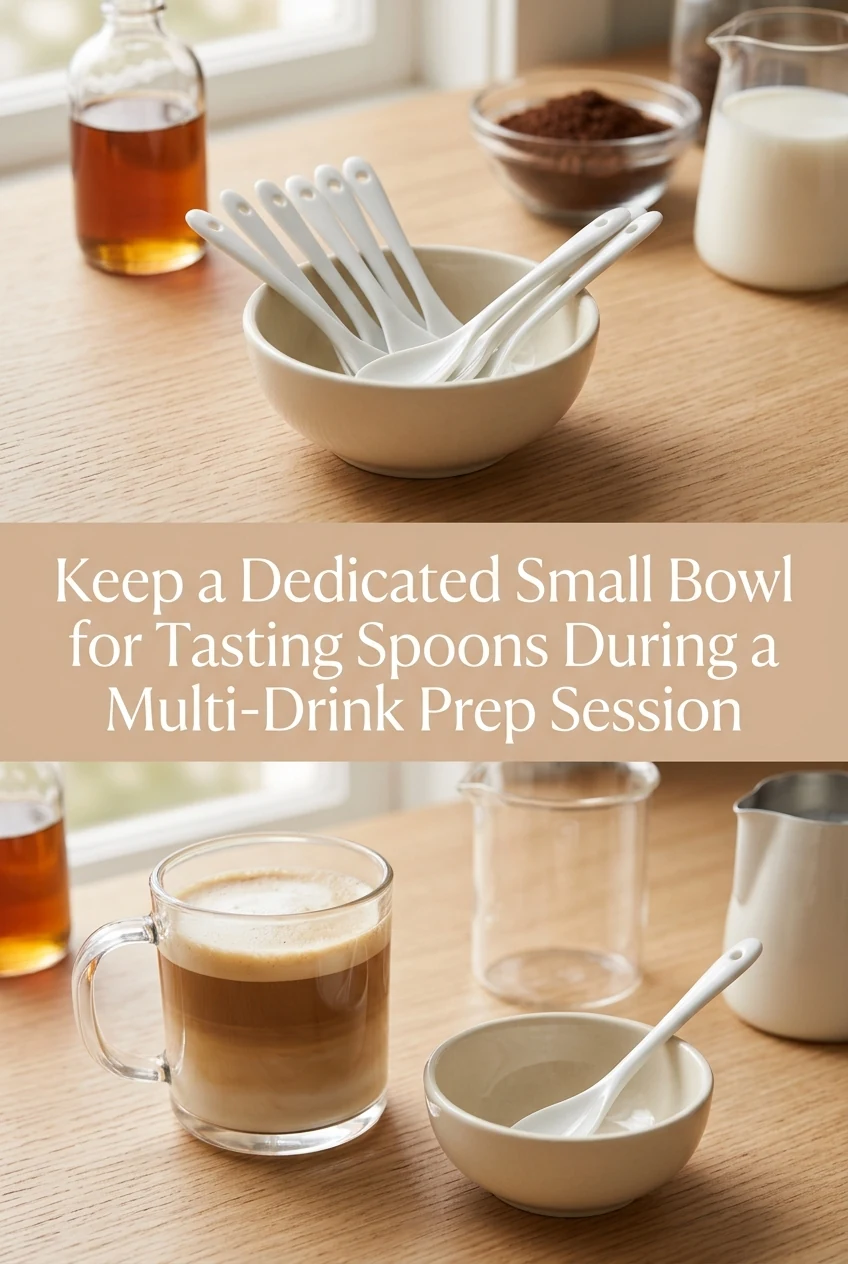
AI-generated editorial concept created for this article. The image is not a technical diagram or a tested result.
Why a Wipe Is Not Enough Between Tastes
A dry cloth or paper towel removes visible residue from a spoon but does not eliminate a thin film of syrup or flavoured liquid clinging to the metal. When that spoon re-enters a plain warm milk drink, the residue disperses into the milk. In a small 200 ml drink, even half a teaspoon of fig or saffron syrup is detectable. The problem compounds if you taste and stir repeatedly, each pass adding a little more of the unwanted flavour to the neutral drink.
What the Resting Bowl Actually Does
A small bowl filled with a few centimetres of clean cold water gives you a place to rest a used tasting spoon between drinks without setting it down on the work surface or returning it to a drink. The water dilutes and holds the residue on the spoon rather than letting it transfer. The bowl is not a cleaning station; it is a holding point. Replace the water if it becomes visibly coloured or if you are working through more than three or four different preparations.
Choosing the Right Bowl Size and Position
A bowl roughly 10 to 12 cm in diameter is large enough to rest a standard teaspoon or dessertspoon without balancing it awkwardly on the rim. Place it on the non-dominant side of your work area, away from the drinks being assembled. Positioning matters because a bowl placed between two active glasses is easy to knock. A ramekin or small prep bowl from your existing kitchen equipment works well; no specialist item is needed.
When to Use a Fresh Spoon Instead
The resting bowl handles brief pauses between tastes of the same session, but it does not replace switching to a clean spoon when you move from a strongly flavoured syrup to a delicate drink. If you are tasting a saffron syrup and then immediately checking a plain cocoa milk, use a fresh spoon for the cocoa. Reserve the resting bowl for situations where you are tasting the same drink at intervals or moving between drinks with similar flavour profiles.
Clearing the Bowl at the End of a Session
Empty and rinse the resting bowl as part of your end-of-session cleanup rather than leaving water and residue sitting in it. Spoons that rested in the bowl should go through your normal dishwashing process before the next session. Do not use the resting bowl water for any other purpose. The practice is about maintaining a clean workflow during preparation, not about sanitising equipment, which requires proper washing with hot water and dish soap.
A little more
to know.
Does this apply when making drinks one at a time rather than simultaneously?
The risk is lower when drinks are made sequentially with time between them, but the bowl is still useful if you taste a syrup, then immediately begin the next drink without washing the spoon. Sequential prep with a short gap still allows residue transfer if the spoon is reused carelessly.
Should the water in the resting bowl be warm or cold?
Cold water is preferable because it does not encourage bacterial growth during a session the way warm water can. The bowl is typically in use for 20 to 40 minutes during a prep session, and cold water keeps that window lower risk while still doing its holding job.
Original editorial guidance and recipe formulations, not independently kitchen-tested. Times are estimates and depend on equipment and product directions. Cooked bases need additional cooling and refrigeration before cold serving. Images are AI-generated illustrations; appearance and yield may vary. Check actual ingredient labels, allergens, and any certification you require. We do not certify products. Read our approach.
Save to Pinterest ↗ANOTHER IDEA FOR THE COUNTER