Keep a Brewed Tea Concentrate Cold and Ready for Iced Drinks
Brewing regular-strength tea and pouring it over ice dilutes the flavor as the ice melts, leaving a weak drink within minutes. Brewing at double strength and refrigerating the concentrate lets you build iced drinks quickly by combining concentrate with cold water or ice in a fixed ratio, so the final cup reaches the intended flavor even after dilution. This approach also reduces last-minute brewing during a busy service period.
Read the note ↓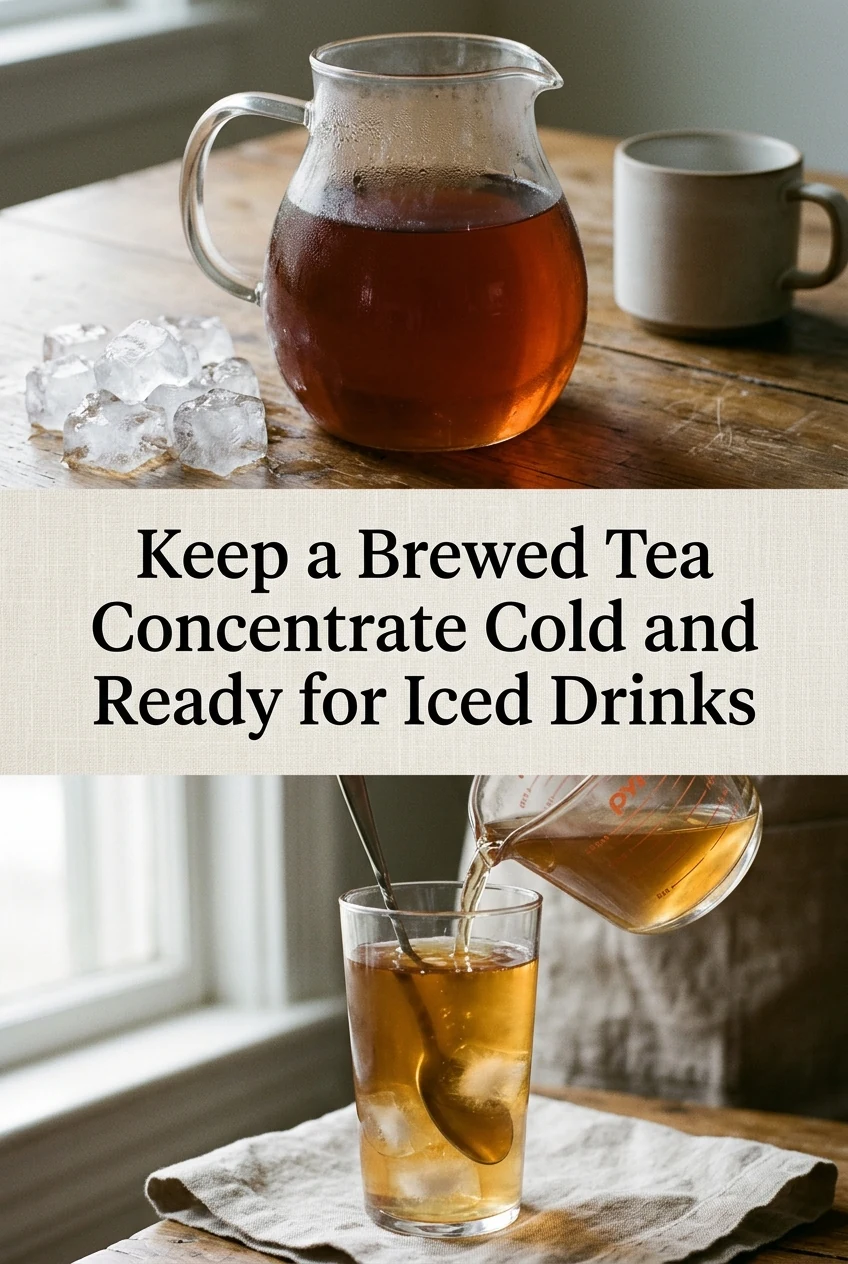
AI-generated editorial concept created for this article. The image is not a technical diagram or a tested result.
Brew at Double Strength
A common starting point for a double-strength concentrate is to use twice the leaf or bag quantity for the same volume of water you would normally brew. As an illustrative example, if your standard ratio is one tea bag per 240 milliliters, use two bags for the same 240 milliliters of hot water. Steep time stays the same as your normal brew; extending steep time to compensate for fewer leaves often produces bitterness rather than strength, particularly with black teas.
Cool the Concentrate Before Refrigerating
Hot liquid placed directly into a refrigerator raises the internal temperature and can affect other stored items. Allow the brewed concentrate to cool at room temperature until it is no longer steaming, then transfer it to the refrigerator promptly. Total time from brew completion to refrigerator entry should not exceed two hours, and should not exceed one hour if your kitchen is above 32 degrees Celsius. Use a food-safe container with a lid to prevent the tea from absorbing other odors.
Choose an Appropriate Storage Container
Glass pitchers or food-safe plastic containers with tight-fitting lids work well for concentrate storage. Avoid containers that previously held strong-smelling foods, as tea readily absorbs residual odors. A one-liter container holds enough concentrate for roughly eight to ten finished 240-milliliter iced drinks when diluted at a one-to-one ratio with cold water or poured over ice. Label the container with the tea type and the date brewed so there is no guesswork during service.
Set a Cold-Hold Time Limit
Brewed tea concentrate held at 4 degrees Celsius or below is generally best used within 24 to 48 hours for quality reasons, as flavor degrades and the liquid can become flat or develop off-notes over time. This is a quality guideline rather than a safety guarantee; follow your local food-handling guidance for specific safety requirements. Prepare concentrate in quantities you expect to use within that window rather than making large batches that sit for several days.
Build the Finished Drink at Service
To assemble an iced drink, fill a glass with ice, pour a measured amount of cold concentrate, then add cold water or another liquid to reach the target dilution. A one-to-one ratio of concentrate to cold water is a practical starting point, but taste and adjust to your preference before committing to a service ratio. Using a jigger or measuring cup for both the concentrate and the diluting liquid keeps each serving consistent rather than estimating by eye.
A little more
to know.
Can I use cold-brew tea as a concentrate instead of hot-brewed?
Cold-brew tea steeped in cold water for an extended period produces a different flavor profile than hot-brewed concentrate. It can work as a base for iced drinks, but the dilution ratio may differ. Taste before setting a fixed service ratio.
Does the container material affect how long the concentrate keeps its flavor?
Glass tends to preserve tea flavor better than thin plastic over 24 to 48 hours because it does not transfer any taste. Food-safe plastic is acceptable for short holds but avoid containers with strong prior odors, as tea absorbs them readily.
Original editorial guidance and recipe formulations, not independently kitchen-tested. Times are estimates and depend on equipment and product directions. Cooked bases need additional cooling and refrigeration before cold serving. Images are AI-generated illustrations; appearance and yield may vary. Check actual ingredient labels, allergens, and any certification you require. We do not certify products. Read our approach.
Save to Pinterest ↗ANOTHER IDEA FOR THE COUNTER